Short Answer

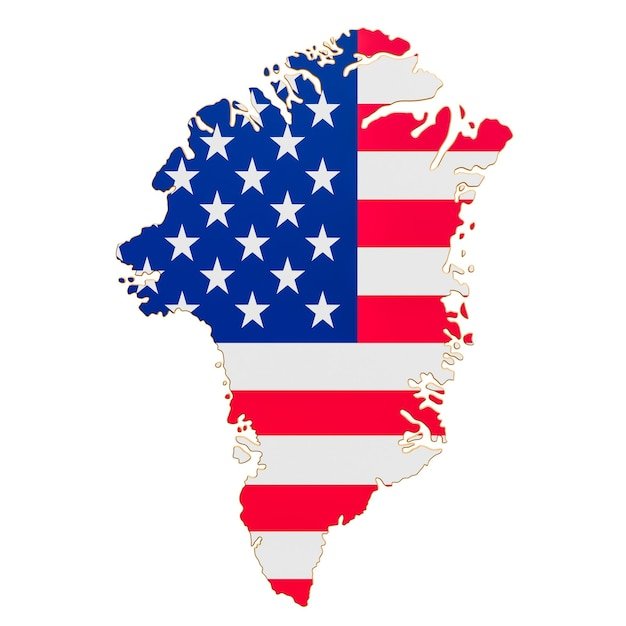
Both the model and the market expect the US to acquire part of Greenland in 2026, with no compelling evidence of mispricing.

1. Executive Verdict

  • Yes appears driven by the Trump Administration's stated acquisition ambitions for Greenland.
  • Denmark and Greenland firmly reject any sovereignty transfer, establishing significant legal barriers.
  • The U.S. Congress also opposed acquisition through legislative action in 2026.

Who Wins and Why

Outcome Market Model Why
Yes 6.0% 3.8% No specific plans for the US to acquire Greenland are mentioned in the available research.

Current Context

As of August 2026, US acquisition of Greenland shows minimal probability. The United States has not acquired any part of Greenland, and no diplomatic or legal indications suggest such a transfer will occur within the year [^][^]. President Donald Trump has repeatedly stated his ambition to bring Greenland under US "operational control" before January 2029. However, both Denmark and Greenland have consistently rejected these claims, reiterating that the territory is not for sale [^][^][^][^]. Prediction markets reflect this unlikelihood, estimating a 4% to 6.8% chance of any new US territorial acquisition before 2027 [^][^].
Diplomatic efforts focus on cooperation, not territorial transfer. In early 2026, President Trump initially threatened tariffs on European allies to compel negotiations [^][^][^]. He subsequently renounced the use of military force in January 2026, announcing a "framework of a future deal" with NATO Secretary General Mark Rutte [^][^][^]. This framework aimed to de-escalate tensions. Technical talks are ongoing through a high-level working group between the US, Denmark, and Greenland, focused on expanding military, security, and mineral cooperation in the Arctic region, rather than transferring sovereignty [^][^][^][^][^][^].
The US Congress actively opposes any Greenland acquisition attempts. Members have introduced multiple pieces of legislation to counter the administration's stated interest. These include H.R. 7013, which seeks to prohibit funds for the invasion or purchase of Greenland, and S. Con. Res. 26, which affirms respect for Denmark's sovereignty over the territory [^][^][^][^][^].

2. Market Behavior & Price Dynamics

Historical Price (Probability)

Outcome probability
Date
This market has priced in a low, single-digit probability for a US acquisition of any part of Greenland in 2026. The contract has traded in a narrow, sideways range between 4.5% and 8.5% since its inception. A modest downtrend is visible, with the price declining from a high of 8.5% in late July to a current level of 5.5% in early August. This price decay aligns with the lack of any diplomatic or political movement toward a sale as the resolution year progresses.
The most significant technical feature of this market is its complete lack of activity. With zero contracts traded, there is no volume to confirm price levels or indicate market conviction. The price movements are therefore not the result of trader activity but likely represent adjustments by the market maker. The low implied probability is consistent with public statements from Danish and Greenlandic officials that the territory is not for sale. While President Trump has stated a goal of US control, his target date is 2029, outside this contract's resolution window. The market's pricing reflects this fundamental reality, treating a 2026 acquisition as a tail-risk event with no active catalysts.

3. Market Data

View on Polymarket →

Contract Snapshot

The contract rules for this market specify a "Yes" resolution if the United States acquires control of any Greenlandic land territory by December 31, 2026, 11:59 PM ET. This acquisition must constitute a transfer of sovereignty or primary/exclusive jurisdiction, established by a binding agreement, legal instrument, or use of force, where ordinary Danish and Greenlandic legal authority does not apply without U.S. permission. Non-binding statements, negotiations, or simple basing rights do not qualify; otherwise, the market resolves to "No." Resolution sources include official information from the U.S., Danish, and Greenlandic governments, or a consensus of credible reporting.

Available Contracts

Market options and current pricing

Outcome bucket Yes (price) No (price) Last trade probability
Yes $0.06 $0.95 6%

Market Discussion

Traders overwhelmingly believe the US will not acquire any part of Greenland by the end of 2026, with the market currently showing a 94% chance for "No." This strong consensus is primarily driven by firm diplomatic resistance from both Greenland and Denmark, who have repeatedly stated they will not cede sovereignty. Discussions between the US and Greenland have focused on defense cooperation and basing arrangements, rather than territorial transfer, and the short remaining timeframe makes complex legislative and international agreements for acquisition highly unlikely.

4. What diplomatic or economic catalysts in 2026 could realistically compel Denmark or Greenland to reconsider a sovereignty transfer to the U.S.?

Greenlandic Sovereignty StanceNot for sale or negotiation (Denmark and Greenland) [^][^][^][^]
US Acquisition AttemptPresident Trump threatened tariffs in January 2026 to compel transfer [^]
Prediction Market OutlookVery low probability of US acquiring Greenland in 2026 [^][^][^][^][^]
Denmark and Greenland firmly reject any sovereignty transfer to the U.S. There is currently no evidence of a diplomatic or economic mechanism that would realistically compel Denmark or Greenland to transfer sovereignty to the United States in 2026 [^]. Both the Danish and Greenlandic governments have consistently and explicitly declared that sovereignty is a "red line," asserting it is not for sale or negotiation [^][^][^][^]. While open to discussions concerning security, investment, and economic cooperation, the issue of sovereignty remains non-negotiable [^][^][^][^].
President Trump's 2026 tariff threats aimed to compel sovereignty transfer. In January 2026, President Trump attempted to compel a sovereignty transfer or land acquisition of Greenland from Denmark by threatening 10% to 25% tariffs on several European nations [^]. However, following a meeting at the World Economic Forum in Davos with NATO Secretary-General Mark Rutte, Trump announced a vague "framework of a future deal" concerning Greenland and the Arctic, leading to the subsequent dropping of the tariff threats [^][^].
Prediction markets reflect low probability for Greenland's sovereignty transfer. Prediction markets monitoring whether the U.S. will acquire Greenland or a portion thereof in 2026 currently assign very low probabilities to such an outcome [^][^][^][^][^]. This reflects a market consensus that, despite ongoing political rhetoric, an actual transfer of sovereignty is highly unlikely [^][^][^][^][^].

5. What specific legal and constitutional barriers within Denmark and Greenland prevent a sale to the United States before 2027?

Act of Greenland Self-Government2009 [^][^]
US Senate votes for treaty67 votes [^][^][^]
Probability of US acquiring Greenland by 20264% to 15.5% [^][^][^][^]
Greenland's self-determination and Danish law create significant legal barriers to any sale. The 2009 Act of Greenland Self-Government grants its people a veto over changes to their political status, establishing a right to self-determination [^][^]. Furthermore, Danish constitutional law mandates parliamentary approval and potentially a referendum for any territorial cession [^][^][^]. Contemporary international law reinforces these requirements, demanding the express consent of the Greenlandic population through referenda for any transfer of territory [^][^][^][^].
US acquisition faces Senate hurdles and low market probability. On the United States' side, its Constitution requires 67 Senate votes to ratify a treaty for territorial acquisition [^][^][^]. As of mid-2026, prediction markets indicate a low probability of the US acquiring any part of Greenland in 2026, with estimates generally ranging between 4% and 15.5% [^][^][^][^].

6. How do President Trump's stated ambitions for Greenland compare with the official policy objectives outlined by the U.S. State Department and Congress in 2026?

Trump's prediction for US control of GreenlandBy 2029 [^]
US Congressional stance on Greenland acquisitionBipartisan opposition [^][^][^][^][^][^][^][^][^]
Prediction market probability of US acquiring Greenland in 20264%–15% (as of August 4, 2026) [^][^][^]
President Trump consistently advocates for the U.S. acquisition or operational control of Greenland. His rationale centers on national security concerns, specifically addressing Russian and Chinese influence in the Arctic region [^][^][^][^][^]. Trump has publicly predicted that the United States will control Greenland by 2029, explicitly stating, "Make That Bet" [^]. This ambition is in direct opposition to the official policy objectives expressed by the U.S. Congress in 2026, which has demonstrated clear bipartisan opposition to any such move [^][^][^][^][^][^][^][^][^].
U.S. Congress in 2026 has actively resisted Greenland acquisition proposals. Bipartisan opposition manifested through the introduction of legislation aimed at prohibiting the use of federal funds for acquiring Greenland [^][^][^][^]. These legislative initiatives unequivocally affirm the sovereignty of the Kingdom of Denmark and emphasize that any territorial changes would necessitate Congressional authorization [^][^][^][^]. Reflecting this significant domestic legislative pushback and a lack of diplomatic progress, prediction markets, as of August 4, 2026, assign a very low probability, estimated between 4% and 15%, to the U.S. acquiring any portion of Greenland in 2026 [^][^][^]. The available research does not detail specific official policy objectives from the U.S. State Department regarding Greenland in 2026.

7. What specific milestones in the ongoing U.S.-Denmark-Greenland working group talks could signal an escalation from security cooperation to sovereignty discussions in 2026?

Current Talks FocusCollective defense and security cooperation (not sovereignty) [^][^][^]
Expected Agreement TimelineBy end of 2026 for security-focused agreement [^][^]
US Acquisition Probability (2026)Overwhelmingly favors 'No' in prediction markets [^][^][^]
Current U.S.-Denmark-Greenland working group talks focus solely on collective defense and security cooperation. The discussions do not address changes in sovereignty, which both Denmark and Greenland consider a "red line" [^][^][^]. Although former U.S. President Donald Trump previously expressed interest in acquiring Greenland for national security reasons, this topic is not part of the ongoing negotiations [^][^][^].
No identified milestones signal a shift to sovereignty discussions in 2026. Danish officials anticipate that these working group discussions could conclude with a security-focused agreement by the end of 2026, prioritizing a diplomatic resolution over any territorial changes [^][^]. Prediction markets as of August 2026 overwhelmingly indicate a "No" outcome for the U.S. acquiring any part of Greenland in 2026, with the probability for a "Yes" result consistently remaining low [^][^][^].

8. How has the U.S. Congress, specifically through legislation like H.R. 7013, demonstrated its opposition to an acquisition of Greenland, and what powers does it retain to block such a move in 2026?

Bill NameH.R. 7013, "Greenland Sovereignty Protection Act" [^][^][^][^][^]
Bill SponsorRep. Jimmy Gomez [^][^][^][^][^]
Probability of US acquiring Greenland by EOY 20265% to 8% (as of August 2026) [^][^][^][^][^]
The U.S. Congress has clearly opposed a potential acquisition of Greenland through legislative action. This opposition is primarily demonstrated by H.R. 7013, known as the "Greenland Sovereignty Protection Act" [^][^][^][^][^]. Introduced in the 119th Congress (2025-2026) by Rep. Jimmy Gomez, this bill seeks to prohibit the use of federal funding for any activities that would facilitate the invasion, annexation, purchase, or any other form of U.S. government acquisition of Greenland [^][^][^][^][^]. Furthermore, the legislation aims to prevent increases in U.S. military presence or financial investment in Greenland, as well as any U.S.-funded influence campaigns concerning Greenland's self-determination, unless an explicit statutory waiver is granted [^][^][^][^].
Congress retains significant power to block such an acquisition, reflected in low market predictions. Its primary constitutional authority lies in the "power of the purse," enabling it to refuse to appropriate funds for any acquisition [^][^][^][^]. Additionally, the Senate holds the power to ratify treaties, requiring a two-thirds majority vote to approve any acquisition agreement [^][^][^][^]. This strong legislative stance is consistent with prediction markets, which, as of August 2026, indicate a low probability, typically between 5% and 8%, that the United States will acquire Greenland or any portion of it by the end of 2026 [^][^][^][^][^].

9. What Could Change the Odds

Key Catalysts

The Trump Administration pursued acquiring Greenland throughout 2026, citing national security, Arctic security, and U.S. economic interests [^][^][^][^]. Early in 2026, the administration publicly discussed various options, including outright purchase and potential military intervention [^][^][^][^]. These proposals drew significant pushback from Denmark, Greenlandic officials, and members of the US Congress [^][^][^][^]. Congressional scrutiny also exists regarding the administration's approach, with resolutions introduced to inquire about the "takeover of Greenland" and to affirm the existing partnership with Denmark and Greenland [^][^][^].
On January 14, 2026, a high-level meeting occurred between U.S., Danish, and Greenlandic officials; following this, President Trump briefly proposed tariffs on eight NATO allies to pressure them regarding a Greenland deal [^] [^] [^] [^] . Relations" data-source-lanes="curated">[^][^][^][^]. This threat was withdrawn on January 21, 2026, with President Trump citing a potential framework for future negotiations [^][^][^][^]. By late January 2026, after a meeting with NATO Secretary-General Mark Rutte, President Trump publicly ruled out the use of military force to seize Greenland and announced the formation of a "framework of a future deal" [^][^].
As of August 4, 2026, the United States has not acquired any part of Greenland, and there is no binding agreement in place to do so [^] [^] [^] [^] [^] [^] [^] [^] . National Security Claims and Treaty Realities | IBTimes UK" data-source-lanes="traditional">[^][^][^][^][^]. Despite repeated assertions from President Trump that he intends to bring the territory under US control, no specific details or transfer of sovereignty have materialized [^][^][^][^][^][^]. Prediction markets currently reflect low expectations, generally under 10% probability, for any US acquisition of Greenlandic territory before the end of 2026 [^][^][^].

Key Dates & Catalysts

  • Closes: December 31, 2026

10. Decision-Flipping Events

  • Trigger: The Trump Administration pursued acquiring Greenland throughout 2026, citing national security, Arctic security, and U.S.
  • Trigger: Economic interests [^] [^] [^] [^] .
  • Trigger: Early in 2026, the administration publicly discussed various options, including outright purchase and potential military intervention [^] [^] [^] [^] .
  • Trigger: These proposals drew significant pushback from Denmark, Greenlandic officials, and members of the US Congress [^] [^] [^] [^] .

12. Historical Resolutions

No historical resolution data available for this series.