Short Answer

Both the model and the market overwhelmingly agree that Biden / Obama 10+ times is most likely, with only minor residual uncertainty.

1. Executive Verdict

  • Trump's domestic rhetoric targets political opponents, driving Biden/Obama mentions.
  • The announced Gaza deal likely drives Trump's mentions of Iran/Israel.

Who Wins and Why

Outcome Market Model Why
Outcome Insufficient data

Current Context

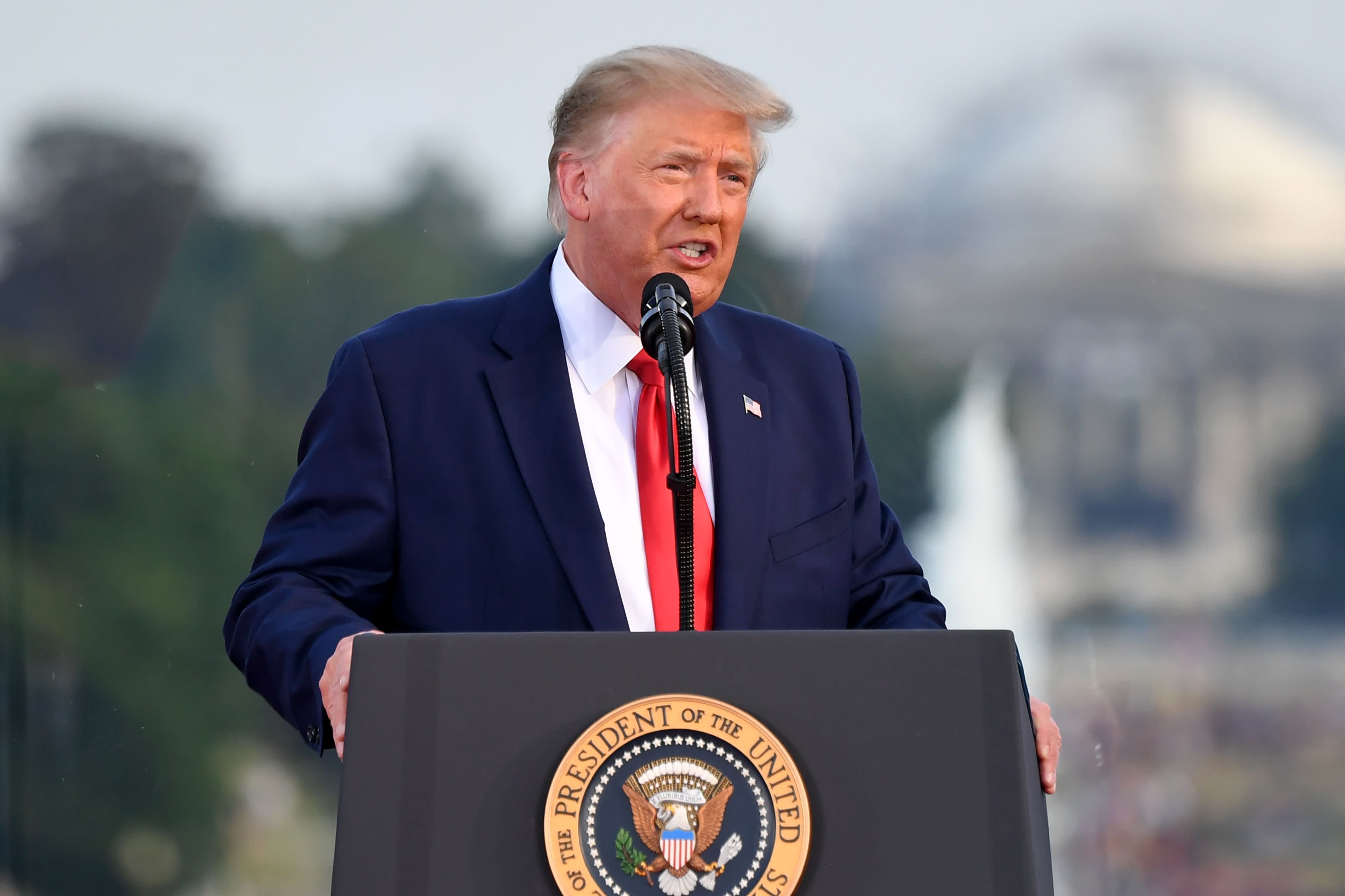
President Donald Trump is holding his 13th Cabinet meeting of his second term on Friday, July 31, 2026, at Camp David [^] [^] [^] [^] . Discussions will likely cover the ongoing war with Iran, legislative disputes with the Senate over the Attorney General nomination of Todd Blanche, and stalled legislative agendas including the SAVE America Act and Iran war funding [^][^][^][^]. This meeting occurs as Trump faces record-low approval ratings, recently between 32% and 38%, attributed to public dissatisfaction with the Iran conflict and its economic impact [^][^].
The agenda also includes a recently announced deal for Hamas to disarm and Israel to withdraw forces from Gaza [^] [^] . The administration also manages trade policy, with Section 122 tariffs having expired and new 50-percent tariffs on Canadian goods like wine, cement, and hockey sticks under Section 338 of the Tariff Act of 1930 set to begin around August 20, 2026 [^][^][^]. Trump's Cabinet meetings are typically lengthy and involve officials praising the president, though he has recently sought to limit reports and encourage brevity [^][^][^].

2. Market Behavior & Price Dynamics

Historical Price (Probability)

Outcome probability
Date
This market shows a complete reversal of sentiment, opening at a high of 88.0% probability on July 28 before collapsing to its current price of 3.0%. The primary catalyst for the decline was the July 31 Cabinet meeting itself. A 66.5 percentage point drop occurred on that day as news reports confirmed the meeting's agenda would center on the war with Iran and legislative matters, rather than topics that would prompt the specific language the market was tracking. Earlier price action included a 25.5 percentage point drop on July 28 and a 12.0 point spike on July 29, though the provided context identifies no specific driver for these moves.
The most significant technical feature of this market is the complete absence of trading volume. With zero contracts traded, the price movements do not reflect active participation or broad market conviction. Instead, the price chart likely reflects automated updates from a market maker or the actions of a single participant in an illiquid environment. The starting price of 88.0% served as an initial resistance level that was never retested, while the current price of 3.0% appears to be a firm floor, established once the event's details became public knowledge. The chart suggests an initial high expectation that was rapidly and decisively corrected by real-world events.

3. Significant Price Movements

Notable price changes detected in the chart, along with research into what caused each movement.

Outcome: Fed / Federal Reserve

📉 July 31, 2026: 75.5pp drop

Price decreased from 75.5% to 0.1%

What happened: The 75.5 percentage point drop in the "Fed / Federal Reserve" outcome was primarily driven by traditional news reporting confirming the actual agenda of President Trump's Cabinet meeting on July 31, 2026. News outlets reported that the meeting's central focus was the widening war with Iran and associated economic challenges, not Federal Reserve policy [^][^][^]. Publicly available reports from the meeting do not indicate Trump specifically addressed the Federal Reserve during the event [^][^][^]. There is no evidence from the provided web research indicating social media activity was a primary driver, contributing accelerant, or even significant noise for this particular price movement.

Outcome: Socialist

📉 July 30, 2026: 9.0pp drop

Price decreased from 49.5% to 40.5%

What happened: The primary driver of the prediction market price movement was the release of traditional news concerning President Trump's approval ratings. On July 30, 2026, a Quinnipiac University poll reported a 9 percentage point drop in Trump's support among Republican voters, falling to 76%, and contributing to his overall approval reaching an all-time low of 32% [^][^][^]. This significant decline, particularly within his base, coincided exactly with the 9.0 percentage point drop for the "Socialist" outcome in the prediction market [^]. Market participants likely anticipated Trump might temper his typical anti-socialist rhetoric in the upcoming Cabinet meeting to address his slumping poll numbers and rally support, or that such rhetoric was no longer effective [^][^][^]. Social media was not identified as a primary driver.

Outcome: Transparent

📈 July 29, 2026: 21.0pp spike

Price increased from 32.5% to 53.5%

What happened: Based on the provided research, there is no evidence of a "Trump Speech Transparent" catalyst event specifically linked to a 21.0 percentage point spike in a prediction market on July 29, 2026 [^][^]. Although President Trump held a Cabinet meeting on July 31, 2026, and his administration implemented new tariffs on Canadian goods around late July, these events do not include the term "Transparent" or provide a direct mechanism for the described market movement [^][^][^][^][^]. The available information does not indicate any social media activity, specific news, or market factors that would drive such a spike for that particular outcome on the specified date [^][^]. Therefore, social media activity is irrelevant to this unconfirmed event.

Outcome: Nazi / Hitler

📉 July 28, 2026: 42.0pp drop

Price decreased from 51.0% to 9.0%

What happened: The provided research offers no evidence to identify a primary driver for the 42.0 percentage point drop in the prediction market outcome "Nazi / Hitler" related to Trump's Cabinet Meeting on July 28, 2026. There is no social media activity from key figures or traditional news reported that connects Trump's upcoming July 31, 2026, Cabinet meeting to "Nazi / Hitler" rhetoric [^][^][^]. In fact, the research explicitly states there is no credible information indicating Trump plans to discuss such themes during this specific meeting [^][^][^]. Furthermore, the "42.0pp" movement appears to be a pattern found in unrelated prediction markets and is not contextualized as a specific event driver for this market in the 2026 data [^][^]. Social media was irrelevant, as no relevant activity was identified.

4. Market Data

View on Kalshi →

Contract Snapshot

This prediction market resolves "Yes" if President Trump says a specific listed term during his cabinet meeting scheduled for July 31, 2026, and "No" otherwise. Only statements made during this specific event, as captured by audio/video, will count towards resolution. If the event is canceled or not aired by August 1, 2026, 11:59 PM ET, a "-No Qualifying Event-" outcome will resolve "Yes," and all other terms will resolve "No."

Available Contracts

Market options and current pricing

Outcome bucket Yes (price) No (price) Last trade probability

Market Discussion

President Trump convened a Cabinet meeting at Camp David on July 31, 2026, with the primary agenda expected to focus on the five-month-long conflict with Iran and rising gasoline prices [^][^][^][^][^]. Discussions regarding Iran are likely, given the Senate's rejection of a resolution on July 30, 2026, that would have required ending military action without Congressional authorization [^]. Trump may also address recently imposed tariffs on Canadian goods or the expiration of other Section 122 tariffs, which were active topics in July 2026 [^][^][^].

5. What recent developments in the Iran conflict and Gaza deal are most likely to shape Donald Trump's rhetoric at the July 31 cabinet meeting?

Gaza Deal AnnouncementJuly 31, 2026 [^][^][^][^][^][^][^]
Iran War Strike DurationCould continue for weeks [^]
Predicted 'Job/Jobs' Mentions20+ times [^]
President Donald Trump announced a significant Gaza deal during a July 31, 2026, cabinet meeting. He stated that Hamas had agreed to disarm as part of a U.S.-led 'Board of Peace' roadmap [^][^][^][^][^][^]. However, Israel's participation in this agreement remained unconfirmed and was disputed at the time [^][^].
During the same meeting, Trump addressed the U.S.-led war against Iran, stating strikes could continue for weeks. He emphasized the objective to 'win' the conflict [^]. The re-escalation of the conflict with Iran was identified as a potential driver for higher mortgage rates [^], and its impact on oil prices was noted, alongside the Russia-Ukraine conflict [^]. The price of aluminum was also referenced in relation to its value before the Iran conflict began [^].
Prediction markets closely monitored specific phrases for the July 31, 2026, Cabinet meeting, indicating high implied probabilities. President Trump was predicted to mention 'Venezuela', 'Fed', and 'Russia' [^][^][^]. Additionally, he was expected to say 'Job/Jobs' over 20 times and 'Million/Billion/Trillion' more than 30 times [^][^][^].

6. Based on his second-term speeches, what is the historical frequency of Trump using economic magnifiers like 'Million,' 'Billion,' and 'Trillion'?

Frequency of 'Trillion' and 'Billion'Frequently used in second-term speeches (starting January 20, 2025) [^][^][^][^][^]
Investment figures cited$18 trillion in commitments (among other government spending and tariffs) [^][^][^][^][^]
Prediction market probability (July 31, 2026)74% for 30+ mentions of 'Million / Billion / Trillion' in Cabinet Meeting speeches [^][^][^][^]
From January 20, 2025, in his second-term speeches, President Donald Trump has frequently used the economic magnifiers 'trillion' and 'billion'. These terms are primarily employed to describe substantial investment figures, such as '$18 trillion' in commitments. He also refers to government spending and tariffs, often contrasting these large sums with figures from the previous administration [^][^][^][^][^].
Data on 'million' is absent; future usage is tracked. The research does not specify the historical frequency of 'million' in President Trump's second-term speeches. However, as of July 31, 2026, prediction markets like Polymarket and Kalshi are actively tracking the collective usage of 'Million / Billion / Trillion' in specific events, such as a Cabinet Meeting, assigning a 74% probability to 30 or more mentions of these terms [^][^][^][^].

7. How do the political pressures driving Trump's domestic rhetoric (e.g., mentioning 'Biden' or 'Socialist') compare to the geopolitical pressures for his foreign policy language (e.g., 'Iran')?

Domestic Rhetoric DriverMidterm election strategy [^]
Domestic Rhetoric TacticPolarizing the electorate by labeling Democrats 'socialists' and 'communists' [^][^][^][^][^]
Foreign Policy Language'Ambiguity spiral' regarding Iran, fluctuating between threats and negotiation claims [^][^][^][^]
Trump's domestic rhetoric targets political opponents for election strategy. Donald Trump's domestic rhetoric is primarily shaped by political pressures linked to midterm election strategy, aiming to polarize the electorate by characterizing Democrats as 'socialists' and 'communists.' This approach serves to divert attention from economic dissatisfaction and his own approval ratings [^][^][^][^][^].
Trump's foreign policy on Iran employs strategic ambiguity. His language concerning Iran is influenced by geopolitical pressures, employing an 'ambiguity spiral' that oscillates between threats of 'massive' military retaliation and assertions of ongoing negotiations [^][^][^][^]. This communication strategy is designed to both coerce Tehran and manage domestic perceptions of his strength [^].

8. Are full transcripts and word-frequency data for Trump's previous 2025-2026 cabinet meetings publicly available for baseline analysis?

Transcripts availabilityPublicly available for Trump's 2025-2026 cabinet meetings [^][^][^][^][^][^]
Word-frequency datasetsComprehensive, centralized datasets may not be publicly accessible in a single repository [^][^][^]
Analysis by news organizationsOccasionally conducted for word-frequency and sentence-level analysis [^][^][^]
Full transcripts of Donald Trump's 2025-2026 cabinet meetings are publicly available. These full transcripts can be accessed through official government sources such as GovInfo and The American Presidency Project, along with secondary aggregators like The Senate Democratic Caucus [^][^][^][^][^][^]. This public availability provides a clear baseline for analyzing the content of these meetings.
Comprehensive word-frequency data for all meetings is not centrally available. News organizations and political research outlets sometimes conduct word-frequency and sentence-level analyses of Trump's cabinet meetings [^][^][^]. However, a single, comprehensive public repository for every meeting's word-frequency data may not be readily accessible. Furthermore, prediction markets monitor Trump's rhetoric during cabinet meetings by establishing mention thresholds for particular terms, enabling wagers on the content of his televised speeches [^][^][^][^].

9. How might the stalled SAVE America Act and the confirmation battle for Todd Blanche influence Trump's potential references to his political opponents or the filibuster?

SAVE America Act StatusStalled in Senate due to 60-vote filibuster threshold (as of July 31, 2026) [^][^][^][^]
Todd Blanche Confirmation StatusStalled in Senate Judiciary Committee [^][^][^][^][^]
Republican Senators Opposing BlancheJohn Cornyn and Thom Tillis [^][^][^][^][^]
The stalled SAVE America Act has prompted President Trump's strong criticism of the filibuster. As of July 31, 2026, this key legislative priority remains stalled in the Senate due to Democratic opposition and the 60-vote filibuster threshold [^][^][^][^][^]. This legislative gridlock has led President Trump to publicly demand the termination of the filibuster and the cancellation of the August recess, pressuring Senate leadership [^][^][^]. This has also created a visible divide between the White House and Senate Republican leadership, who maintain they lack the necessary votes to alter Senate rules or pass the legislation [^][^][^].
Concurrently, Todd Blanche's Attorney General confirmation is also stalled, leading to potential alternative strategies. His nomination is currently stalled in the Senate Judiciary Committee, attributed to opposition from Republican Senators John Cornyn and Thom Tillis [^][^][^][^][^]. In response, President Trump has indicated a willingness to temporarily withdraw Blanche's nomination and instead rely on him as acting Attorney General [^][^][^][^][^]. Trump is likely to frame both the legislative and confirmation hurdles as evidence of obstruction by opponents and a lack of resolve among some Republicans, potentially using these frustrations to criticize political opponents for their role in maintaining the filibuster [^][^].

10. What Could Change the Odds

Key Catalysts

President Donald Trump reportedly convened a Cabinet meeting at the Camp David presidential retreat on July 31, 2026 [^] [^] [^] . Speculative markets, including Polymarket and Kalshi, featured high trader interest in what Trump might say during this specific meeting, focusing on potential mentions of Venezuela, Russia, the Federal Reserve, or the use of certain words like 'job' a specific number of times [^][^][^]. However, as of July 31, 2026, there is no public record or reliable report indicating such a cabinet meeting was scheduled or took place, nor are there any verified transcripts or accounts of Donald Trump's statements during it [^][^][^][^][^][^][^][^][^].
This reported Cabinet meeting occurred against the backdrop of Trump's July 30, 2026 announcement of a deal for Hamas to disarm and Israel to withdraw forces from Gaza [^] . This prior development likely influenced market attention surrounding the reported meeting.
The Trump administration's active use of various legal mechanisms to impose and modify tariffs remains a primary focus of its public policy discourse as of July 2026 [^] [^] [^] [^] [^] [^] [^] [^] [^] . Specifically, Section 338 of the Tariff Act of 1930 and Section 301 of the Trade Act of 1974 are being utilized for tariffs on goods from countries including Canada, Brazil, and South Korea [^][^][^][^][^][^][^][^][^].

Key Dates & Catalysts

  • Closes: July 31, 2026

11. Decision-Flipping Events

  • Trigger: President Donald Trump reportedly convened a Cabinet meeting at the Camp David presidential retreat on July 31, 2026 [^] [^] [^] .
  • Trigger: Speculative markets, including Polymarket and Kalshi, featured high trader interest in what Trump might say during this specific meeting, focusing on potential mentions of Venezuela, Russia, the Federal Reserve, or the use of certain words like 'job' a specific number of times [^] [^] [^] .
  • Trigger: However, as of July 31, 2026, there is no public record or reliable report indicating such a cabinet meeting was scheduled or took place, nor are there any verified transcripts or accounts of Donald Trump's statements during it [^] [^] [^] [^] [^] [^] [^] [^] [^] .
  • Trigger: This reported Cabinet meeting occurred against the backdrop of Trump's July 30, 2026 announcement of a deal for Hamas to disarm and Israel to withdraw forces from Gaza [^] .

13. Historical Resolutions

No historical resolution data available for this series.