
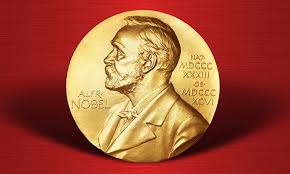
Nobel Peace Prize Winner 2026
Short Answer
1. Market Behavior & Drivers
- Since last update (~28d): António Guterres's model probability dropped -5.9pp, compressing his edge, driven by model conviction.
- UNRWA's model probability surged +4.7pp, widening its edge, driven by model conviction.
- Donald Trump's model probability rose +4.0pp, widening its edge significantly, driven by model conviction.
- Tamim bin Hamad Al Thani's model probability increased +4.2pp, widening its edge, driven by model conviction.
- Yulia Navalnaya leads, aligned with the Committee's anti-authoritarian preference.
- Donald Trump received nominations, but the Committee may show political aversion.
- UNRWA's staff controversy and Zelenskyy's wartime role present hurdles.
Who Wins and Why
| Outcome | Market | Model | Why |
|---|---|---|---|
| Donald Trump | 2.1% | 13.6% | He has received nominations for diplomatic interventions, but the Committee may be averse to his public lobbying and rhetoric. |
| UNRWA | 4.3% | 11.9% | Its plausible candidacy as a humanitarian organization is hindered by existing controversy regarding its staff. |
| Greta Thunberg | 1.2% | 4.3% | Her prominent activism links climate action to peace, a theme the Committee has previously considered. |
| Xi Jinping | 0.5% | 1.9% | His authoritarian rule conflicts with the Committee's historical preference for anti-authoritarian advocates. |
| Ahmed al-Sharaa | 1.1% | 4.0% | His public profile as a militant leader is fundamentally incompatible with Nobel Peace Prize criteria. |
Current Context
Sources (15)
- 1Prize announcement datesnobelprize.org
- 2The 2026 Nobel Prize announcements - NobelPrize.orgnobelprize.org
- 3All Nobel Peace Prizesnobelprize.org
- 42026 Nobel Peace Prizeen.wikipedia.org
- 5S.Res.460 - 119th Congress (2025-2026): A resolution recognizing the accomplishments of President Donald J. Trump and recommending that he be awarded the Nobel Peace Prize in 2026. | Congress.gov | Library of Congresscongress.gov
- 6S.Res.460 - 119th Congress (2025-2026): A resolution...congress.gov
- 7All Information (Except Text) for S.Res.460 - A...congress.gov
- 8Who Will Win the 2026 Nobel Peace Prize?next.io
- 9Nobel Peace Prize 2026 Odds & Predictions | Prediction Geniuspredictiongenius.io
- 10congress.gov
- 11S.Res.462 - A resolution recognizing Nobel Prize winner...congress.gov
- 122026 Geopolitics Book Award - Press kitsdassault-aviation.com
- 132026 Lionel Gelber Prize awarded to Francis Gavin for Thinking Historically: A Guide to Statecraft and Strategyprnewswire.com
- 14NATO and socioMovens receive Westphalian Peace Prize 2026 | WWLwirtschaftliche-gesellschaft.de
- 15Tommy Koh wins 2026 Ramon Magsaysay Award for diplomacy | The Straits Timesstraitstimes.com
2. Price Chart
Historical Price (Probability)
3. Market Data
Contract Snapshot
Here's a summary of the contract rules:
1. YES resolution: A YES resolution for a specific listed nominee occurs if they are officially announced as the winner of the 2026 Nobel Peace Prize by the Norwegian Nobel Committee. In the event of joint winners, special precedence rules apply, prioritizing Donald Trump, Volodymyr Zelenskyy, Benjamin Netanyahu, Vladimir Putin, or Elon Musk in that specific order, followed by an individual over an organization, and then alphabetical order for similar types. 2. NO resolution: A NO resolution for a specific listed nominee occurs if they are not officially announced as the 2026 Nobel Peace Prize winner, or if another listed nominee is determined as the single winner under the joint resolution rules, or if the market ultimately resolves to "Other." 3. Key dates/deadlines: The market's resolution is contingent on the 2026 Nobel Peace Prize announcement. If no official announcement is made by March 31, 2027, 11:59 PM ET, the market will resolve to "Other." 4. Special settlement conditions: If the prize is awarded jointly, a single winner is determined by a specific order of precedence (Trump > Zelenskyy > Netanyahu > Putin > Musk). If none of these five are recipients, an individual winner takes precedence over an organization. If all joint recipients are of the same type, the listed name that comes first alphabetically will resolve to YES. The sole resolution source is the first official announcement from the Norwegian Nobel Committee.
Available Contracts
Market options and current pricing
| Outcome bucket | Yes (price) | No (price) | Last trade probability |
|---|---|---|---|
| Yulia Navalnaya | $0.09 | $0.93 | 9% |
| UNRWA | $0.04 | $0.96 | 4% |
| Volodymyr Zelenskyy | $0.04 | $0.96 | 4% |
| International Court of Justice | $0.03 | $0.97 | 3% |
| Pope Leo XIV | $0.03 | $0.97 | 2% |
| Tamim bin Hamad Al Thani | $0.02 | $0.98 | 2% |
| Donald Trump | $0.02 | $0.98 | 2% |
| Greta Thunberg | $0.01 | $0.99 | 1% |
| Narendra Modi | $0.01 | $0.99 | 1% |
| Ahmed al-Sharaa | $0.01 | $0.99 | 1% |
| Julian Assange | $0.01 | $0.99 | 1% |
| António Guterres | $0.01 | $0.99 | 1% |
| Xi Jinping | $0.01 | $0.99 | 1% |
| Khaled Mashal | $0.00 | $1.00 | 0% |
| Recep Tayyip Erdoğan | $0.00 | $1.00 | 0% |
| Benjamin Netanyahu | $0.00 | $1.00 | 0% |
| Charlie Kirk | $0.00 | $1.00 | 0% |
| Elon Musk | $0.00 | $1.00 | 0% |
| Mohammed bin Salman | $0.00 | $1.00 | 0% |
| Vladimir Putin | $0.00 | $1.00 | 0% |
| Other | $1.00 | $1.00 | 0% |
| Person A | $1.00 | $1.00 | 0% |
| Person AA | $1.00 | $1.00 | 0% |
| Person AB | $1.00 | $1.00 | 0% |
| Person AC | $1.00 | $1.00 | 0% |
| Person AD | $1.00 | $1.00 | 0% |
| Person AE | $1.00 | $1.00 | 0% |
| Person AF | $1.00 | $1.00 | 0% |
| Person AG | $1.00 | $1.00 | 0% |
| Person AH | $1.00 | $1.00 | 0% |
| Person AI | $1.00 | $1.00 | 0% |
| Person AJ | $1.00 | $1.00 | 0% |
| Person AK | $1.00 | $1.00 | 0% |
| Person AL | $1.00 | $1.00 | 0% |
| Person AM | $1.00 | $1.00 | 0% |
| Person AN | $1.00 | $1.00 | 0% |
| Person AO | $1.00 | $1.00 | 0% |
| Person AP | $1.00 | $1.00 | 0% |
| Person AQ | $1.00 | $1.00 | 0% |
| Person AR | $1.00 | $1.00 | 0% |
| Person AS | $1.00 | $1.00 | 0% |
| Person AT | $1.00 | $1.00 | 0% |
| Person AU | $1.00 | $1.00 | 0% |
| Person AV | $1.00 | $1.00 | 0% |
| Person AW | $1.00 | $1.00 | 0% |
| Person AX | $1.00 | $1.00 | 0% |
| Person B | $1.00 | $1.00 | 0% |
| Person C | $1.00 | $1.00 | 0% |
| Person D | $1.00 | $1.00 | 0% |
| Person E | $1.00 | $1.00 | 0% |
| Person F | $1.00 | $1.00 | 0% |
| Person G | $1.00 | $1.00 | 0% |
| Person H | $1.00 | $1.00 | 0% |
| Person I | $1.00 | $1.00 | 0% |
| Person J | $1.00 | $1.00 | 0% |
| Person K | $1.00 | $1.00 | 0% |
| Person L | $1.00 | $1.00 | 0% |
| Person M | $1.00 | $1.00 | 0% |
| Person N | $1.00 | $1.00 | 0% |
| Person O | $1.00 | $1.00 | 0% |
| Person P | $1.00 | $1.00 | 0% |
| Person Q | $1.00 | $1.00 | 0% |
| Person R | $1.00 | $1.00 | 0% |
| Person S | $1.00 | $1.00 | 0% |
| Person T | $1.00 | $1.00 | 0% |
| Person U | $1.00 | $1.00 | 0% |
| Person V | $1.00 | $1.00 | 0% |
| Person W | $1.00 | $1.00 | 0% |
| Person X | $1.00 | $1.00 | 0% |
| Person Y | $1.00 | $1.00 | 0% |
| Person Z | $1.00 | $1.00 | 0% |
Market Discussion
The market indicates a highly fragmented field for the 2026 Nobel Peace Prize, with Yulia Navalnaya currently holding the highest implied probability at 8%. Other leading contenders, including Volodymyr Zelenskyy, UNRWA, and the International Court of Justice, are closely bunched with probabilities between 3.2% and 4.3%. There are no explicit arguments for or against candidates provided, but the low probabilities across the board suggest a lack of strong consensus or a clear frontrunner, indicating that traders do not anticipate a decisive breakthrough or major milestone that would significantly favor any single candidate at this time.
4. Trust Index
Scheduled reveal: one organization already holds the answer
Integrity risk· Information exposure
Includes the cost to trade: a $10,000 order can't be filled here because the order book is too thin.
Weighted blend with hard caps — a critically weak safety pillar, or a severe trading anomaly, caps the total regardless of the rest. Full methodology · About the Trust Index
5. What geopolitical catalysts between late 2025 and the February 2026 nomination deadline could elevate an organization like the International Court of Justice (ICJ) or UNRWA to frontrunner status?
| ICJ and UNRWA Candidacy | Recognized institutional candidates for Nobel Peace Prize, generally lower implied probabilities than individual favorites [1][2] |
|---|---|
| 2026 Nomination Deadline | January 31, 2026 [3][4][5] |
| Geopolitical Event Specification | Research does not specify events between late 2025 and the 2026 deadline that would elevate them to frontrunner status [3][4][5] |
Sources (6)
- 1Nobel Peace Prize Winner 2026polymarketpredict.com
- 2Nobel Peace Prize Winner 2026 Odds & Prediction Market Analysis | CryptoSlatecryptoslate.com
- 3Nomination and selection of Nobel Peace Prize laureatesnobelprize.org
- 4Prize announcement datesnobelprize.org
- 5Nobel Peace Prize 2026: Nomination Deadline Looms in...newsweek.com
- 6Nobel Peace Prize 2026: What Navalnaya's Odds Reveallines.com
6. How does the 2025 Nobel Peace Prize award to María Corina Machado signal the Committee's potential focus for 2026, particularly regarding democratic activists versus state actors?
| 2025 Nobel Peace Prize Winner | María Corina Machado [1][2][3][4] |
|---|---|
| Yulia Navalnaya 2026 Prize Probability | 9–15% [5][6] |
| 2026 Nobel Peace Prize Outlook | Unpredictable, high probability for 'Other' candidates [7] |
Sources (7)
- 1The Nobel Peace Prize 2025 – Maria Corina Machadonobelprize.org
- 2Nobel Peace Prize 2025nobelprize.org
- 3All Nobel Prizes 2025nobelprize.org
- 42025 Nobel Peace Prizeen.wikipedia.org
- 5Nobel Peace Prize 2026: What Navalnaya’s Odds Reveal | Lines.comlines.com
- 6Nobel Peace Prize 2026: Navalnaya Favorite | PolyVeritaspolyveritas.com
- 7The 2026 Nobel Peace Prize Race Remains Genuinely Wide Open — Priced In Newspricedinnews.com
7. How do the diplomatic achievements attributed to Donald Trump, such as the Abraham Accords, compare with the human rights advocacy of Yulia Navalnaya as justification for the 2026 award?
| Yulia Navalnaya Nobel Peace Prize odds | 8% to 13.5% (as of September 1, 2026) [1][2][3] |
|---|---|
| Donald Trump Nobel Peace Prize odds | Low single digits (compared to Navalnaya) [4][5][6][7] |
| Competition for 2026 Nobel Peace Prize | Fragmented field including UNRWA, International Court of Justice, and Médecins Sans Frontières [3] |
Sources (7)
- 1Nobel Peace Prize Winner 2026 Odds & Prediction Market Analysis | CryptoSlatecryptoslate.com
- 2Nobel Peace Prize 2026: What Navalnaya's Odds Reveallines.com
- 3Nobel Peace Prize 2026: Navalnaya Favorite | PolyVeritaspolyveritas.com
- 4ICYMI: Congresswoman Tenney Nominates President Trump...tenney.house.gov
- 5Luna formally nominates Trump for Nobel Peace Prizethehill.com
- 6Trump nominated for 2026 Nobel Peace Prize with support from Cambodia, Israel, Pakistancryptobriefing.com
- 7Why experts say Trump is unlikely to win the Nobel Peace...pbs.org
8. What are the key milestones in the Nobel Peace Prize selection timeline for 2026, from the nomination cutoff to the October announcement?
| Nomination Deadline | January 31, 2026 (287 nominations) [1] |
|---|---|
| First Committee Meeting | February 26, 2026 [2] |
| Laureate Announcement | October 9, 2026 (11:00 CEST) [3][4] |
Sources (6)
- 1Nomination and selection of Nobel Peace Prize laureatesnobelprize.org
- 2What to know about Nobel Peace Prize nominationsthehill.com
- 3All Nobel Peace Prizesnobelprize.org
- 42026 Nobel Peace Prizeen.wikipedia.org
- 5Photos of Venezuelan opposition leader María Corina Machado who has won the Nobel Peace Prize | The Associated Pressap.org
- 6Pioneers in artificial intelligence win the Nobel Prize in physicsap.org
9. What is the historical precedent for the Nobel Committee awarding the prize to controversial free-speech or transparency advocates like Julian Assange or Elon Musk?
| Liu Xiaobo Peace Prize | Awarded 2010 for freedom of expression [1][2][3] |
|---|---|
| Maria Ressa Peace Prize | Awarded 2021 for freedom of expression [1][2][3] |
| Assange/Musk 2026 Prediction Market Status | Not listed as front-runners as of September 1, 2026 [4][5][6][7] |
Sources (12)
- 1LISTEN: One of this year's Nobel Peace Prize winners...facebook.com
- 2PEN America CEO Suzanne Nossel Testimony Before...pen.org
- 3Nonsuch HP: Liu Xiaobo - Nobel Peace Prize Winnernonsuchhp.blogspot.com
- 4Nobel Peace Prize Winner 2026 Predictions & Odds | Polymarketpolymarket.com
- 5Nobel Peace Prize winner Odds & Predictions 2026kalshi.com
- 62026 Nobel Peace Prize winner — Compare Kalshi vs Polymarket Odds | CoinRithmcoinrithm.com
- 7Nobel Peace Prize Winner 2026 Odds & Prediction Market Analysis | CryptoSlatecryptoslate.com
- 8Musk and Assange follow Putin, Trump and Stalin as Nobel...politico.eu
- 9Tesla and X founder Elon Musk nominated for Nobel...indiatoday.in
- 10Norwegian Lawmaker Nominates Elon Musk For Nobel...ndtv.com
- 11Elon Musk nominated for Nobel Peace Prize by Norway MPhindustantimes.com
- 12Controversial Nobel Peace Prize Winnersstarsinsider.com
10. What Could Change the Odds
Key Catalysts
Key Dates & Catalysts
- Closes: October 10, 2026
Sources (16)
- 1The 2026 Nobel Prize announcements - NobelPrize.orgnobelprize.org
- 22026 Nobel Peace Prizeen.wikipedia.org
- 3Nobel Peace Prize 2025: how is it decided? | Reutersreuters.com
- 4Donald Trump nominated for 2026 Nobel Peace Prize: Reportnewsbytesapp.com
- 5Nobel Peace Prize 2026 Odds & Predictions | Prediction Geniuspredictiongenius.io
- 6Who will win the Nobel Peace Prize? Odds & Predictions 2026kalshi.com
- 7Nobel Peace Prize 2026: What Navalnaya's Odds Reveallines.com
- 8Nobel Peace Prize Winner 2026 Odds - Yulia Navalnaya 8...predictionhunt.com
- 9Nominations for the Nobel Peace Prize 2026nobelpeaceprize.org
- 10Trump and the 2026 Nobel Peace Prize: the market view — farexiofarexio.com
- 11Nobel Peace Prize Winner 2026 Odds & Prediction Market...cryptoslate.com
- 12PresageLabs/PrediBenchgithub.com
- 13S.Res.460 - 119th Congress (2025-2026): A resolution recognizing the accomplishments of President Donald J. Trump and recommending that he be awarded the Nobel Peace Prize in 2026. | Congress.gov | Library of Congresscongress.gov
- 14H.Res.799 - Recognizing President Donald J. Trump's...congress.gov
- 15https://www.congress.gov/119/bills/sres305/BILLS-119sres305is.htmcongress.gov
- 16Bills 119hres799ih.htmcongress.gov
