
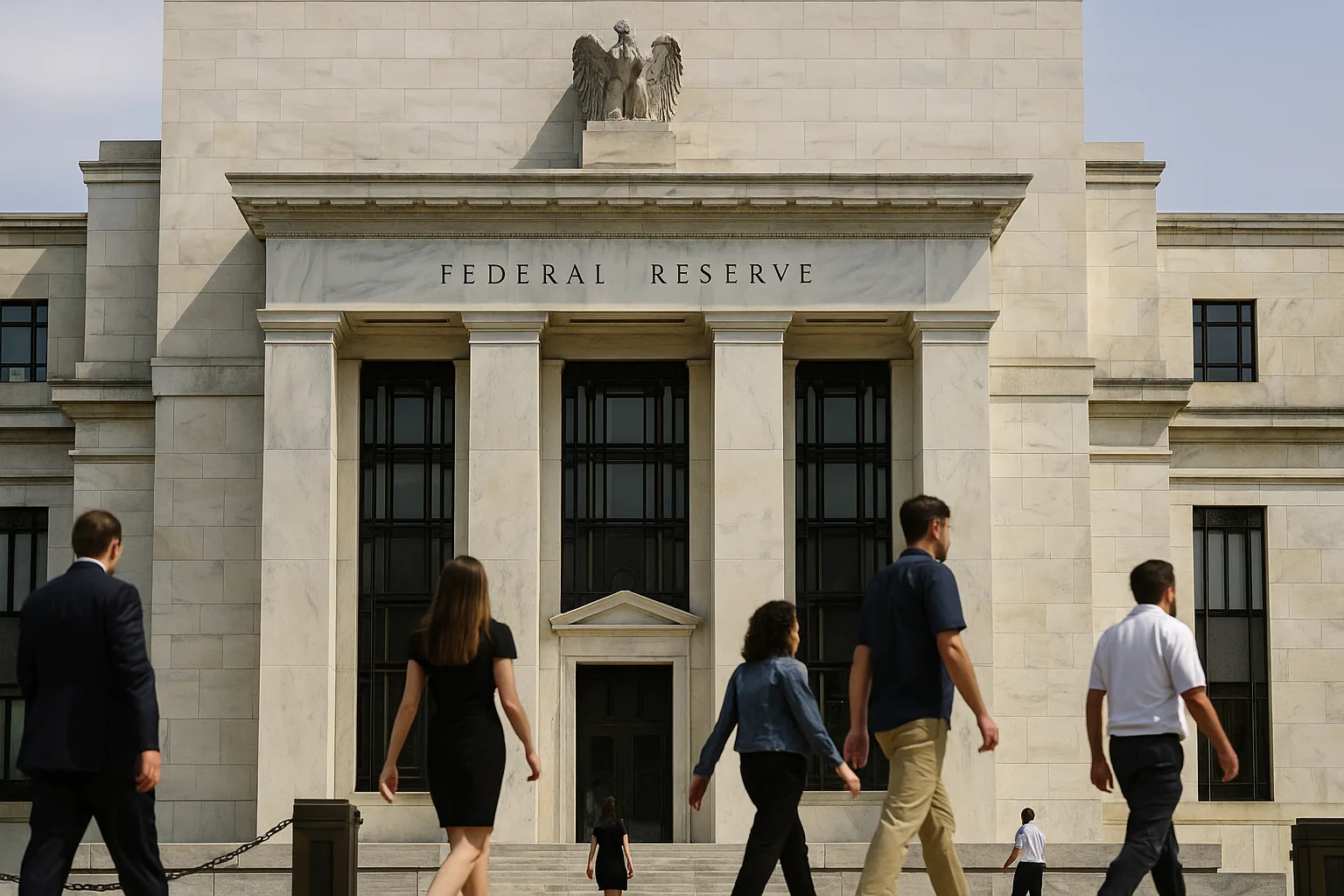
A surprisingly weak July jobs report on Friday, August 07, 2026, prompted a significant dovish shift in prediction markets, with traders pushing back the expected timeline for the next Federal Reserve interest rate hike. Probabilities for a rate increase occurring before 2027 saw the sharpest decline, falling 11 percentage points to 54% in the session's trading.
The repricing was broad-based, indicating a cohesive market reaction to the new labor data, which showed an unexpected drop in employment. The move suggests traders believe the suddenly softening job market significantly complicates the Federal Open Market Committee's (FOMC) path to raising rates, despite persistent inflation concerns. The current federal funds target rate remains at 3.50% to 3.75% following the committee's decision to hold rates steady in its late July meeting.
Distribution Analysis
The shift away from a near-term hike was consistent across all contracts tracking the timing of the next rate increase. Shorter-term contracts, which cover rate hikes before mid-2027 and the end of 2027, also saw their probabilities decline, though more modestly.
| Outcome | Current Prob | Change | Volume |
|---|---|---|---|
| Before 2027 | 54% | -11.0pp | 132,014 |
| Before July 2027 | 72% | -3.0pp | 11,324 |
| Before 2028 | 78% | -1.0pp | 2,986 |
Net: All 3 of 3 contracts declined on 146,324 total volume, shifting the implied timeline for the next rate hike further into the future.
What's Driving the Shift
The market's dovish repricing appears directly linked to fresh evidence of a cooling U.S. labor market, which alters the calculus for the Fed's next move.
Dismal July Jobs Report: The primary catalyst was the July employment report, which showed that employers unexpectedly shed 23,000 jobs, according to a CBS News report. The Labor Department also revised hiring data for May and June downward by a combined 103,000. This data challenges the narrative of a resilient economy and complicates the Fed's dual mandate of maximizing employment while maintaining price stability.
Reversal of Hawkish Momentum: The jobs data represents a sharp reversal from the prevailing market sentiment earlier in the week. Following the Fed's divided 9-3 vote to hold rates in July, many analysts had begun pricing in a hike at the September meeting. J.P. Morgan Wealth Management strategists, for instance, had recently shifted their base case to a 25-basis-point hike in September, citing credibility concerns. The weak labor print appears to have overridden those expectations for now.
Corroboration from Futures Markets: The move in prediction markets aligns with activity in the broader interest rate futures market. According to CME FedWatch data cited by CBS News, the probability of the Fed holding its benchmark rate steady at the September meeting rose to 56% on Friday, from 45% the previous day.
Market Context
The Federal Reserve is navigating a complex economic environment characterized by elevated inflation and emerging signs of labor market weakness. While inflation remains above the committee's 2% target, the central bank's next move has been a subject of intense debate.
The dissent at the July FOMC meeting, where three members voted for an immediate rate increase, highlighted a growing hawkish faction within the Fed. In recent weeks, several officials have reinforced their hawkish stance, and some analysts, including Bank of America's CEO, have publicly forecast multiple hikes before the end of 2026. This context makes the market's swift dovish reaction to the jobs report particularly notable, as it suggests traders see weak employment data as a significant constraint on the Fed's ability to tighten policy.
What to Watch
With the labor market picture now cloudier, all eyes will turn to upcoming inflation data to gauge the Fed's next steps. Key releases include the July Consumer Price Index (CPI) on August 12 and the Fed's preferred inflation gauge, the Personal Consumption Expenditures (PCE) price index, on August 26.
Beyond data releases, market participants will be closely watching Fed Chair Kevin Warsh's upcoming speech at the Jackson Hole Economic Symposium in late August. His remarks will be scrutinized for any clues regarding the Fed's reaction function and how the central bank weighs its competing mandates in light of the latest economic signals. The next scheduled FOMC meeting is on September 15-16, 2026.
