
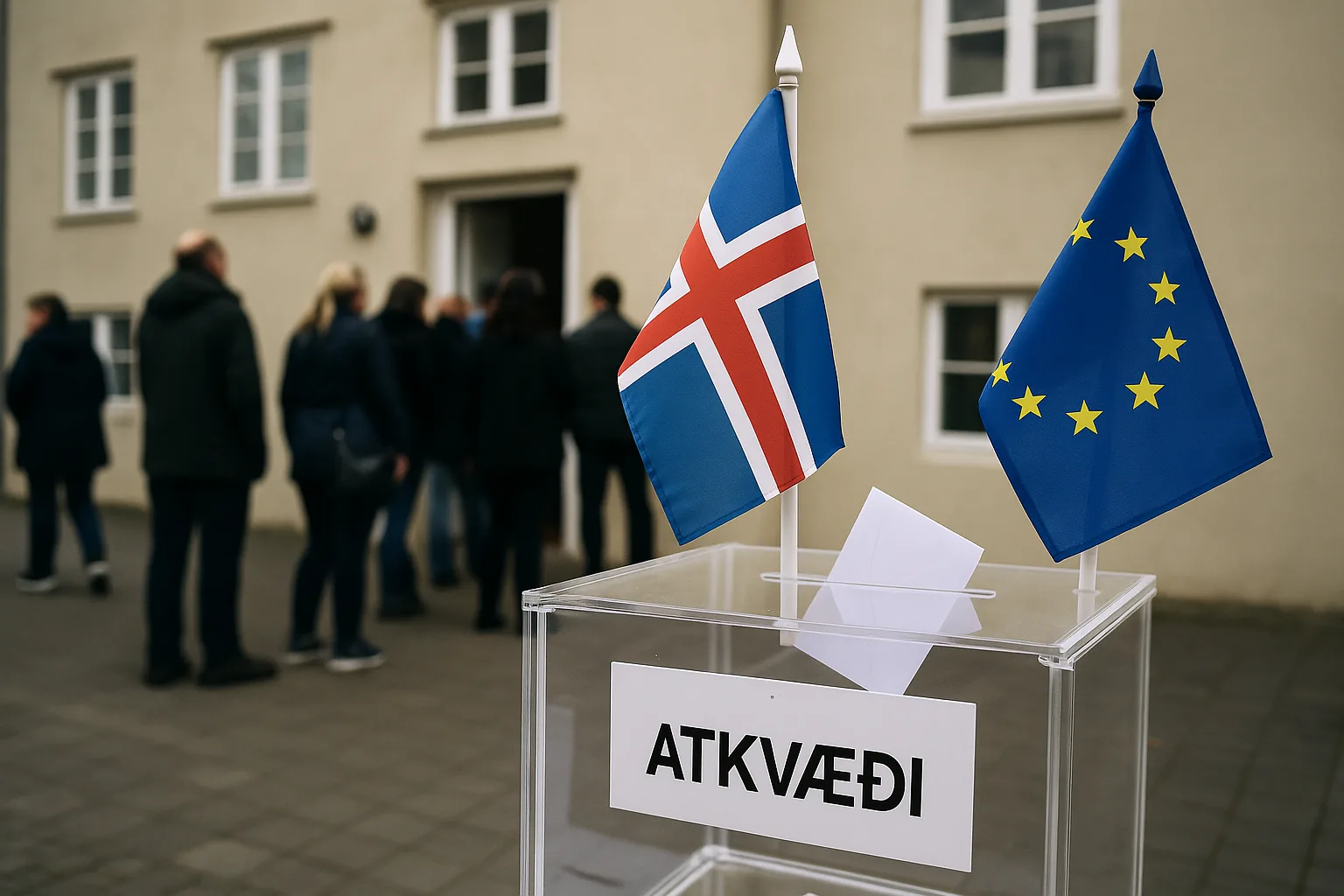
The official result of Iceland's referendum on European Union membership talks, in which voters rejected a government proposal to resume accession negotiations, prompted a sharp repricing in a related prediction market on Sunday, August 30, 2026. The contract pricing a "Yes" outcome for the referendum plummeted 46 percentage points, falling from 49.0% to 3.0%, as traders aligned their positions with the definitive election result.
The move from a near-even probability to a near-zero chance for a "Yes" vote reflects the market's swift reaction to the certified outcome. In the referendum held on Saturday, August 29, 52.8% of Icelanders voted "No" to restarting talks, while 47.2% voted "Yes", according to public broadcaster RUV. The decisive result effectively resolved the market's core question, leaving little room for any other outcome.
Distribution Analysis
| Outcome | Current Prob | Change | Volume |
|---|---|---|---|
| Yes | 3% | -46.0pp | 32,843 |
Net: The sole eligible contract declined on significant volume, reflecting the market's alignment with the referendum's official 'No' result.
What's Driving the Shift
The dramatic shift in market odds was driven exclusively by the official outcome of the national referendum.
- Definitive 'No' Vote: The primary catalyst was the confirmed result of the referendum. Official figures reported by international media showed a clear, albeit close, victory for the "No" campaign, with a margin of approximately 12,600 votes. This erased the uncertainty that had kept the "Yes" contract priced near 50% in the days leading up to the vote.
- High Voter Turnout: The referendum saw an 82.5% voter turnout, one of the highest levels of participation in an Icelandic national vote since 2009. This high turnout lends significant weight to the result, signaling a clear mandate from the electorate and leaving no ambiguity for the market to price in.
- Sovereignty and Fisheries Concerns: The "No" campaign was effectively driven by concerns over national sovereignty, particularly regarding Iceland's lucrative fishing industry. Opponents argued that joining the EU would mean ceding control of fishing waters to the bloc's common fisheries policy, a sentiment that resonated with a significant portion of the electorate, according to Reuters.
Market Context
This referendum was intended to decide whether Iceland should resume accession negotiations that were put on hold in 2013. Iceland first applied for EU membership in 2009 in the wake of a severe financial crisis, but a subsequent eurosceptic government suspended the talks. The government of Prime Minister Kristrún Frostadóttir, which had championed the referendum, had framed it as a pivotal moment for the nation's future.
Prior to the vote, the market on Kalshi, a CFTC-regulated exchange, indicated a toss-up, with odds hovering just below 50%. This reflected the tight race seen in some opinion polls and the deep divisions within the country on the issue. The post-result collapse of the "Yes" contract demonstrates the function of prediction markets in moving from pricing public sentiment and uncertainty to reflecting confirmed, real-world events.
Following the result, Prime Minister Frostadóttir stated that the EU membership debate would be shelved for the remainder of her government's term. While the vote was on resuming talks and not on membership itself, the outcome effectively closes the door on Iceland's EU path for the foreseeable future.
What to Watch
The primary item to watch is the official settlement of the market, which is based on the proclamation by Iceland's electoral authority. With the outcome now public and undisputed, the contract is expected to resolve to "No", with the "Yes" contract settling at zero. The government is scheduled to hold a press conference on Sunday to discuss the result and its implications, which may include whether to formally withdraw the country's original 2009 EU membership application, which technically remains on file.
