
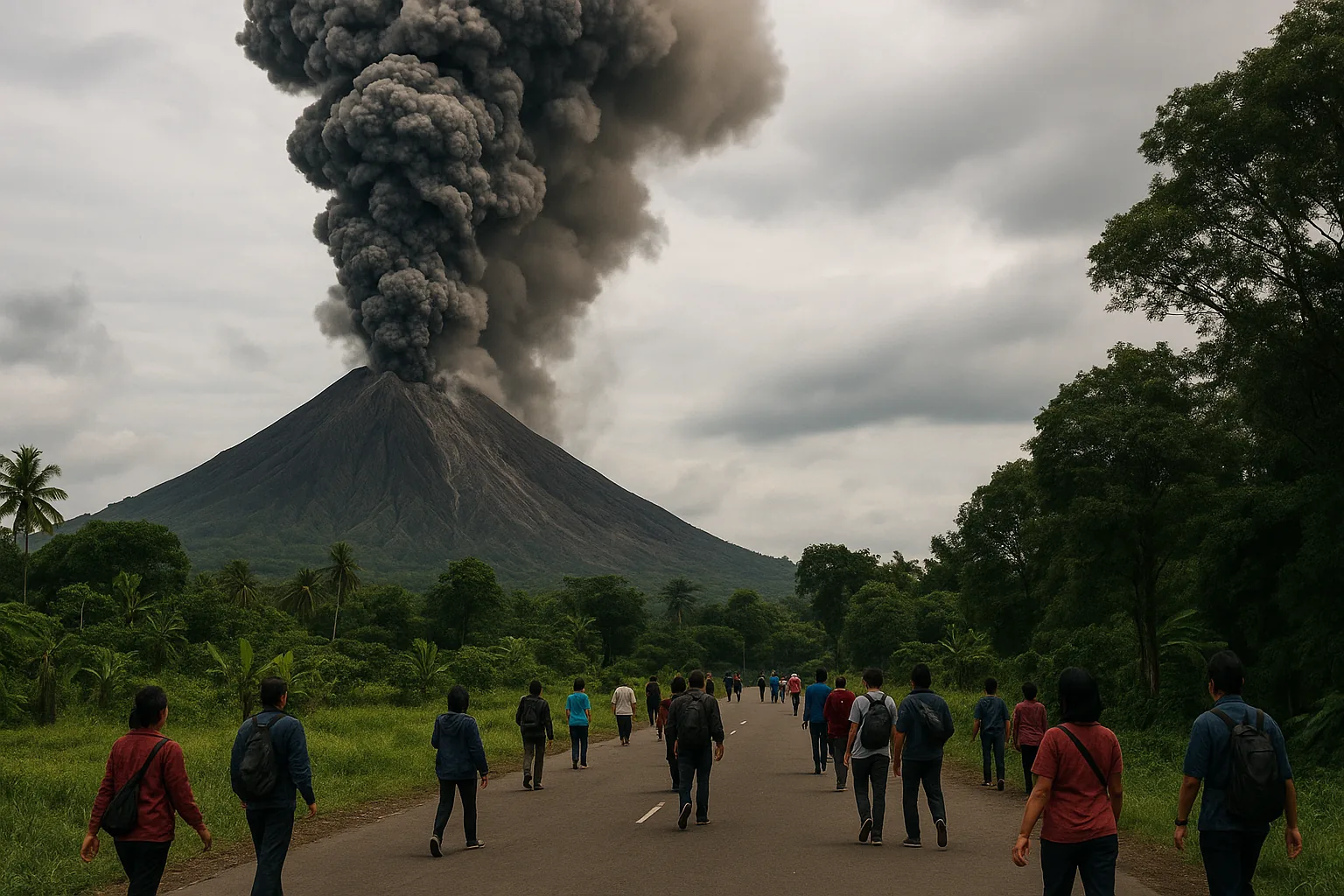
A cluster of volcanic eruptions across Indonesia on Tuesday, September 22, 2026, drove a significant repricing in a market forecasting the number of major eruptions for the year. The events at Mount Semeru, Mount Ibu, and Mount Ili Lewotolok coincided with a sharp 66.0 percentage point spike in contracts for "At least 2" major (VEI 4+) eruptions in 2026, which jumped from 5.0% to 71.0%. The move suggests traders are interpreting the heightened and widespread activity as a material increase in the likelihood of reaching at least two such high-intensity events before year's end.
This shift marks a dramatic change in consensus for the market, which had priced a low probability of multiple major events for most of the year. The repricing effectively transferred the bulk of probability from an outcome of zero or one major eruption to an outcome of exactly two. Contracts for "At least 3" major eruptions remained stable at a low probability, indicating the market's new consensus is consolidating around a specific number rather than a broad increase in catastrophic risk.
Distribution Analysis
| Outcome | Current Prob | Change | Volume |
|---|---|---|---|
| At least 2 | 71% | +66.0pp | 254 |
| At least 3 | 9% | ~0pp | 10 |
Net: Probability surged into the "At least 2" outcome on significant volume, implying the market now sees two VEI 4+ eruptions as the most likely scenario for 2026.
What's Driving the Shift
Simultaneous Eruptions: The primary driver for the repricing appears to be a series of volcanic events occurring in Indonesia on the same day. On Tuesday, September 22, Mount Semeru in East Java erupted, its fifth eruption in the past week. Concurrently, Mount Ibu in North Maluku also erupted, marking its eighth event in seven days. A third volcano, Mount Ili Lewotolok in East Nusa Tenggara, also erupted Tuesday. This cluster of activity across the archipelago likely signaled to traders an elevated state of geological instability, increasing the perceived chances that one or more of these events could reach the VEI 4 threshold.
Anak Krakatau's Recent Major Event: While Indonesia's Geological Agency lowered the alert status for Mount Anak Krakatau on September 21, the market was likely primed by the volcano's powerful eruption earlier in the month. The early September event was substantial, sending ash plumes up to 50,000 feet and forcing the suspension of over 1,500 flights, which affected 170,000 passengers. This recent demonstration of a volcano's capacity for major disruption likely amplified the market's reaction to the new string of eruptions.
Focus on the VEI 4 Threshold: The Kalshi market contract settles based on the number of eruptions in 2026 officially classified with a Volcanic Explosivity Index (VEI) of 4 or higher. A VEI 4 event is considered "cataclysmic" and typically involves an eruption column of over 10 km (33,000 feet) and significant ashfall. While the recent eruptions have not yet been officially rated, their frequency and the intensity of the recent Anak Krakatau event are being priced by traders as increasing the statistical probability of two events meeting this high-energy threshold.
Market Context
Throughout 2026, volcanic activity has been persistent globally. Data from the Smithsonian's Global Volcanism Program showed 47 confirmed eruptions through March 2026. However, most of these have been lower-intensity events. The market for two or more VEI 4+ events reflected this, with odds remaining low for much of the year. Tuesday's 66.0 percentage point spike represents the most significant re-evaluation of risk in this market to date, shifting expectations from a quiet year to one with multiple major volcanic events.
What to Watch
Traders will be closely watching for official classifications of the recent Indonesian eruptions from agencies like the Pusat Vulkanologi dan Mitigasi Bencana Geologi (PVMBG). The key settlement data will be the final VEI ratings assigned to these and any subsequent eruptions in 2026. The market remains open until June 2027, providing ample time for these events to be fully assessed by scientific bodies. Any new significant eruptions, particularly in geologically active regions like Indonesia or the Pacific Ring of Fire, will likely cause further volatility.
