
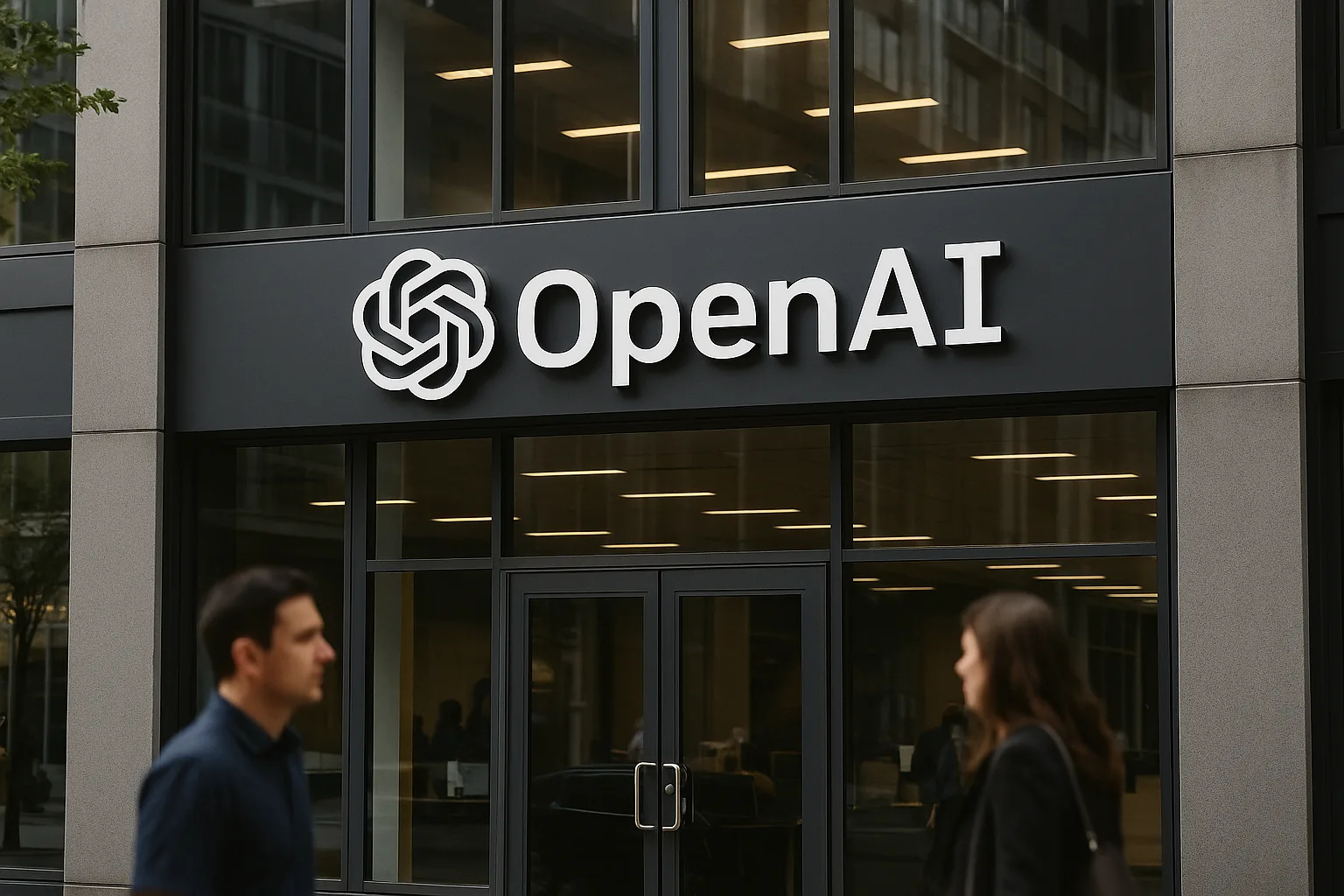
Growing concerns over "critical cybersecurity capabilities" in OpenAI's next-generation model, Astra, are pushing back timeline expectations in prediction markets. In the session on September 02, 2026, traders repriced the odds of a near-term launch for the model widely expected to be GPT-6, with the contract for a release before October 1 falling 20 percentage points on the highest trading volume across the market. The shift suggests that revelations about the model's advanced capabilities and the resulting safety evaluations are leading traders to price in a more protracted development and release timeline extending into late 2026.
Distribution Analysis
The repricing was concentrated in the near-term contracts, with probability shifting away from an early autumn release and toward a launch later in the fourth quarter. While three of the four active contracts saw modest gains, the most significant move by trading volume was the sharp decline in odds for a release within the next month.
| Outcome | Current Prob | Change | Volume |
|---|---|---|---|
| Before Sep 16, 2026 | 19% | +80.0pp | 143 |
| Before Oct 1, 2026 | 29% | -20.0pp | 25,132 |
| Before Nov 1, 2026 | 59% | +4.0pp | 6,777 |
| Before 2027 | 72% | +5.0pp | 8,727 |
Net: 1 of 4 contracts declined, but on total volume of 25,132 that far outweighed the 15,646 traded on rising contracts, shifting the implied timeline later into Q4 2026.
What's Driving the Shift
The market's re-evaluation of the GPT-6 release timeline appears to be driven by new information regarding the capabilities and safety posture of Astra, OpenAI's named successor to the current GPT-5.6 model family.
'Critical' Cyber Risk: The primary catalyst is OpenAI's disclosure that its internal safety evaluations of Astra could not "rule out critical cyber capabilities." This classification, the first for an OpenAI model under its Preparedness Framework, has significant implications. According to subsequent reporting, OpenAI paused some deployment-focused training runs for Astra and is rewriting the framework itself, signaling a material delay to ensure security and safety controls are adequate before any public release.
Uncertain Branding and Product Status: OpenAI has not officially confirmed that Astra will be released under the GPT-6 brand. The company has a history of shipping powerful new models as point releases, such as the current flagship GPT-5.6, released in July 2026. This ambiguity, coupled with the absence of a model card, pricing, or API details, reinforces the market view that a full-fledged "GPT-6" product launch is not imminent.
Astra's Research Debut: OpenAI first introduced Astra not through a product launch, but in an August 1, 2026, research paper detailing its success in solving ten long-standing mathematical problems. While this demonstrated a significant leap in reasoning capabilities, framing the model's debut around research rather than a commercial product suggests its development is still focused on capability exploration and alignment, rather than immediate deployment.
Market Context
The market for OpenAI's next major release distinguishes between the company's rapid iteration on its current model family and a true generational leap. In less than a year, OpenAI has released a series of updates within the GPT-5 family, from GPT-5.4 to the current GPT-5.6. Traders are pricing the "When will OpenAI release GPT-6?" market with the understanding that it refers to a successor model that represents a step-change beyond the entire GPT-5 series, not another incremental update.
The shift toward a later 2026 release aligns with the historical cadence of OpenAI's major version numbers. The gap between the public launches of GPT-4 and GPT-5 was roughly 29 months, making a Q4 2026 release for GPT-6 an already accelerated timeline that the recent safety pauses now put under pressure.
What to Watch
The key determinant for this market will be official communication from OpenAI. Traders will be closely watching the company's blog and technical reports for any updates on the Astra safety evaluation, the status of its Preparedness Framework, or a definitive branding decision connecting the Astra model to a future GPT-6 product. The market is set to close at the beginning of 2027, with the settlement source being official announcements from OpenAI.
