
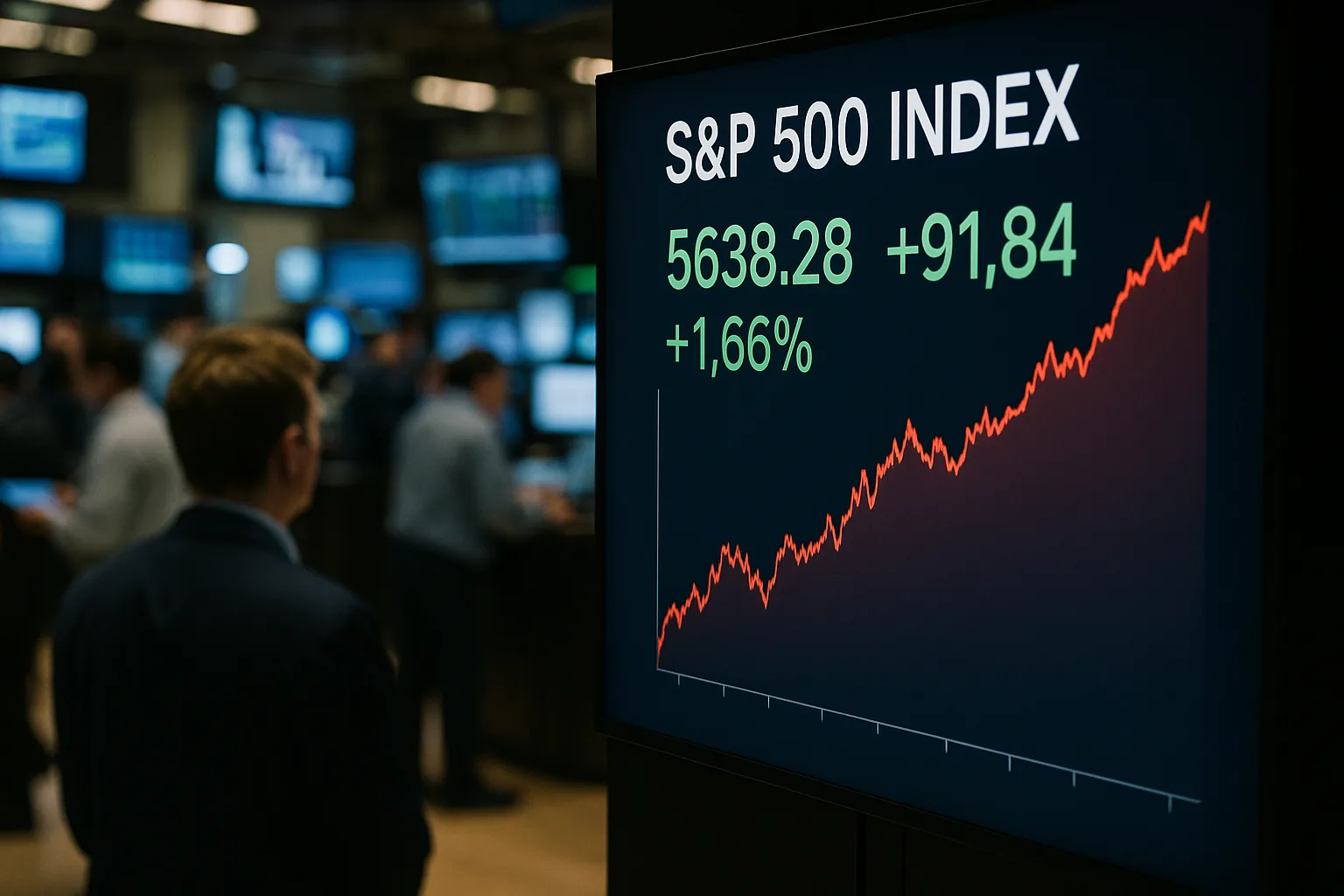
A bullish S&P 500 forecast from UBS on Tuesday, July 21, 2026, coincided with a shift in prediction market sentiment, as traders priced lower odds of a severe market downturn this year. While one low-volume contract betting on a drop to "6,000 or below" saw a significant percentage-point spike, the broader, high-volume trend showed conviction moving away from the most bearish outcomes. The move suggests growing trader alignment with increasingly optimistic Wall Street targets, pushing back against more cautious outlooks for the remainder of the year.
The repricing occurred in a Kalshi market asking how low the S&P 500 index will trade in 2026. Across the five most active contracts, three saw their implied probabilities fall on significant trading volume, indicating a decreased appetite for bets on a major correction from the index's current levels near all-time highs. The most notable high-conviction move was a decline in the probability of the index falling to "5,900 or below," which occurred on the day's highest volume.
Distribution Analysis
| Outcome | Current Prob | Change | Volume |
|---|---|---|---|
| 6,300 or below | 32% | -1.6pp | 505 |
| 6,200 or below | 30% | -1.7pp | 419 |
| 6,100 or below | 25% | +14.3pp | 223 |
| 6,000 or below | 19% | +16.7pp | 3 |
| 5,900 or below | 6% | -2.8pp | 1,225 |
Net: 3 of 5 contracts declined on total volume of 2,149, shifting the implied consensus away from severe bear market scenarios.
What's Driving the Shift
The market's repricing appears to be influenced by several factors, chief among them a series of increasingly bullish analyst forecasts for the S&P 500.
Upgraded Wall Street Targets: The shift directly coincides with a UBS report on July 21 hiking its year-end S&P 500 target to 8,100. This follows other recent optimistic calls, including a target of 8,250 from Yardeni Research and a raised forecast of 7,800 from JPMorgan. These bullish revisions provide a strong counter-narrative to persistent recession and correction fears.
Strong Earnings Momentum: The bullish calls are grounded in strong corporate earnings. In late May, Goldman Sachs raised its year-end forecast to 8,000, citing that profit growth has "powered the entire S&P 500 return so far this year." This view is supported by analysis showing aggregate forward earnings for the S&P 500 and other indices continue to climb to record highs.
Pushback Against Bearish Outlooks: The move away from deep correction scenarios comes despite some prominent cautious calls. Bank of America has recently maintained a more conservative year-end price target of 7,100, warning that "speculation has reached extreme levels." The market's high-volume selling of the most bearish contracts suggests traders are currently weighing the bull case more heavily.
Market Context
With the S&P 500 trading near 7,500 for much of the past two months, this market effectively gauges trader conviction in a significant reversal. A drop to 6,000 would represent a decline of over 20%—a technical bear market.
The volume distribution provides critical context for Tuesday's price action. The contracts for a fall to "6,300 or below," "6,200 or below," and "5,900 or below" saw their probabilities decline on a combined volume of over 2,100 contracts. In contrast, the much-publicized 16.7 percentage-point jump in the "6,000 or below" contract occurred on a negligible volume of just 3 contracts, indicating it may be an artifact of a thinly traded book rather than a broad-based shift in sentiment. The highest-volume contract of the day was "5,900 or below," which saw traders actively selling, reducing its probability by 2.8 percentage points.
What to Watch
The primary driver for the S&P 500, and therefore this market, remains corporate earnings. The ongoing Q2 earnings season will be critical in validating the optimistic forecasts from firms like UBS and Goldman Sachs. Key inflation and employment data releases from the Bureau of Labor Statistics will also influence sentiment, as they factor heavily into the Federal Reserve's monetary policy decisions. This market is scheduled to close on January 1, 2027, and will settle based on the lowest trading price of the S&P 500 index during the 2026 calendar year.
