
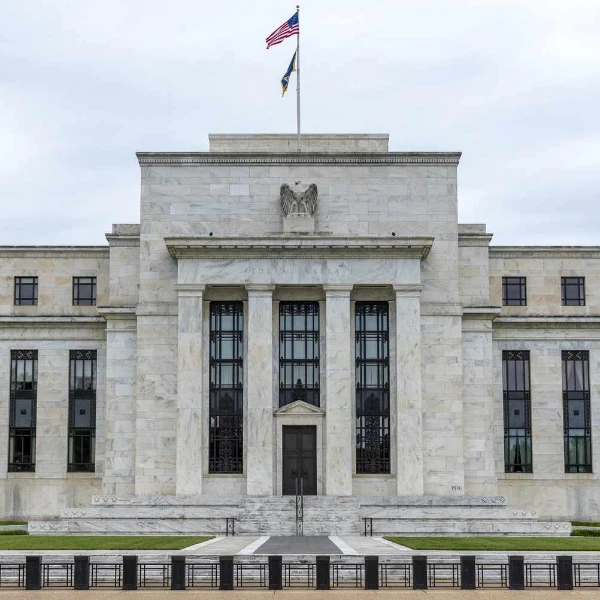
Fed decision in Jul 2026?
Short Answer
1. Market Behavior & Drivers
- Since last update (~24h): Model-led probability for "Fed maintains rate" increased by 7.4pp; edge compressed.
- The model-led probability of a 25bps hike decreased by 7.0pp; edge compressed.
- Confidence score increased by 3.0pp, indicating strengthened internal conviction.
- The Fed likely maintains rates, driven by cooler June CPI data on July 14, 2026.
- A 25bps hike is a minority view, despite Chair Warsh's explicit hawkish stance.
Current Context
Sources (9)
- 1Federal Reserve Board - Calendar: July 2026federalreserve.gov
- 2The Fed - Meeting calendars and informationfederalreserve.gov
- 3Federal Reserve Board - Federal Open Market Committee announces its tentative meeting schedule for 2025 and 2026federalreserve.gov
- 4seekingalpha.comOctagon Agent
- 5FOMC Meeting Schedule July 2026 - Dates & Timefedratecalc.com
- 6July 28-29 FOMC Meeting: What to Expect After CPI 4.2% and the Warsh Message – StocksAnalyzer Blogstocksanalyzer.app
- 7Federal Reserve ratespolymarket.com
- 8CPI Falls in June: Trade on Prediction Markets for Fed...federalnewsnetwork.com
- 9www.cnbc.comOctagon Agentcnbc.com
2. Price Chart
Historical Price (Probability)
3. Significant Price Movements
Notable price changes detected in the chart, along with research into what caused each movement.
📉 July 14, 2026: 28.0pp drop
Price decreased from 35.0% to 7.0%
Outcome: Hike 25bps
📈 July 13, 2026: 12.0pp spike
Price increased from 23.0% to 35.0%
Outcome: Hike 25bps
📉 July 02, 2026: 9.0pp drop
Price decreased from 20.0% to 11.0%
Outcome: Hike 25bps
Sources (11)
- 1Cooler CPI, Hotter Risk Appetite: Data Slams Door on July Fed Rate Hike - State Street SPDR S&P 500 ETF T - Benzingabenzinga.com
- 2U.S. June CPI fell 0.4%, likely cooling move toward Fed rate hikescoindesk.com
- 3US CPI Falls First Time Since 2020, July Fed Hike Odds Drop to 20% — DailyXBTdailyxbt.com
- 4June CPI Cools, Dents Fed Rate Hike Odds; Real Yields Pressure Stocks | StockTistockti.com
- 5Fed's Warsh Says CPI Slowdown Not Enough, Won't Tolerate Inflation - Seoul Economic Dailyen.sedaily.com
- 6Speech by Governor Waller on the economic outlook - Federal Reserve Boardfederalreserve.gov
- 7Fed Should Hike “in the Near Term” if CPI & PPI this Week Are “Hot”: Fed’s Waller. So at the July Meeting? Treasury Yields Jump | Wolf Streetwolfstreet.com
- 8Fed’s Waller says rate hike may be needed if core inflation stays hot | 96.3 Jack FM | Playing What We Want | Nashville, TN963jackfm.com
- 9Fed's Waller 'concerned' about rising inflation | American Bankeramericanbanker.com
- 10seekingalpha.comOctagon Agent
- 11Traders Shift Odds Toward No July Fed Rate Hike After Cooler June Inflationtradevae.com
4. Market Data
Contract Snapshot
This market resolves to Yes if the Federal Reserve announces a 0bps hike on July 29, 2026, or if the scheduled FOMC meeting for that date is canceled. Conversely, it resolves to No if any other rate change occurs, given its mutually exclusive nature where only one outcome can be Yes. The market opens on September 29, 2025, closes on July 29, 2026 at 1:59pm EDT, with a projected payout at 2:09pm EDT, and outcomes are verified by the Federal Reserve.
Market Discussion
The market overwhelmingly anticipates the Federal Reserve will maintain interest rates in July 2026, with a 93% probability, while a 25bps hike has a 7% chance and a cut is deemed highly unlikely at less than 1%. Traders betting on a rate cut cite "0% annualized core CPI" and a general desire for lower rates, though this perspective faces skepticism from others who question if economic conditions would warrant such a move. The strong consensus reflects a broad expectation that current monetary policy will persist.
5. Trader Dashboard
6. What key economic data releases between the June and July 2026 FOMC meetings could compel the Fed to hike rates?
| June PCE price index release | July 25, 2026 [1] |
|---|---|
| Market-implied July rate hike probability (after June CPI) | 10-15% [2][3][4] |
| Polymarket 'No change' probability for July 2026 FOMC | 78-94% [5][1][4] |
Sources (6)
- 1Stunning CPI Miss Kills July Rate Hike, But Hormuz Puts September Back on Tabletechtimes.com
- 2Top Fed officials embrace cooler inflation reading, clamor for more - SRN Newssrnnews.com
- 3US core inflation cools to lowest since February, dimming case for Fed rate hikeproactiveinvestors.com
- 4The Overnight Report: US Inflation Softens - FNArena.comfnarena.com
- 5Polymarket Fed decision July 2026: is no change at 78¢ value? - The Fair Stakethefairstake.com
- 6Daybreak Weekend: US Jobs, Wimbledon Tournament, Vietnam Eco | Bloomberg Daybreak: US Editionyoutube.com
7. What is the primary evidence supporting the minority view that the FOMC will enact a 25bps hike in July 2026?
| FOMC Participants Projecting Hike | Nine of 18 FOMC participants by year-end 2026 (June 2026 SEP) [1][2][3] |
|---|---|
| Median 2026 Rate Projection | Rose to 3.8% (June 2026 SEP) [1][2][3] |
| Core PCE Inflation | Sticky above 3% [1][2] |
Sources (9)
- 1Kalshi Fed July 2026 odds: is a 25bps hike at 10¢ value? - The Fair Stakethefairstake.com
- 2Fed decision in Jul 2026? — FutureSearchfuturesearch.ai
- 3Polymarket Fed decision July 2026: is no change at 78¢ value? - The Fair Stakethefairstake.com
- 4GS_Q12026, Page: 6Octagon Agentoctagonai.co
- 5GS_Q12026, Page: 5Octagon Agentoctagonai.co
- 6BLK_Q12026, Page: 1Octagon Agentoctagonai.co
- 7C_Q12026, Page: 1Octagon Agentoctagonai.co
- 8C_Q12026, Page: 2Octagon Agentoctagonai.co
- 9MS_Q12026, Page: 1Octagon Agentoctagonai.co
8. How does Fed Chair Kevin Warsh's stated policy on inflation compare to that of his predecessor in the run-up to the July 2026 decision?
| Fed Chairman (as of July 15, 2026) | Kevin Warsh [1][2][3][4][5] |
|---|---|
| Appointment Date | May 22, 2026 [1][2][3][4][5] |
| Inflation Policy Stance | Explicitly hawkish [6][7][8][9][10][11] |
Sources (11)
- 1Semiannual Monetary Policy Report to the Congress - Federal Reservefederalreserve.gov
- 2Warsh vows to crush inflation but offers no hint on the Fed's next moveapnews.com
- 3Warsh pledges Fed policy 'regime change' to rid inflation 'tax... - CNBCcnbc.com
- 4Warsh Tells Congress the Fed Has 'No Tolerance' for High Inflation - WSJwsj.com
- 5Warsh Reiterates Fed's Pledge to Get Inflation Down but Doesn't Specify...nytimes.com
- 6JPM_Q12026, Page: 11Octagon Agentoctagonai.co
- 7JPM_Q12026, Page: 5Octagon Agentoctagonai.co
- 8JPM_Q12026, Page: 4Octagon Agentoctagonai.co
- 9JPM_Q12026, Page: 3Octagon Agentoctagonai.co
- 10JPM_Q12026, Page: 2Octagon Agentoctagonai.co
- 11seekingalpha.comOctagon Agent
9. With no Summary of Economic Projections (SEP) in July 2026, which alternative data will the FOMC and market analysts prioritize for forward guidance?
| SEP Status for July 2026 | No Summary of Economic Projections [1][2] |
|---|---|
| Primary Policy Indicator | Labor-market and inflation data [1][2] |
| Chair Warsh's June 2026 Stance | Declined individual rate projection [3] |
Sources (5)
- 1MS_Q12026, Page: 8Octagon Agentoctagonai.co
- 2MS_Q12026, Page: 1Octagon Agentoctagonai.co
- 3Fed Holds Rates June 2026; Dot Plot Flips to a Hikestocktitan.net
- 4Stunning CPI Miss Kills July Rate Hike, But Hormuz Puts September Back on Tabletechtimes.com
- 5Warsh says Fed has 'no tolerance' for high inflation but provides no hints on next moveaudacy.com
10. What potential international economic shocks from the ECB or China before July 2026 could shift the Federal Reserve's domestic policy focus?
| Primary International Shocks before July 2026 | ECB-driven energy/geopolitical inflation and China-driven disinflation/supply-chain shocks [1][2][3][4][5][6] |
|---|---|
| Potential Impact of ECB Shocks | Higher global energy prices, second-round inflation, dollar strength, and tighter global financial conditions in the U.S. [1][2][3][4][5][6] |
| Potential Impact of China Shocks | Lower goods prices and softer commodities (disinflation) or supply disruptions and higher goods-price uncertainty (inflation) [1][2][3][4][5][6] |
11. What Could Change the Odds
Key Catalysts
Key Dates & Catalysts
- Strike Date: July 29, 2026
- Expiration: October 28, 2026
- Closes: July 29, 2026
Sources (8)
- 1The Fed - Meeting calendars and informationfederalreserve.gov
- 2Federal Reserve Board - Calendar: July 2026federalreserve.gov
- 3Federal Reserve Board - Federal Open Market Committee announces its tentative meeting schedule for 2025 and 2026federalreserve.gov
- 4FOMC Meeting Schedule July 2026 - Dates & Timefedratecalc.com
- 5Fed Decision in July? Trading Odds & Predictions 2026 | Polymarketpolymarket.com
- 6July 2026 FOMC Odds: Will the Fed Cut? (Live) | MacroOddsmacroodds.com
- 7CPI Falls in June: Trade on Prediction Markets for Fed Decision in July 2026federalnewsnetwork.com
- 8Polymarket Fed decision July 2026: is no change at 78¢ value? - The Fair Stakethefairstake.com
13. Related News
Waller's Dovish Remarks on Jobs Data Drive Fed Hike Odds Sharply Lower
Comments from Federal Reserve Governor Christopher J. Waller highlighting a weak June jobs report and the risk of "overtightening" monetary policy appear to have triggered a sharp, dovish repricing in...
Waller Speech Sparks Hawkish Shift in July Fed Rate Bets
Remarks from Federal Reserve Governor Christopher J. Waller on Monday, July 13, 2026, coincided with a significant repricing in prediction markets for the Federal Open Market Committee's (FOMC) upcomi...
14. Historical Resolutions
Historical Resolutions: 5 markets in this series
Outcomes: 1 resolved YES, 4 resolved NO
Recent resolutions:
- KXFEDDECISION-26JUN-H26: NO (Jun 17, 2026)
- KXFEDDECISION-26JUN-H25: NO (Jun 17, 2026)
- KXFEDDECISION-26JUN-H0: YES (Jun 17, 2026)
- KXFEDDECISION-26JUN-C26: NO (Jun 17, 2026)
- KXFEDDECISION-26JUN-C25: NO (Jun 17, 2026)
