
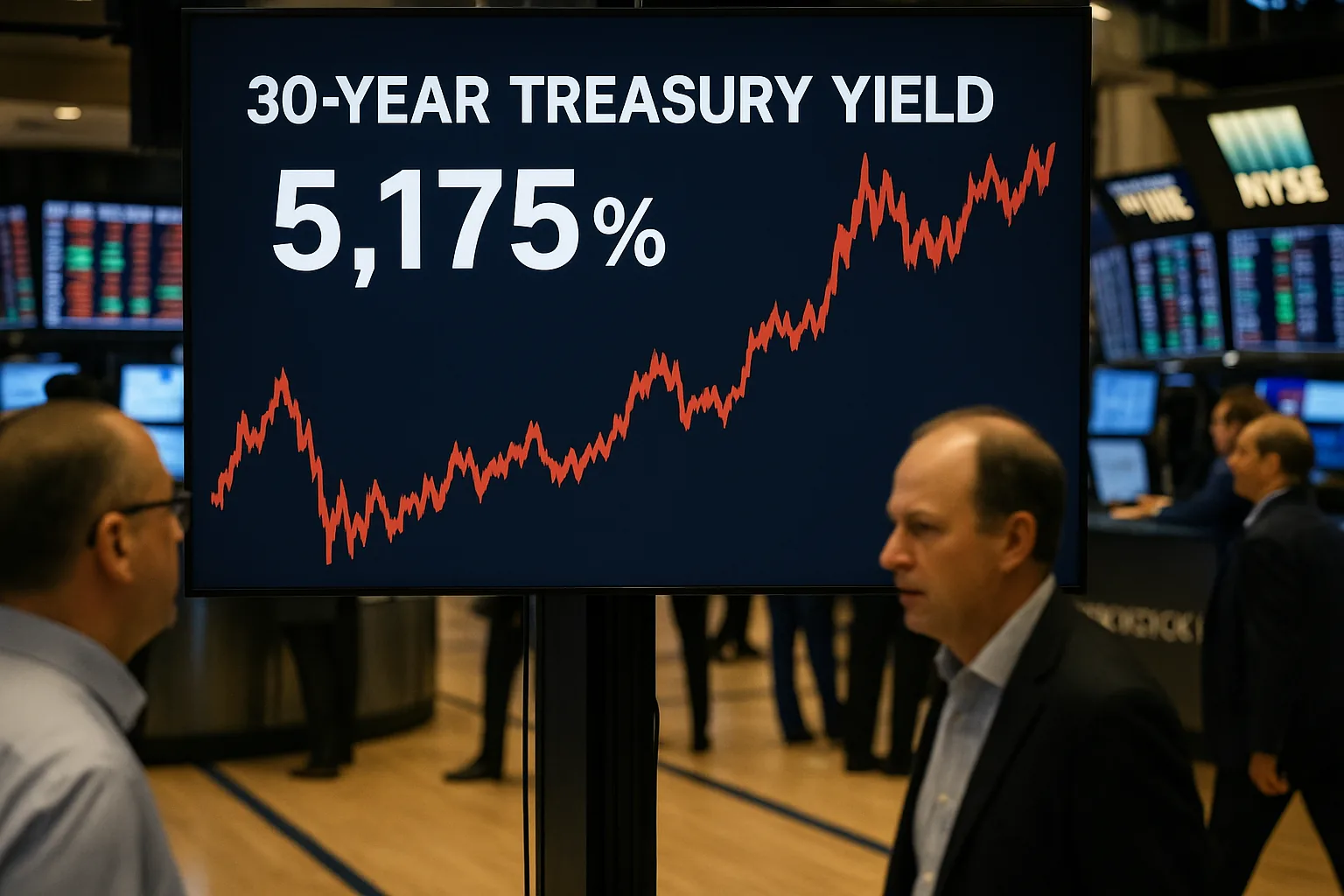
A global bond selloff that pushed the 30-year U.S. Treasury yield to its highest level since 2004 on Thursday triggered a sharp repricing in prediction markets, as traders boosted the implied probability of yields climbing further to near certainty. In Friday's session (September 25, 2026), the contract for the 30-year yield reaching "5.48% or above" by January 1, 2027, surged 56.0 percentage points to 98.0% on the Kalshi exchange. The broad-based move across multiple contracts suggests a solidifying consensus that the long bond yield will not only sustain its recent gains but will likely breach the 5.50% threshold before the new year.
The repricing followed a tumultuous week in fixed income, with the 30-year cash Treasury yield hitting 5.44% on Thursday amid persistent inflation fears, surging oil prices, and heavy debt issuance from both government and corporate sectors. The velocity of the move has forced a rapid reassessment of where long-term rates may settle, with prediction markets now pricing in levels that just weeks ago were considered tail risks.
Distribution Analysis
All seven tracked contracts, each representing a different yield threshold, saw their probabilities rise, signaling a strong directional conviction among traders. The most significant move was in the contract closest to the current yield, which now implies that only four more basis points of upward movement are needed to resolve.
| Outcome | Current Prob | Change | Volume |
|---|---|---|---|
| 5.48% or above | 98% | +56.0pp | 200 |
| 5.51% or above | 95% | +11.0pp | 136 |
| 5.49% or above | 93% | +4.0pp | 339 |
| 5.54% or above | 92% | +23.0pp | 575 |
| 5.5% or above | 91% | +6.0pp | 540 |
| 5.53% or above | 90% | +25.0pp | 200 |
| 5.52% or above | 85% | +2.0pp | 136 |
Net: 7 of 7 contracts rose on 2,126 in total volume, shifting the implied consensus decisively toward higher yields.
What's Driving the Shift
The sharp repricing appears to be a direct reaction to the underlying Treasury market breaching key technical and psychological levels, driven by a confluence of macroeconomic pressures.
Multi-Decade Highs Breached: The primary catalyst was the cash 30-year Treasury yield itself reaching 5.44% on September 24. With yields now firmly at levels unseen in 22 years, prediction market contracts for nearby thresholds have become near-certainties, as traders price in momentum and volatility. The 30-year yield rose 15 basis points during the week ending September 25.
Inflation and Energy Shocks: The move is underpinned by worsening inflation expectations. A fresh jump in oil prices, with Brent crude approaching $110 a barrel amid geopolitical tensions, has renewed concerns about cost pressures. In a recent Bloomberg survey, three-quarters of market participants identified a surge in energy prices as the biggest risk to the bond market.
Surging Debt Supply: Markets are grappling with what one analyst called a "torrent of bond sales". This includes massive U.S. Treasury issuance to fund ongoing deficits and a wave of corporate debt to finance the "historic AI boom". This flood of supply requires higher yields to attract sufficient demand from investors.
Market Context
The conviction displayed in prediction markets aligns with, and in some cases outpaces, professional forecasts. A Bloomberg Markets Pulse survey published Thursday found that over half of respondents expect the 30-year yield to exceed 6% by the end of 2026.
Other econometric models also point toward higher rates, though some are now lagging the market's aggressive pricing. One model forecasts the January 2027 monthly average yield at 5.60%, while another market-consensus model projected a January 2027 average of 5.41%. The swiftness of the recent selloff has rendered many earlier projections obsolete, a dynamic reflected in the rapid repricing on Kalshi's platform.
What to Watch
The market will resolve based on the daily 30-year Treasury yield published by the U.S. Department of the Treasury. The key question is whether the yield reaches or exceeds the specified thresholds at any point before the market's closure on January 1, 2027. Traders will be closely monitoring upcoming inflation data, Federal Reserve commentary, and developments in energy markets for signs of whether this new, higher-rate regime will be sustained.
