
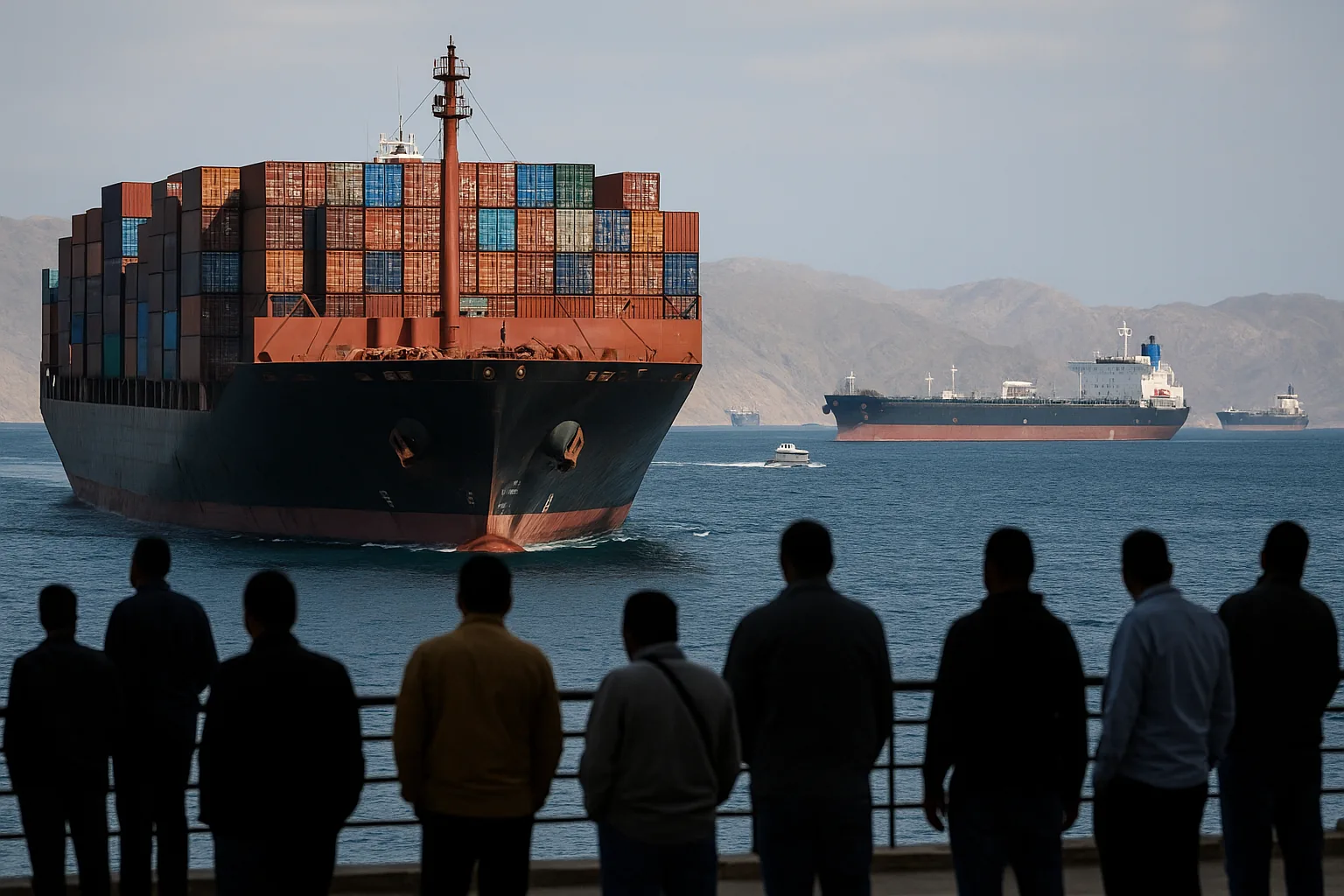
The consolidation of control over Yemen's western coast by Iran-aligned Houthi forces through September 12, 2026, triggered a sharp upward repricing in prediction markets for shipping traffic through the Bab el-Mandeb Strait. In the session on Saturday, September 12, the contract for weekly traffic to be "Above 175" vessels jumped 32 percentage points to 59%, as traders appeared to price in a new, more stable status quo following the end of active fighting in the immediate vicinity of the critical chokepoint.
The market shift suggests an interpretation that with territorial control secured, Houthi forces may be incentivized to allow most international shipping to continue, a stance seemingly reinforced by their public statements. This repricing occurred despite on-the-ground data showing traffic had recently fallen to multi-year lows of just 26 vessels per day, less than half the pre-crisis average. The market's upward move indicates traders are betting that the resolution of uncertainty outweighs the risk of a full blockade.
Distribution Analysis
The repricing was seen across all contracts in the market, which resolves based on IMF PortWatch data for total transits between September 14 and September 20. The most significant move occurred in the highest-volume contract.
| Outcome | Current Prob | Change | Volume |
|---|---|---|---|
| Above 150 | 85% | +64.0pp | 11 |
| Above 175 | 59% | +32.0pp | 660 |
| Above 225 | 24% | +10.0pp | 42 |
Net: 3 of 3 contracts rose on 713 total volume, shifting implied expectations for the week's traffic sharply higher.
What's Driving the Shift
The market repricing appears to be driven by a tactical shift on the ground and the accompanying messaging from the Houthi group.
Consolidation of Control: In the days leading up to September 12, Houthi militants captured the coastal city of Mocha and seized the strategic Perim Island, which sits directly in the Bab el-Mandeb Strait. This territorial gain, reported by Yemeni government sources, effectively gives the group direct physical control over the key maritime chokepoint, resolving the immediate uncertainty of active fighting in the area. Traders appear to be pricing in the idea that a stable Houthi-controlled coastline is less chaotic than one being actively contested.
Houthi Messaging: Following their advance, Houthi officials issued statements aimed at reassuring the shipping industry. A spokesperson stated that international navigation would remain "free, safe and smooth" for vessels not linked to their adversaries. The Houthi-run al-Masirah TV claimed on September 13 that 73 vessels had crossed the strait in the prior 48 hours, an average of 36.5 per day. This figure, if accurate, would represent a significant increase from the 26-per-day average reported earlier in the week and supports the market's move toward higher traffic counts.
Low-Volume Anomaly: It is notable that the contract with the largest percentage-point gain, "Above 150," traded on extremely low volume (11 contracts). The more liquid "Above 175" contract, which traded 660 contracts, saw a more moderate but still significant 32-point rise. This suggests the core of market conviction lies in traffic stabilizing just above recent lows, rather than a full-scale recovery.
Market Context
The current market pricing implies a high probability that weekly traffic will exceed 150 vessels, equivalent to an average of about 21.5 ships per day. The 59% probability assigned to the "Above 175" level (25 ships per day) aligns closely with the most recent independent ship-tracking data showing daily averages of 26 vessels.
These levels remain severely depressed compared to historical norms. Prior to the escalation of Houthi attacks in late 2023, the strait handled an average of around 71 vessels per day, meaning the market is pricing in a fragile stabilization at roughly one-third of normal capacity. The risk to commercial shipping in the region remains rated as "substantial" by the Joint Maritime Information Center, and many major container lines continue to divert traffic around the Cape of Good Hope.
What to Watch
The market will resolve based on the total number of transit calls reported by the IMF PortWatch for the seven-day period from September 14 to September 20, 2026. The initial data for Monday and Tuesday will be critical in confirming whether the Houthi-claimed increase in traffic materializes. Regionally, diplomatic talks between Iran and the UAE regarding the Strait of Hormuz, set for September 14, could also influence broader sentiment on maritime security in the Middle East.
