
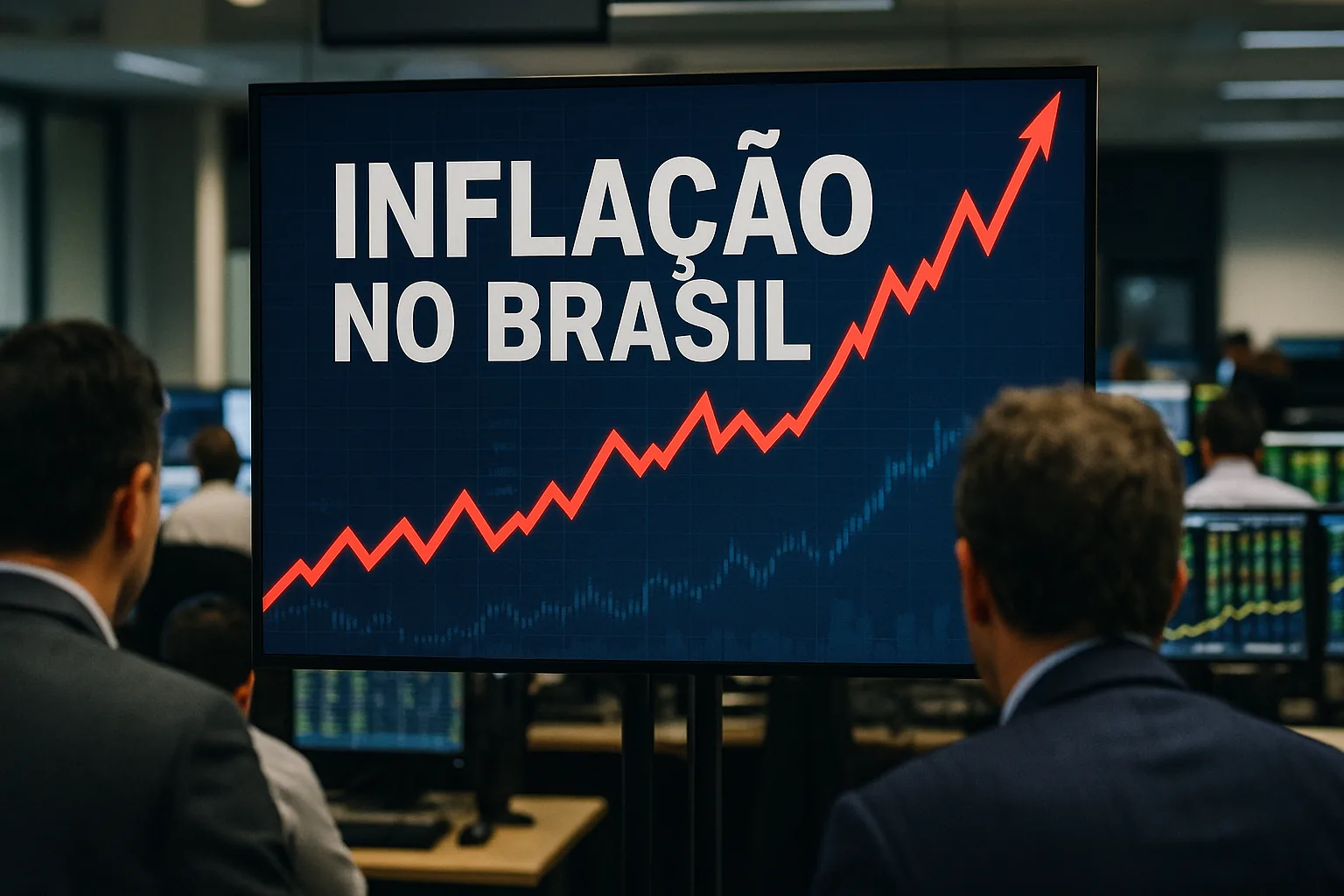
An updated Central Bank Focus survey showing rising inflation forecasts for Brazil triggered a dramatic repricing in prediction markets on Monday, September 28, 2026. The probability that Brazil's year-end 2026 inflation rate will be below 4.00% collapsed from 83% to just 6% in a single session. The move signals that traders are now overwhelmingly aligned with economic forecasts that see the country's IPCA inflation index finishing the year well above the official target range.
The sharp repricing follows the release of the latest weekly Focus survey, which showed the median analyst forecast for 2026 year-end inflation rose for the second consecutive week to 4.99%. This data reinforced a hawkish report from Brazil's Central Bank (BCB) published days earlier, on September 24, which projected year-end inflation at 5.2% and estimated a 90% probability of breaching the 4.50% target ceiling. The market's 77.0 percentage point drop on high volume indicates strong conviction that lower inflation outcomes are now highly unlikely.
Distribution Analysis
The market, which resolves based on the official 12-month IPCA reading for December 2026, is structured as a single binary contract. The near-total collapse in probability for a sub-4.00% outcome reflects a decisive shift toward higher inflation expectations.
| Outcome | Current Prob | Change | Volume |
|---|---|---|---|
| In Dec 2026 (sub-4.00%) | 6% | -77.0pp | 95,939 |
Net: The contract saw a significant decline on high volume, indicating a sharp drop in expectations for inflation to fall below 4.00%.
What's Driving the Shift
Rising Analyst Expectations: The primary catalyst for the repricing was the Central Bank's weekly Focus survey released on September 28. The report showed the median forecast for 2026 IPCA inflation rose to 4.99% from 4.92% the prior week. More recent estimates within the survey, taken over the last five business days, were even higher, at a median of 5.08%.
Hawkish Central Bank Report: The Focus survey data landed in a market already primed by the Central Bank's own downbeat assessment. In its quarterly Monetary Policy Report released September 24, the BCB projected year-end 2026 inflation would reach 5.2%. The bank cited a tight labor market, persistent global uncertainty, and de-anchored inflation expectations as key concerns justifying its restrictive monetary policy.
Persistent Above-Target Inflation: While recent monthly inflation has moderated, policymakers have consistently warned that the path back to the target remains challenging. The BCB's official inflation target is 3.00%, with a tolerance interval up to 4.50%. The Copom meeting minutes from mid-September highlighted that inflation expectations for both 2026 (at 4.9%) and 2027 (at 4.3%) remained stubbornly above the target, requiring "serenity and caution" in monetary policy.
Market Context
The 6% probability assigned by the market for inflation to end below 4.00% is a stark reflection of the consensus forming among economists and Brazil's monetary authorities. The Focus survey's 4.99% median and the Central Bank's 5.2% forecast both point to a significant breach of the 4.50% upper tolerance limit for the IPCA.
The repricing aligns the prediction market more closely with data from other venues tracking the same event. For example, related multi-bracket markets on the Polymarket platform show traders assign the highest probability, roughly 46%, to an outcome in the 5.00-5.49% range, with a cumulative 90% chance of inflation ending above the 4.50% target ceiling. The sharp sell-off in the sub-4.00% contract on the Kalshi exchange suggests traders who previously saw a path to a more benign outcome have now capitulated to the more hawkish consensus.
What to Watch
The primary variable for this market is Brazil's official 12-month IPCA inflation rate for December 2026. The contract will settle based on the monthly report from the Brazilian Institute of Geography and Statistics (IBGE). This data is typically released in the first half of the following month, making early January 2027 the key period for resolution. Until then, traders will closely watch incoming monthly IPCA prints, subsequent Central Bank Focus surveys, and any change in tone from the Copom for further guidance.
