
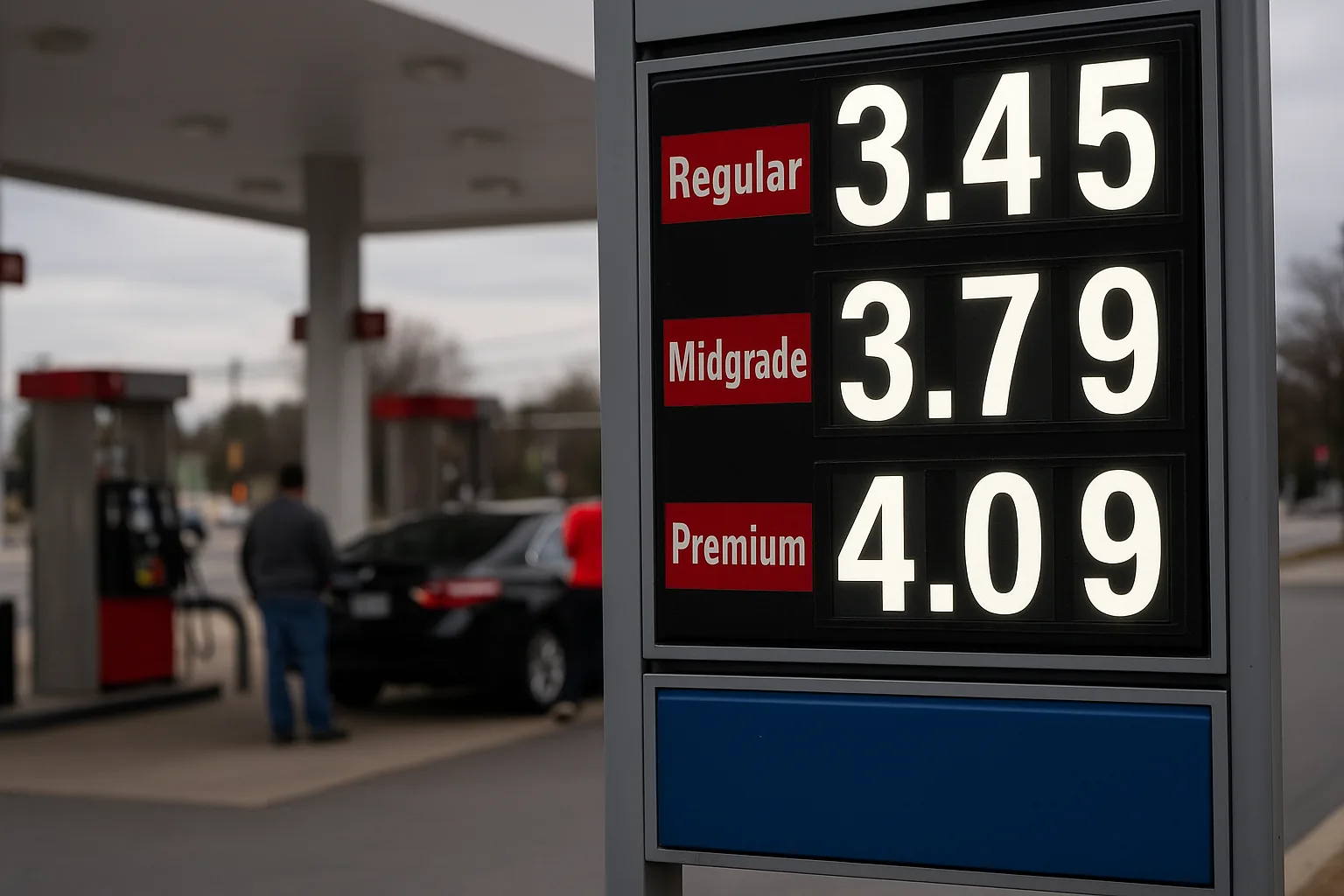
A pullback in crude oil prices on Friday prompted a significant repricing in markets for the U.S. national average gasoline price, as traders scaled back bets that pump prices would continue their sharp ascent. In the session ending September 18, 2026, contracts on the Kalshi exchange for gasoline exceeding $4.53 per gallon experienced a dramatic drop, falling 81 percentage points to a 6% implied probability. The move suggests a consensus is forming that while pump prices remain elevated, a near-term ceiling may be forming as the cost of crude, gasoline's primary input, shows signs of easing.
The repricing occurred even as the national average for regular gasoline continued to climb, hitting approximately $4.47 per gallon according to AAA data. This week's rise has been driven by persistent geopolitical tensions in the Middle East and ongoing disruptions to global supply chains. However, the sharp, high-volume sell-off in contracts pricing in the most extreme price hikes indicates that traders are weighing the cooling crude market more heavily than the week's prevailing bullish sentiment.
Distribution Analysis
The market shift was not isolated to a single outcome. Probabilities fell across nearly all contracts for prices above $4.48 per gallon, with the most significant declines concentrated in the $4.50 to $4.56 range. Conversely, the contract for prices "Above 4.4700" gained 10 percentage points, suggesting traders see prices consolidating just below the $4.50 mark.
| Outcome | Current Prob | Change | Volume |
|---|---|---|---|
| Above 4.2000 | 99% | ~0pp | 736 |
| Above 4.3000 | 99% | ~0pp | 100 |
| Above 4.3400 | 99% | ~0pp | 137 |
| Above 4.3600 | 99% | ~0pp | 16,946 |
| Above 4.3800 | 99% | ~0pp | 336 |
| Above 4.4200 | 99% | ~0pp | 421 |
| Above 4.4400 | 99% | -1.0pp | 905 |
| Above 4.4600 | 99% | -6.0pp | 18,887 |
| Above 4.3200 | 98% | ~0pp | 28,488 |
| Above 4.4000 | 98% | ~0pp | 1,319 |
| Above 4.4700 | 92% | +10.0pp | 1,219 |
| Above 4.4800 | 85% | -27.0pp | 12,091 |
| Above 4.4900 | 75% | -40.0pp | 6,030 |
| Above 4.5000 | 36% | -56.0pp | 15,643 |
| Above 4.5200 | 19% | -29.0pp | 26,229 |
| Above 4.5100 | 13% | -65.0pp | 4,539 |
| Above 4.5300 | 6% | -81.0pp | 2,289 |
| Above 4.5400 | 2% | -13.0pp | 15,224 |
| Above 4.5800 | 2% | ~0pp | 12,635 |
| Above 4.5600 | 1% | -11.0pp | 16,974 |
| Above 4.6000 | 1% | ~0pp | 34,614 |
Net: 10 of 21 active contracts declined on over 118,000 in total 24-hour volume, shifting the implied ceiling for peak gas prices lower.
What's Driving the Shift
The market repricing appears to be a direct reaction to developments in the global oil markets, weighed against the backdrop of an already-stressed U.S. consumer.
Crude Oil Reversal: The primary catalyst appears to be a drop in crude oil prices during Friday's trading session. While remaining historically high, WTI crude settled around $100.30, and Brent crude settled near $104.87. As the largest component of gasoline's retail cost, any sustained downturn in crude futures directly reduces upward pressure on pump prices, a factor traders quickly priced in.
Consolidation Below a Psychological Barrier: The market is now pricing a high probability (92%) of the national average exceeding $4.47, a level already reached this week. However, the odds drop precipitously for prices above $4.50. This pattern suggests traders anticipate prices will remain high but are now less convinced of a continued surge toward the all-time record of just over $5 per gallon set in June 2022.
Persistent Supply Pressures: The broader market context remains bullish for fuel prices. The ongoing war with Iran has disrupted oil flows through the Strait of Hormuz, and attacks on Saudi oil infrastructure continue to pose a threat to supply. These factors had pushed prices higher throughout the week, setting the stage for Friday's sharp reversal as new information about crude prices emerged.
Market Context
The national average gas price has been on a steady climb, rising nearly 16 cents in the past week to $4.43 as of September 17, according to AAA. The U.S. Energy Information Administration's (EIA) latest data, for the week of September 14, registered the average at $4.455 per gallon, a 3.73% increase from the prior week.
This surge has been particularly painful for the broader economy due to a parallel spike in diesel fuel. The average national cost of diesel hit a record high of $6.45 per gallon this week, impacting everything from commercial trucking to agriculture and raising costs that are ultimately passed on to consumers.
Government efforts to tame prices, including a release from the Strategic Petroleum Reserve and an early switch to cheaper winter-blend gasoline, have so far had what one economist called a "marginal difference."
What to Watch
This market will resolve based on the national average for a gallon of regular unleaded gasoline as reported by the American Automobile Association (AAA) on September 21, 2026. The next key data point for the underlying asset will be the EIA's weekly Gasoline and Diesel Fuel Update, with the next release scheduled for September 22, 2026. Traders will be closely watching crude oil futures to see if Friday's dip was a temporary reprieve or the start of a new trend.
