
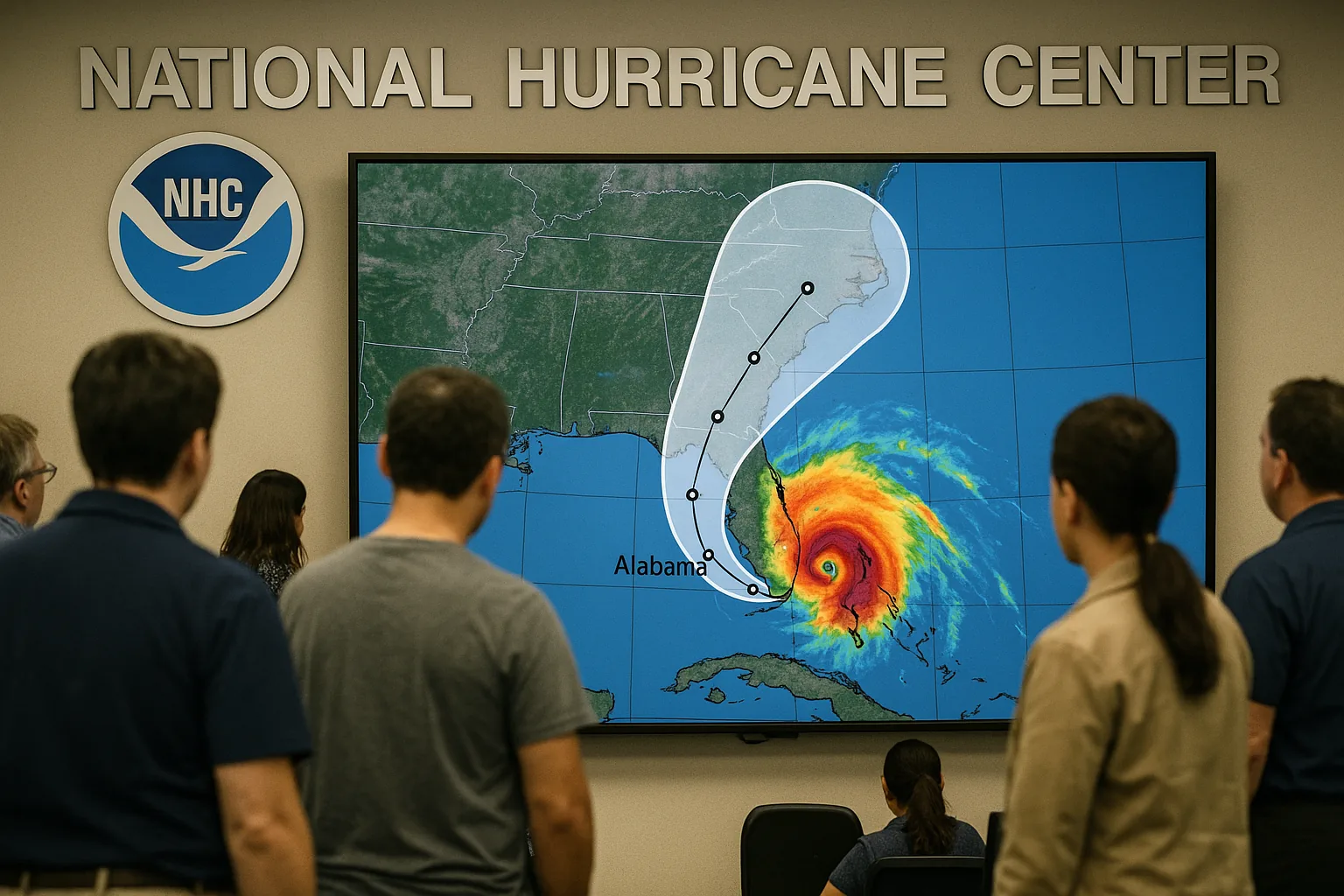
The National Hurricane Center's (NHC) reclassification of Isaias as a post-tropical cyclone early Saturday (October 10, 2026) caused prediction market odds for the storm crossing Alabama as a hurricane to collapse, falling 89 percentage points to just 2%. The downgrade, which occurred after the storm's center had already moved into the state, signaled to traders that Isaias would fail to meet the market's key settlement criterion of maintaining sustained winds of at least 74 mph while over Alabama.
The dramatic repricing reflects a sudden alignment with official meteorological data that contradicted forecasts from the previous day. On Friday, with Isaias approaching the coast as a major hurricane, the market had priced in a greater than 90% chance of the event occurring. However, after making landfall in Florida, the storm weakened much faster than anticipated, leading to the decisive downgrade by the NHC while the storm's center was near Montgomery. This rendered the contract a near-certainty to resolve to "No."
Distribution Analysis
| Outcome | Current Prob | Change | Volume |
|---|---|---|---|
| Before Dec 31, 2026 | 2% | -89.0pp | 8,577 |
Net: The contract's implied probability saw a near-total collapse, shifting market consensus to a near-certainty that the event did not occur as specified.
What's Driving the Shift
Official Downgrade Below Hurricane Strength: The primary driver for the market's collapse was the 4:00 AM CDT advisory issued by the National Hurricane Center on Saturday, October 10. This bulletin reclassified Isaias as a "Post-Tropical Cyclone" and reported its maximum sustained winds had decreased to 35 mph. Crucially, the storm's center was already located about 25 miles south-southwest of Montgomery, Alabama, at the time of the advisory, confirming it was no longer a hurricane while over the state.
Rapid Weakening Post-Landfall: Isaias made landfall near Destin, Florida, on the evening of October 9 as a Category 2 hurricane with winds of 90 mph. However, as it moved inland overnight, it lost strength far more rapidly than some models had predicted. By 1 a.m. on October 10, news reports indicated it had lost its tropical characteristics, setting the stage for the official NHC downgrade just hours later.
Strict Contract Criteria: The market is set to resolve based on whether Isaias crossed Alabama with sustained winds of at least 74 mph. While the storm's center of circulation did move across the state, the definitive data from the NHC showed it did so as a much weaker system. This technical, but critical, distinction is what drove the contract's value from near-certainty to near-zero.
Market Context
The sharp reversal highlights the sensitivity of weather-based markets to real-time, official data. On Friday, October 9, forecasts from the Alabama Emergency Management Agency projected that "Isaias will remain a hurricane into south-central Alabama." This guidance supported the contract's high valuation, with traders pricing in a strong likelihood that the storm would maintain its intensity long enough after landfall to satisfy the market's terms.
The subsequent collapse was not a gradual shift in sentiment but an abrupt reaction to the NHC's definitive classification change. This demonstrates how a single, authoritative data release can instantly resolve market uncertainty and trigger a significant repricing event. The high trading volume of over 8,500 shares on the contract underscores the market's conviction in the new information.
What to Watch
The contract, which trades on the CFTC-regulated Kalshi exchange, will remain open until December 31, 2026, but is expected to resolve to "No" based on the available data. Final resolution will depend on the post-storm analysis and "best track" data compiled in the official Tropical Cyclone Report for Isaias published by the National Hurricane Center. This report is considered a definitive source for meteorological statistics and will be a key document for the market's settlement. As of October 10, all tropical storm and hurricane warnings for the region had been discontinued.
