
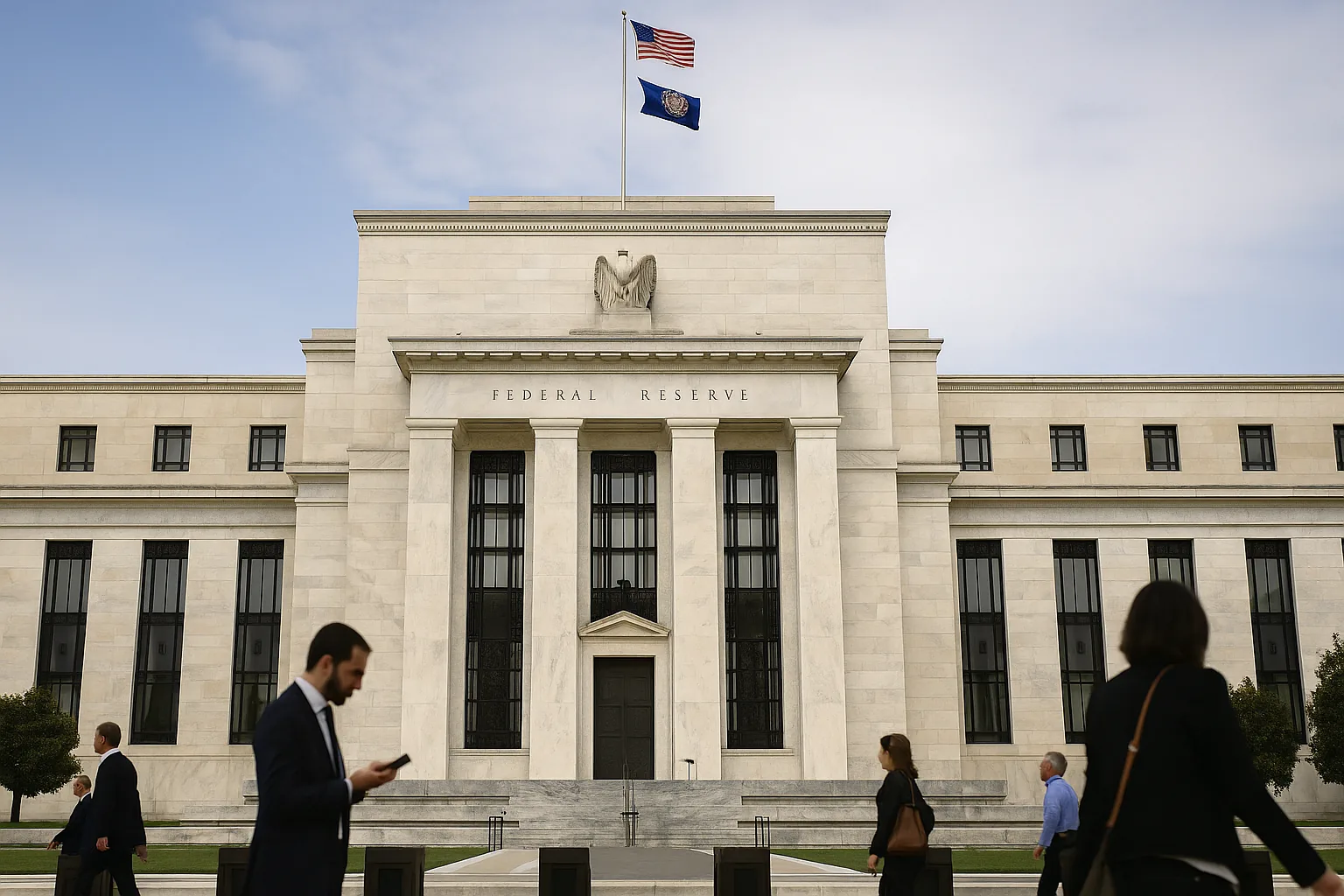
Following the release of September's inflation data, traders in the October Federal Open Market Committee (FOMC) prediction market have significantly scaled back bets on a second consecutive interest rate hike. In the session on Friday, October 16, 2026, the implied probability of the Fed holding rates steady at its upcoming meeting rose 16 percentage points to 53%. The shift suggests a consensus moving away from an expected hike and toward a pause, as traders digest the latest economic signals ahead of the Fed's decision.
The repricing came almost entirely from the contract for a 25 basis point (bps) increase, which fell 14 points to 47%. This represents a direct transfer of probability, flipping the market from favoring a hike to now slightly favoring a hold. The move establishes a near toss-up for the October 28 decision, a notable shift from just days prior when a hike was the market's base case.
Distribution Analysis
| Outcome | Current Prob | Change | Volume |
|---|---|---|---|
| No change | 53% | +16.0pp | 1,113,974 |
| 25 bps increase | 47% | -14.0pp | 779,457 |
| 25 bps decrease | 1% | ~0pp | 395,311 |
| 50+ bps increase | 1% | ~0pp | 335,784 |
| 50+ bps decrease | 0% | ~0pp | 390,892 |
Net: 1 of 5 contracts rose while 1 declined on significant volume, shifting the implied consensus from a likely rate hike to a slight bias toward a hold.
What's Driving the Shift
The primary drivers of this dovish repricing appear to be the latest inflation figures and the proximity to the Fed's recent policy action.
September CPI Report: The market move follows the release of September's inflation data on October 14, which showed headline consumer prices at 3.7%. While inflation remains well above the Fed's 2% target, the market's reaction suggests the report did not provide a compelling enough reason for traders to expect an immediate follow-up to September's rate increase. The shift in odds indicates the data was likely in line with or less aggressive than what hawkish traders had positioned for.
Proximity to September Hike: The FOMC raised the federal funds target range by 25 bps to 3.75%–4.00% at its September 16 meeting. This was the first rate hike since July 2023. Traders may now be pricing in a higher likelihood that the committee will opt to pause in October to assess the economic impact of that recent tightening before signaling its next move.
Comparison with Futures Markets: While this prediction market now narrowly favors a pause, it remains considerably more hawkish than institutional interest rate markets. The CME Fed Rate Monitor Tool, which analyzes Fed Fund futures prices, implies an 83.9% probability of no change for the October meeting. The 53% odds on the crypto-based Polymarket platform suggest its participants see a much more significant chance of a hike than their institutional counterparts, though the latest move has brought the two markets into closer alignment.
Market Context
The October 27–28 FOMC meeting is a non-SEP (Summary of Economic Projections) meeting. The committee will not be releasing an updated "dot plot" or new economic forecasts, which often raises the bar for a significant policy change. A decision to hold rates steady would be consistent with a data-dependent approach, allowing officials to observe more economic reports before the final meeting of the year in December, which will include fresh projections.
The September rate hike was a unanimous 12-0 decision under Fed Chair Kevin Warsh, reflecting a committee focused on returning inflation to its target. Minutes from that meeting, released on October 7, noted that "most participants" judged another increase "would likely be appropriate by year end," leaving the door open for a move in either October or December.
What to Watch
All eyes will be on the FOMC's policy statement, scheduled for release at 2:00 PM ET on Wednesday, October 28, 2026. The subsequent press conference with Fed Chair Warsh at 2:30 PM ET will be closely scrutinized for any signals regarding the committee's outlook and the potential for a rate hike at the December meeting. Until then, forthcoming data on employment and inflation will continue to shape market expectations.
