
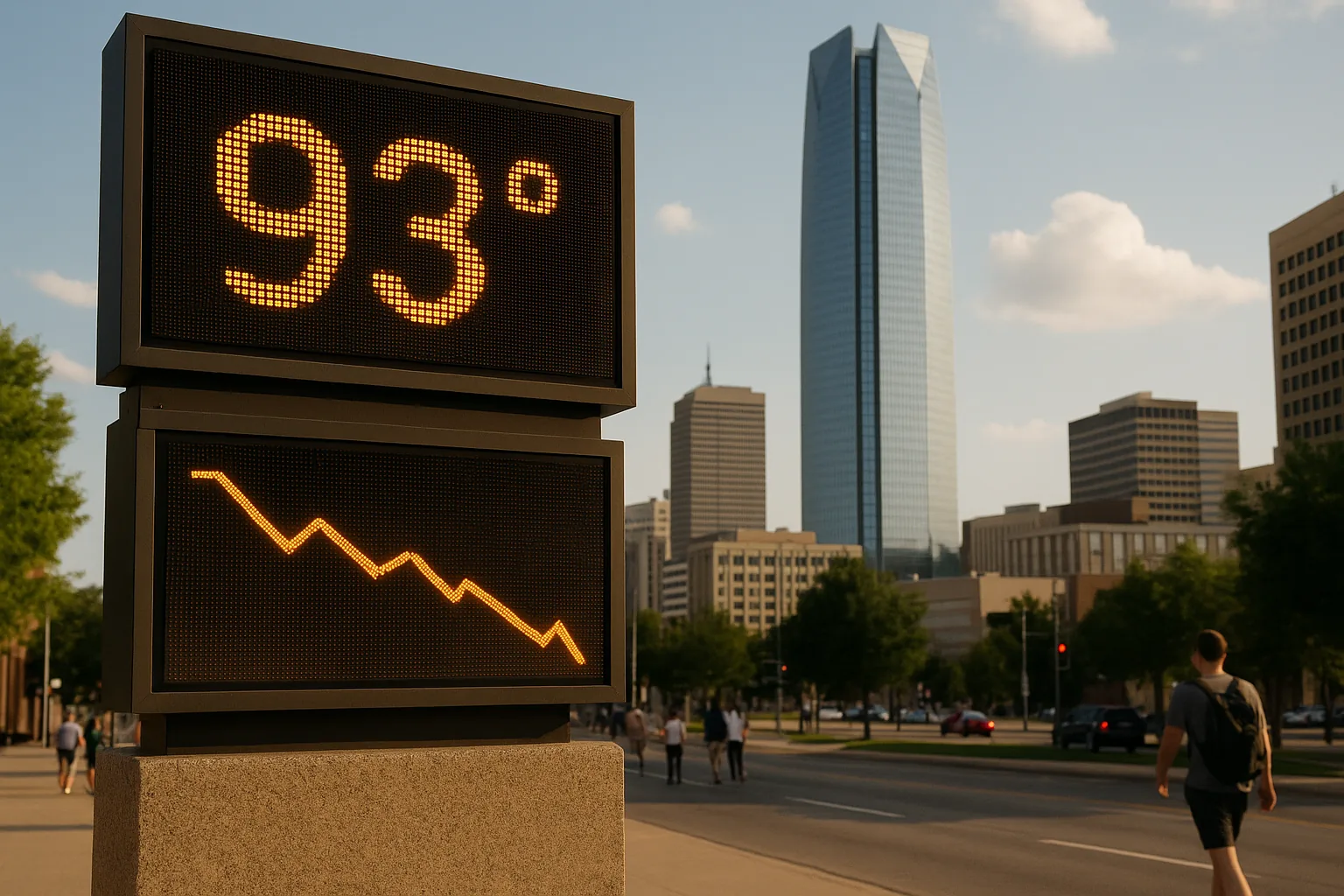
Official temperature data released Friday for Oklahoma City confirmed that a recent streak of days with an average temperature above 90°F ended at three, causing a sharp repricing in prediction markets for a longer heat wave. The release of the data made longer streaks mathematically impossible, pushing the implied probability for "6+ consecutive days" from 90% down to just 1% on Friday, August 21, 2026. The move reflects the market's rapid adjustment to definitive meteorological facts, effectively resolving the contracts for longer heat streaks ahead of the official settlement date.
The sell-off was comprehensive, with all contracts tracking longer streaks collapsing toward zero. The market for "4+ consecutive days," which saw the highest trading volume, plunged 88 percentage points to 2%. This across-the-board decline signals that traders see no path for the heat streak to extend, with observed data superseding earlier forecasts that had priced in a prolonged and severe heat event.
Distribution Analysis
| Outcome | Current Prob | Change | Volume |
|---|---|---|---|
| 3+ consecutive days | 66% | -7.0pp | 12,491 |
| 4+ consecutive days | 2% | -88.0pp | 23,581 |
| 5+ consecutive days | 2% | -38.0pp | 12,412 |
| 6+ consecutive days | 1% | -89.0pp | 5,695 |
Net: All four contracts declined on a total of 54,179 in 24-hour volume, as observed temperature data made a heat streak longer than three days impossible.
What's Driving the Shift
Definitive Temperature Data: The primary driver for the market's collapse was the official climate report from the National Weather Service. The climate summary for August 21, 2026 showed an average temperature of exactly 90°F. Because the market contract requires the daily average to be above 90°F, this reading definitively broke the streak.
Confirmed Three-Day Streak: Prior to Friday's reading, Oklahoma City had experienced a significant heat wave. Official data confirmed three consecutive days with average temperatures above the threshold: August 18 (91°F), August 19 (93°F), and August 20 (93°F). This established the three-day streak, which will lead to the "3+ consecutive days" contract resolving to "Yes."
Certain Resolution: With the streak broken on the fourth day, contracts for "4+ consecutive days," "5+," and "6+" are now certain to resolve to "No." The remaining small percentages (1-2%) likely reflect market friction, such as the bid-ask spread, as traders close out now-worthless positions.
Market Context
The sharp repricing follows a period of intense heat in the Southern Plains, which had previously justified high odds for a long streak. The week began with Oklahoma City recording a record-breaking high of 109°F on August 18, the hottest day of the year. This intense, observable heat led traders on the CFTC-regulated Kalshi exchange to price in a high likelihood of the pattern continuing, pushing the "6+ days" contract to 90% probability before the streak was confirmed to have been broken. The subsequent price collapse demonstrates how quickly weather-based prediction markets can shift from being forecast-driven to being determined by observed, ground-truth data.
What to Watch
The market series, which covers the week of August 18 to August 24, 2026, is scheduled to close for trading on August 24. The final settlement will rely on official data from The Weather Company. Based on currently available National Weather Service data, the contract for "3+ consecutive days" is on track to resolve to "Yes," while all longer-duration contracts are positioned to resolve to "No."
