
Episode summary
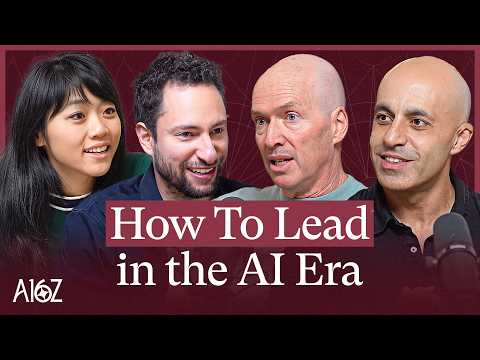
Ben Horowitz and Ali Ghodsi: How to Run a $100 Billion Business
 The a16z Show
· · Hosts: Sarah Wang, Erik Torenberg · Guests: Ben Horowitz, Ali Ghodsi
Summary
The conversation centers on how Databricks scaled from an open-source project into a company aiming for far more than a conventional software outcome. The guest describes taking over as CEO in 2016 after recognizing that the company’s biggest threat was not competitors, but customers simply downloading the open-source version. That pushed Databricks toward aggressive internal pivots, sharper product strategy, and stronger go-to-market execution.
A major theme is leadership at scale: the guest argues that CEOs must stay close to the work, give frequent feedback, and avoid symmetric management structures that hide problems. The host and guest agree that high-intensity cultures only work if leaders model the pace, hire for real grit, and make employees feel they are winning rather than merely grinding. They also stress that feedback should feel useful, not punitive.
The second half focuses on business development, especially the Microsoft partnership, which the guest and host frame as a model for give-and-get dealmaking. They argue that large deals require timing luck, a real product gap on the bigger company’s side, and repeated persistence. On M&A, they say the best acquisitions are built around product and culture first, not financial engineering, because long-term integration and retention matter more than short-term revenue lift.
Key takeaways
- The guest says Databricks’ early threat was that customers could just use the open-source version, forcing painful strategic pivots.
- The host argues the best CEOs stay “low and fast,” because the truth usually lives with individual contributors, not the executive staff.
- The guest says Databricks’ culture works only if leaders model the intensity, but also watch for burnout and work-life balance problems.
- On the Microsoft deal, the guest says the partnership worked because Microsoft needed the product and Databricks needed its distribution channel.
- The guest says acquisitions should be judged first on founders, culture, and product integration, not on revenue multiple or spreadsheet logic.
- The guest says the company once decided it could pay P95th percentile compensation, and that thinking helped it compete for top talent.
Notable quotes
“if you're a CEO and you don't fly low and fast, it's going to be a mess because you don't you never get the truth”
“I think the best way I would say it is like it's kind of like a T and want to be broad and then you have the leg that goes down and goes really really deep”
“we spend a lot of time with the team and the founders. So we're trying to see hey can we build together like you come here and you build together”
How the episode opens
I was like, maybe they're right. Maybe we should just sell. And I remember having that conversation with Ben, which is he said, "Hey, you can do whatever you want.
You can sell. You're going to make a lot of money and you'll be super successful in life, but you know, if you're like me, you're going to look back the rest of your life thinking, you know, I missed that one shot. That was the one thing I should have taken it all the way.
Now I'll never know how far I could have taken it. Could have been. So, do you want to live with that or do you want to just have the money?
You know, I'll support whatever you want to do. I really couldn't care less. excited to bring back Boss Talk.
This was a series that you guys did a few years ago on Clubhouse that was a a big hit. Yeah, we had fun. It was Ben's idea.
Yeah. Excited to bring it back. So, in the spirit of of of boss talk, let's talk about the the first time that you became a boss in terms of running uh uh data bricks.
Um, let's talk about the moment in 2016 when data bricks was was uh not things weren't as smooth as perhaps they should have been and we were looking for a new CEO and uh Ben you recommended Ali. First of all, like kudos to Yan for building the company originally and uh Ben uh you know investing and believing in us and then also I kind of couldn't have done the CEO job. Uh Ben basically babysat me uh the first couple years a short short baby you know so uh um but I I did know what was kind of wrong with the company because I had been there for two three years and I had seen from inside you know what we should change and what the issues were.
From the episode’s captions: roughly the first two minutes, lightly cleaned. Keep watching on YouTube →
Topics
- founder leadership
- hiring and dealmaking
- company culture
- m&a strategy
- scaling with acquisitions
Companies and tickers mentioned
- MSFT
- Andreessen Horowitz
- Loudcloud
- Databricks
- Microsoft
Watch the episode
Watch “Ben Horowitz and Ali Ghodsi: How to Run a $100 Billion Business” on YouTube
Summary, takeaways and quote selection by Octagon. Quotes are short excerpts; the full conversation is in the episode.
More from The a16z Show
-
 Cyberattacks Used to Take Months. AI Can Do It in Minutes.
-
 How AI Could Bring Halo and Other Classic Games Back to Life
-
 Mike Volpi on Why AI Infrastructure Will Outlast the Hype Cycle
-
 Why HubSpot’s Co-Founder Is Betting Against the SaaSpocalypse
-
 Inside Salesforce’s Acquisition Strategy for the AI Era
-
 How AI Is Turning Figma’s Finance Team Into Builders
The a16z Show, this episode and its artwork belong to Andreessen Horowitz. Octagon is not affiliated with the show; this page is an independent summary.
