
Episode summary
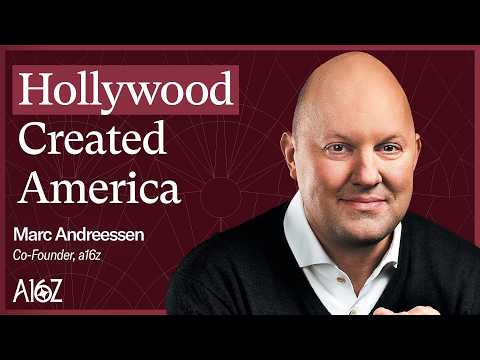
Marc Andreessen: How Movies Explain America
 The a16z Show
· · Hosts: Katherine Boyle, Erik Torenberg · Guests: Marc Andreessen
Summary
Marc Andreessen frames Los Angeles as the archetypal American city: built through ambition, mythmaking, and a kind of “fake it till you make it” national energy. He uses that backdrop to argue that Once Upon a Time in Hollywood is really about a pivotal American hinge moment, when the 1960s cultural revolution had expanded through art, protest, and counterculture before curdling into fear, violence, and the darker 1970s.
His central claim is that the Manson murders were the turning point that ended cultural innocence, not just in Hollywood but in the country more broadly. Tarantino’s film matters, in his view, because it stages an alternate history in which that turn does not happen, making the real tragedy feel even larger. He reads the movie as both a love letter to Hollywood and a meditation on how violence, celebrity, and social change intersect.
Andreessen then extends the same lens to the 2010s, arguing that America may have gone through a similar cultural cycle from roughly 2014 to November 2024. The conversation sets up Tropic Thunder as the next example of a movie that captures its era perfectly, especially its satire of Hollywood, race, and the machinery of fame.
Key takeaways
- Marc Andreessen argues that Los Angeles is the archetypal American city because it was literally built as a “fake it till you make it” project.
- He says Once Upon a Time in Hollywood captures the 1969 pivot when the 1960s cultural revolution tipped into fear, violence, and the darker 1970s.
- Marc Andreessen treats the Manson murders as the key turning point that ended America’s cultural innocence and changed behavior in Los Angeles.
- He argues that Tarantino’s alternate-history ending makes the real-world tragedy feel even larger by showing what might have happened instead.
- Marc Andreessen draws a parallel between the late 1960s and the 2014-2024 era, saying America lived through another cultural revolution and reset.
Notable quotes
“LA in a lot of ways is is sort of you you could describe it as like it's the ar archetypal American city”
“it captures a time and place that was absolutely critical to the evolution of modern America”
“it really, you know, kind of restores her memory in in an amazing way”
How the episode opens
LA in a lot of ways is is sort of you you could describe it as like it's the ar ar ar ar ar ar ar ar ar ar ar ar ar ar ar ar ar ar ar ar archetypal American city. Here's the larger significance of Once Upon a Time in Hollywood or my view of it, which is it captures a time and place that was absolutely critical to the evolution of modern America. The reaction from the audience is extreme laughter.
You are laughing during the most violent sequence for 20 minutes. Well, uh excited to have the Modern the Situation crew back for another episode on movies. Uh Mark, thanks for joining again.
Yes. Excited. So, we want to go deeper into some of our in some of our favorite movies.
Mark, I know from watching movies with you that one of your genres you enjoy is movies about Hollywood. And so, we wanted to start with Once Upon a Time in Hollywood. Why don't you talk about what's so remarkable about that or why you wanted to talk about it?
The reason I movies about Hollywood, I mean, one is they tend to be very entertaining because of course the people who make movies about Hollywood are from Hollywood and they they know where all the bodies are buried. Um, and they tend to put them all in in the movies. Um, and so they're, you know, all run spectacular Hollywood movies.
So for people who haven't seen, I would recommend Mahal and Drive. Um, it's one of Eric's favorites. Um, and nightmares run it and, uh, and then The Player, um, which also is an alltime alltime one there.
You know, there's there's a bunch of, of course, you know, famous ones like Sunset Boulevard, but, you know, the the iconic, you know, clearly the the the iconic Hollywood movie, you know, now is is Once Upon a Time in Hollywood, you know, by by Quentyn Tarantino.
From the episode’s captions: roughly the first two minutes, lightly cleaned. Keep watching on YouTube →
Topics
- movies and american culture
- tarantino once upon a time in hollywood
- tropic thunder satire and offense
- fight club capitalism to alienation
- oppenheimer morality and invention
Watch the episode
Watch “Marc Andreessen: How Movies Explain America” on YouTube
Summary, takeaways and quote selection by Octagon. Quotes are short excerpts; the full conversation is in the episode.
More from The a16z Show
-
 How AI Could Bring Halo and Other Classic Games Back to Life
-
 Mike Volpi on Why AI Infrastructure Will Outlast the Hype Cycle
-
 Why HubSpot’s Co-Founder Is Betting Against the SaaSpocalypse
-
 Inside Salesforce’s Acquisition Strategy for the AI Era
-
 How AI Is Turning Figma’s Finance Team Into Builders
-
 The New AI Agents That Shop, Plan, and Gossip
The a16z Show, this episode and its artwork belong to Andreessen Horowitz. Octagon is not affiliated with the show; this page is an independent summary.
