
Episode summary
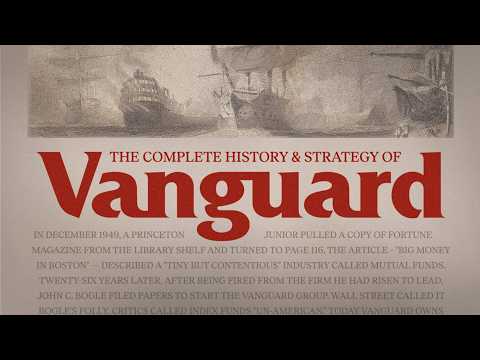
Vanguard: The communist capitalist who saved investors a trillion dollars (Audio)
 Acquired
· · 3 hr 48 min
Summary
Vanguard’s origin story begins with Jack Bogle’s conviction that mutual funds should serve investors, not outside shareholders. The hosts trace how the post-Depression mutual fund industry worked: high management fees, hefty sales loads, and incentives that rewarded asset gathering more than performance. Bogle’s Princeton thesis already hinted at the core insight that, in aggregate, investors cannot beat the market after costs, so minimizing fees matters enormously.
After joining Wellington under Walter Morgan, Bogle rose quickly and inherited a conservative firm just as Wall Street shifted into the speculative “go-go” era led by Fidelity. Wellington tried to adapt by merging with a younger, aggressive shop, but the strategy backfired when markets crashed in the 1970s and assets collapsed. That forced Bogle to confront the contradiction between charging fees and underperforming clients, pushing him toward a radical idea: mutualize the fund business and eliminate the profit motive.
He was fired as CEO of Wellington Management Company, but then used his role as chairman of the funds to argue that the funds themselves should control their own destiny. The compromise was limited but crucial: the funds would create their own subsidiary to handle administration, setting up the legal and organizational foundation for what would become Vanguard.
Key takeaways
- The hosts say Vanguard ultimately saved investors over $500 billion in fees and trading costs since 1975, with another $500 billion forced out of the industry.
- Jack Bogle’s Princeton thesis argued that, in aggregate, investors are the market and that lower fees are the clearest path to better net returns.
- Wellington’s attempt to pivot into go-go investing backfired when the 1970s downturn cut the Wellington fund’s assets from $2 billion to $480 million.
- Bogle’s core break with the industry was his push to mutualize the fund structure so clients, not external shareholders, would control the enterprise.
Notable quotes
“Vanguard, who effectively created the first index fund for individual investors in 1975 and today is the largest provider of index funds in the United States”
“Because of Vanguard's relentless cost cutting and low fees, Vanguard has saved investors over $500 billion in fees and trading costs since its founding in 1975”
“The issue we face is whether a structure so traditional, so long accepted, so satisfactory for an infant industry as it grew during a time of less stringent ethical and legal standards is really the optimum structure for these times”
“I realized that a mutual company would never provide me with the personal fortune that so many denisens of Wall Street would earn”
How the episode opens
I was telling my wife, you know, I think I'll be able to do bedtime tonight, maybe, maybe even dinner. And she was like, whoa, whoa, whoa. Don't get ahead of yourself. — Let's not go crazy here. — How complicated could it be? It's index funds
And active funds and money market and brokerage and advisory and — Yeah. Yeah. Yeah. — But really, it's mostly index funds. — All right, — Let's do it. — Let's do it. — Vanguard, — Who got the truth? Is it you? Is it you? Is it you who got the truth now? Is it you? Is it you? Is it you? Sit me down. Say it straight. Another story on the way.
Welcome to the spring 2026 season of Acquired, the podcast about great companies and the stories and playbooks behind them. I'm Ben Gilbert. — I'm David Rosenthal.
And we are your hosts. Today's episode is more relevant for you than any other company we have ever covered. For most of you, you have most of your net worth tied up in this company or the copycats who followed.
The company is Vanguard, who effectively created the first index fund for individual investors in 1975 and today is the largest provider of index funds in the United States. They manage over $10 trillion in passive index funds. That means they own an average of almost 10% of every company in the S&P 500.
General Motors, Nike, Starbucks, Loheed Martin, Visa, Apple, you name it. Vanguard is the largest shareholder of most US corporations. And together with the other big index funds like Black Rockck, State Street, and Fidelity, they own 24% of the entire US stock market.
It's absolutely incredible. And none of those other firms would be in this market or doing it in the same way if it weren't for Vanguard.
From the episode’s captions: roughly the first two minutes, lightly cleaned. Keep watching on YouTube →
Topics
- index investing
- mutual funds
- vanguard fees
- financial crisis
- etf debate
Companies and tickers mentioned
- BLK
- Vanguard
- REI
- Fidelity
- Wellington Management
- BlackRock
Watch the episode
Watch “Vanguard: The communist capitalist who saved investors a trillion dollars (Audio)” on YouTube
Summary, takeaways and quote selection by Octagon. Quotes are short excerpts; the full conversation is in the episode.
More from Acquired




Acquired, this episode and its artwork belong to Ben Gilbert and David Rosenthal. Octagon is not affiliated with the show; this page is an independent summary.
