
Episode summary
The Goldilocks Zone: Finding Value in Venture & Growth Secondaries | Ep. 42
 Alternative Allocations
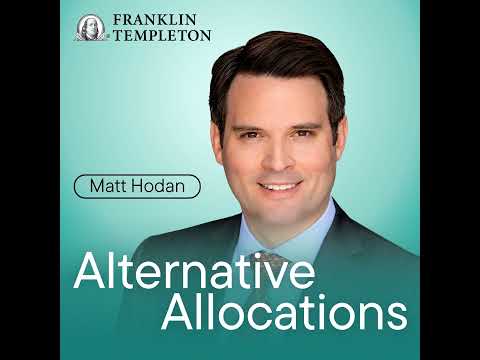
· · 22 min · Hosts: Tony Davidow · Guests: Matt Hodan
Summary
Matt Hodan argues that venture and growth private equity is entering a strong opportunity set because companies are staying private longer, which extends the window for value creation and makes private markets more relevant for innovation-led businesses. He says the asset class has historically been one of the strongest performers in private equity, but the current backdrop is even more attractive because companies can now scale far beyond what was possible a decade ago while still remaining private.
He focuses on the next generation of private winners rather than the headline names like SpaceX, Anthropic, and OpenAI. The case for Lexington’s approach is to build diversified exposure to tier-one venture-backed assets early enough to capture compounding, but not so early that investors bear the full risk of seed-stage uncertainty. Hodan describes this as the firm’s “Goldilocks zone” of value creation.
The episode also explains why secondaries are central to that strategy. Hodan says Lexington targets large, curated secondary transactions that can provide exposure to hundreds of underlying companies at once, while avoiding some of the valuation and exit risk of late-stage direct investing. Looking ahead to 2027, he sees AI accelerating growth across the venture and growth ecosystem, both in native AI businesses and in companies adopting AI to improve products, services, and scale.
Key takeaways
- Hodan says companies are staying private longer, with average exit timing rising from around 7 years in the late 1990s and early 2000s to 9 years in the 2010s and now often 10 years plus.
- He argues that venture and growth has outperformed many other private asset classes over time, making it a core allocation rather than a tactical trade.
- Lexington targets the “Goldilocks zone” after product-market fit but before the final pre-exit stage, aiming to reduce early-stage risk and late-stage valuation risk.
- The secondary strategy can provide diversified exposure through single transactions that may include interests in hundreds of underlying companies.
- Hodan says AI is already helping many venture and growth companies accelerate performance, and expects it to remain a major driver of value creation into 2027.
Notable quotes
“It's among the highest performing asset classes across private equity”
“our jobs right, we're really focused on building exposure into the tier one venturebacked assets of today, but also building exposure into tier one venturebacked assets of tomorrow”
“It allows us to really curate exposure to what I like to call the Goldilock zone of value creation”
“this is an incredibly interesting time to be an investor”
How the episode opens
This is Alternative Allocations by Franklin Templeton, a monthly podcast where we share practical, relatable advice and discuss new investment ideas with leaders in the field. Please subscribe on Apple, Spotify, or wherever you get your podcast to make sure you don't miss an episode. Here is your host, Tony Davidau. Welcome to the latest episode of the Alternative Allocations podcast series. I'm thrilled to be joined today by Matt Hoden of Lexington Partners. Welcome, Matt.
Hey, Tony, it's great to be here. Thanks for having me. — Well, Matt, I wanted to start with your background. You have a very unique perspective and I think it helps shape the way that you look at the world. So, if you can just share a little bit about your background and then we'll get into the opportunity set for today.
Yeah, happy to. Just by way of introduction, Matt Hoden, as you said, a partner at Lexington. I've been at Lexington now for nearly 16 years.
I'm based in our Menllo Park office and I co-lead our investment activities and venturing growth. I built most of my career here at Lexington, though I did have a stint as an entrepreneur prior to joining Lexington. Founded a company backy combinator and raised a bit of angel capital before we ultimately sold.
and prior to that spent some time as a private equity investor at Jenstar Capital and started my career way back when in investment banking in New York.
And I think that's helpful because again I think you have a different vantage point and look at the world differently. I do want to come back and also revisit the fact that I think being in Menllo Park is a real advantage for the space that you operate in.
From the episode’s captions: roughly the first two minutes, lightly cleaned. Keep watching on YouTube →
Topics
- venture and growth secondaries
- private companies staying private longer
- value creation in venture
- silicon valley ecosystem sourcing
- ai transformation opportunity
Companies and tickers mentioned
- Lexington Partners
Watch the episode
Watch “The Goldilocks Zone: Finding Value in Venture & Growth Secondaries | Ep. 42” on YouTube
Summary, takeaways and quote selection by Octagon. Quotes are short excerpts; the full conversation is in the episode.
More from Alternative Allocations
-
 How Geopolitical Risk Is Reshaping Markets & Private Investing | EP 40
-
 Separating Noise from Reality in the Private Credit Market | EP.39
-
 Episode 38: The Model Revolution: Scaling Private Markets Access Through Technology and Education...
-
 Episode 37: The Illiquidity Premium: Lessons Learned from Institutions with Guest Wendy Li, Ivy I...
-
 Episode 32: Special Feature: 2026 Private Market Outlook
-
 Episode 34: Unlocking Value in Middle Market Private Equity with Guest Matt Katz, Fiduciary Trust...
Alternative Allocations, this episode and its artwork belong to Franklin Templeton. Octagon is not affiliated with the show; this page is an independent summary.
