
Episode summary
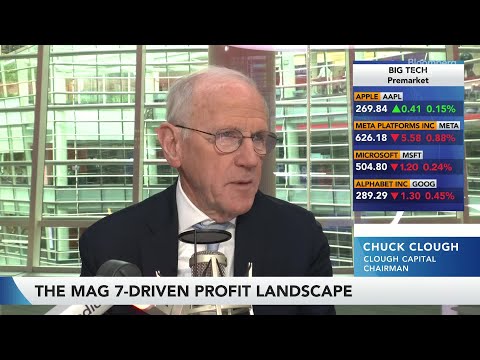
Hyperscalers Most Likely to Survive if AI Bubble Bursts, Says Clough
 Bloomberg Surveillance
· · 7 min · Guests: Chuck Clough
Summary
Chuck Clough argues that today’s AI market is not a replay of the late-1990s dot-com bubble because the biggest winners already have real earnings, cash flow, and distribution. He says the hyperscalers resemble the operating-system companies of the internet era: they are the platforms most likely to build the software packages that bring AI to users and monetize it, while Apple matters because its phones are the main access point for individuals.
Clough says the main vulnerability is not the hyperscalers themselves but some of the independent companies tied to AI infrastructure, especially because chips depreciate quickly and Nvidia-style product cycles move fast. Even so, he thinks the large platform companies can absorb heavy data-center spending and still generate free cash flow, which he sees as a major difference from the dot-com period. He also points to broader balance-sheet strength, saying private debt relative to GDP is falling and the dollar remains far from collapse, which he takes as evidence that the economy is less fragile than bubble warnings suggest. The conversation briefly turns to ETFs, where Clough says the structure is tax-efficient, cheaper, and likely part of a major industry shift away from traditional mutual funds.
Key takeaways
- Clough says the hyperscalers have the best chance of monetizing AI because they can create the software packages that bring AI to the people.
- He argues the key risk is in independent AI infrastructure names, since chips depreciate quickly and new Nvidia products arrive every 18 months.
- Clough says hyperscalers are different from most dot-com companies because they already generate huge amounts of free cash flow.
- He says ETF growth is a structural change because ETFs are tax efficient and much cheaper to run than mutual funds.
- Clough points to declining private debt relative to GDP and a stable dollar as signs that the economy is not in the kind of systemic stress bubble skeptics expect.
Notable quotes
“I think the world is quite different from that standpoint because 99 and I think most people understand that today”
“most of the companies that rode the dotcom boom never generated earnings and never generated revenues”
“So we're already today we have these hyperscalers”
“the hyperscalers plus Apple have the best chance of being in that situation”
“the Hyperscalers themselves are in a totally different level. Even after spending that money, they generate cash free cash”
How the episode opens
I think the world is quite different from that standpoint because 99 and I think most people understand that today, that most of the companies that rode the dotcom boom never generated earnings and never generated revenues. Many of them it was all eyeballs. And I remember being the at the moment there are three companies that rode the boom up, wrote it back down and recovered and became larger, substantially larger companies.
One was Microsoft, one was Apple, and the third was Amazon. Most other companies from Pets.com on, you don't even remember anymore. Of those three made it Amazon in a special case, Microsoft and Apple, they had the operating system and they made all the difference in the world because they could create the software that made the internet usable.
And that was the distinction. Nobody else was able to do that. Even Oracle and Cisco, they're are still here, but they're microcosms of the former of their former self.
So we're already today we have these hyperscalers. And the thing about the hyperscalers is everybody can see the vulnerability. Too much data spending to too much datacenter spending, but in a sense they resemble the operating system of the dotcom boom they have, they are the hyperscalers and they can create the software packages that bring AI to the people.
Apple's part of that because they have the they have the the the the phones which most people most individuals will access. So that's the question who's going to create the software and generate the revenues and the hyperscalers plus Apple have the best chance of being in that situation. Do you think this A.I.
theme, which has been such a big theme for this, not just the tech space, Chuck, but also just the marketing in general?
From the episode’s captions: roughly the first two minutes, lightly cleaned. Keep watching on YouTube →
Topics
- ai bubble
- hyperscaler capex
- openai infrastructure
- nvidia openai deal
- market valuations correction
Companies and tickers mentioned
- NVDA
- META
- Clough Capital
- OpenAI
- Nvidia
- Meta
Watch the episode
Watch “Hyperscalers Most Likely to Survive if AI Bubble Bursts, Says Clough” on YouTube
Summary, takeaways and quote selection by Octagon. Quotes are short excerpts; the full conversation is in the episode.
More from Bloomberg Surveillance
-
 Stocks Rise as Inflation Data Ease Fed-Hike Worry | Bloomberg Surveillance
-
 Bloomberg Surveillance TV: November 13th, 2026 | Bloomberg Surveillance
-
 Bloomberg Surveillance TV: November 12th, 2026 | Bloomberg Surveillance
-
 Jensen Huang Ousted by Nvidia Board as CEO | Bloomberg Surveillance
-
 Bloomberg Surveillance TV: November 11th, 2026 | Bloomberg Surveillance
-
 AI Stocks Rebound as Fed Hike Bets Return | Bloomberg Surveillance
Bloomberg Surveillance, this episode and its artwork belong to Bloomberg. Octagon is not affiliated with the show; this page is an independent summary.
