
Episode summary
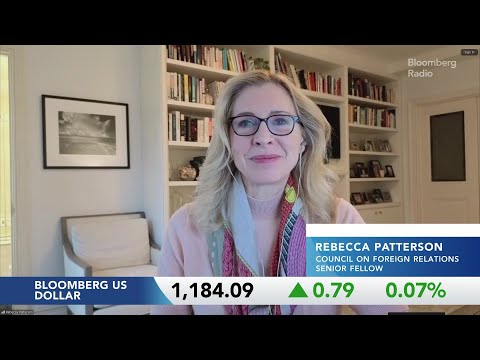
'We Have Hollowed Out' Institutional Knowledge in Government, Says Rebecca Patterson
 Bloomberg Surveillance
· · 6 min · Hosts: Tom Keene, Paul Sweeney · Guests: Rebecca Patterson
Summary
Rebecca Patterson argues that politics is now shaping central-bank leadership timing in Europe and the U.S. She says the ECB still has a strong institutional framework, but it is “striking” that the Bank of France, a national central bank and possibly the ECB are applying politics to when they replace leaders. She links that to broader concerns about rule-breaking pressures in Europe and the United States.
On the U.S. side, Patterson says the bigger issue is not just who leads the Fed, but the loss of experienced technocrats. She argues that long-serving institutional knowledge has been “hollowed out” in government, which will slow decision-making and is a “self goal.” She expects the Fed succession process to be noisy, with Senate delays, DOJ scrutiny of Chair Powell, and other vacancies including Lisa Cook, Steven Miran, and Raphael Bostic’s seat.
Patterson also expects a weaker dollar this year, though perhaps not as weak as last year, because capital continues to flow out of the U.S. into Europe, Japan and emerging markets. She says Europe is at a “make or break” moment: to keep its equity rebound, it needs simpler rules, deeper capital markets and a government that functions, even if that means a multi-speed “European onion.”
Key takeaways
- Patterson says politics is influencing ECB succession timing in a way she has not seen in modern European history.
- She expects the Fed leadership process to stay messy because Senate confirmations and DOJ scrutiny could delay nominations until mid-May.
- Patterson argues the U.S. has lost institutional knowledge as long-serving technocrats have retired or been forced out, slowing government.
- She expects a weaker dollar again in 2026 because capital is still leaving the U.S. for Europe, Japan and emerging markets.
- She says Europe needs simpler regulation, deeper capital markets and more functional government if its equity rebound is to last.
Notable quotes
“we have hollowed out some of the institutional knowledge in the government, which just means it's going to slow things down a bit going forward”
“The one thing that won't go back is all the institutional knowledge from long serving technocrats in government who either have retired or have been forced out”
“I think we're going to have a weaker dollar again this year. Maybe not to the same degree as last year”
“If they want to sustain this equity rebound, they need to actually show us, you know, that they can walk the talk”
How the episode opens
I think that the ECB has a pretty good institutional framework set up now. But but it is striking that you're seeing both the Bank of France, the National Central Bank and now possibly the ECB applying politics to the timing of when they replace leaders. This is not something we've ever seen before in modern history, at least in Europe.
And it's it's a little reminiscent of some of the pressures we're seeing in the U.S. Politics are making a bigger impression on everything. Maybe the editorialize is the autocrats, those conservatives like Le Pen and others saying, we're not going to play by the rulebook.
What do you see after Trump? Will we return to the monetary rulebook? That Well, I think we're still on the monetary rulebook in the U.S., regardless of some of the rhetoric we hear from the administration.
You know, the question to me is broader than that. It's kind of what does the world look like in three, three and a half years? What do we want to go back to?
What can we afford to go back to? And what maybe we didn't like how it happened, but what do we think actually might be better in three, three and a half years that we want to keep? You know, I do think people on both sides of the aisle would argue that the government in the United States could be smaller and more effective and use technology better.
No one's going to argue with that. There might be lots of people, though, who say, you know what, USAID was a great soft power tool and it saved lives. And maybe we need to figure out how to spend for that.
So I think it's going to be really interesting in the next administration to see where we go.
From the episode’s captions: roughly the first two minutes, lightly cleaned. Keep watching on YouTube →
Topics
- ecb leadership transition
- candidate reshuffling
- europe elections far right
- institutional knowledge in government
- fed leadership changes
Companies and tickers mentioned
- Council on Foreign Relations
- Bridgewater Associates
- ABN Amro
Watch the episode
Summary, takeaways and quote selection by Octagon. Quotes are short excerpts; the full conversation is in the episode.
More from Bloomberg Surveillance
-
 Stocks Rise as Inflation Data Ease Fed-Hike Worry | Bloomberg Surveillance
-
 Bloomberg Surveillance TV: November 13th, 2026 | Bloomberg Surveillance
-
 Bloomberg Surveillance TV: November 12th, 2026 | Bloomberg Surveillance
-
 Jensen Huang Ousted by Nvidia Board as CEO | Bloomberg Surveillance
-
 Bloomberg Surveillance TV: November 11th, 2026 | Bloomberg Surveillance
-
 AI Stocks Rebound as Fed Hike Bets Return | Bloomberg Surveillance
Bloomberg Surveillance, this episode and its artwork belong to Bloomberg. Octagon is not affiliated with the show; this page is an independent summary.
