
Episode summary
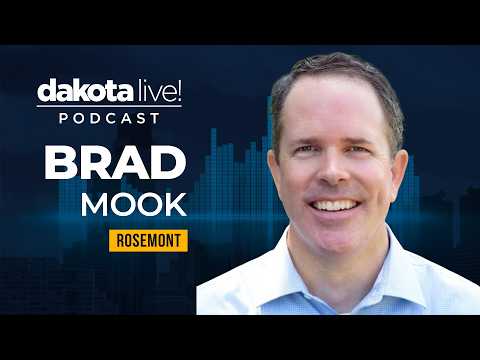
Brad Mook | Rosemont's History in GP Stakes and the Move to Permanent Capital
 Dakota Live!
· · 1 hr 1 min · Hosts: Robert Morier · Guests: Brad Mook
Summary
Rosemont has shifted from a private equity model to permanent capital, and Brad Mook says that changed the firm’s priorities from maximizing exit value to building durable businesses. He argues that the new structure lets Rosemont back minority partners without forcing a sale, which gives founders and next-generation leaders more room to think long term. The firm now favors a small number of close partnerships over a larger, more transactional portfolio.
Mook says the core of the strategy is helping employee-owned asset and wealth management firms stay employee-owned while professionalizing operations, succession, and growth. He emphasizes that great investment performance alone is not enough; a strong business also needs sales, marketing, operations, and aligned ownership. He is skeptical of private equity-style consolidation when it pushes firms toward short-term behavior or creates drift between clients and culture.
He also sees organic growth as harder than many firms admit. In his view, many asset managers and wealth managers have grown mostly through markets or M&A rather than a real business development engine. That makes talent, incentives, and the placement of sales leadership at the senior table central to underwriting. Rosemont still looks at asset management, but Mook says wealth management and OCIO businesses fit especially well with permanent capital because they are steadier, more recurring, and more defensible over time.
Key takeaways
- Brad Mook says Rosemont’s move to permanent capital replaced the private equity exit clock with a 5, 10, 15, 20-year horizon.
- Mook argues that a great investment strategy is not enough; sales, operations, and ownership alignment determine whether a firm is a good business.
- Rosemont prefers minority partnerships that preserve employee ownership and help firms professionalize, rather than consolidating into a larger platform.
- Mook says organic growth is rare and should be valued more highly than growth driven mainly by markets or M&A.
- He believes wealth management and OCIO fit Rosemont’s model better than fragile long-only equity boutiques, though the firm still considers both.
Notable quotes
“a great strategy doesn't make a great business. They still need the other commercial aspects of the business, the sales and marketing, the operations, you've got to look at the P&L, you've got to look at the ownership”
“the treadmill as I call it is not for me. the raising funds, racing to deploy them, and then having to sell them um to me just didn't match up well”
“Our evolution moving from private equity to permanent capital has changed our horizon and the things that matter to us”
“the industry needs to think of itself as a solutions provider not as a product provider”
How the episode opens
Welcome to the Dakota Live podcast. I'm your host, Robert Morier. The goal of this podcast is to help you better know the people behind investment decisions.
We introduce you to chief investment officers, manager research professionals, and other industry leaders to help you sell in between the lines and better understand the investment sales ecosystem. If you're not familiar with Dakota and our Dakota Live content, please visit our website at dakakota.com. Before we get started, I need to read a brief disclosure.
This content is provided forformational purposes and should not be relied upon as recommendations or advice about investing in securities. All investments involve risk and may lose money. Dakota does not guarantee the accuracy of any of the information provided by the speaker who is not affiliated with Dakota.
Not a solicitation, testimonial, or an endorsement by Dakota or its affiliates. Nothing herein is intended to indicate approval, support, or recommendation of the investment adviser or its supervised persons by Dakota. Today's episode is brought to you by Dakota Marketplace.
Are you tired of constantly jumping between multiple databases and channels to find the right investment opportunities? Introducing Dakota Marketplace, the comprehensive institutional and intermediary database built by fundraisers for fundraisers. With the KOD marketplace, you'll have access to all channels and asset classes in one place, saving you time and streamlining your fundraising process.
Say goodbye to the frustration of searching through multiple databases and say hello to a seamless and efficient fundraising experience. Sign up now and see the difference Dakota Marketplace can make for you. Visit dakota marketplace.com today.
Our guest today is Bradmuk. Brad is a managing director of investments and finance at the Rosemont Investment Group, a Ka Hawin, Pennsylvania-based specialist investor that makes minority permanent capital investments in employeeowned asset and wealth management firms.
From the episode’s captions: roughly the first two minutes, lightly cleaned. Keep watching on YouTube →
Topics
- gp stakes evolution
- minority partnerships
- permanent capital
- succession planning
- wealth management ocio
Companies and tickers mentioned
- MKL
- SEIC
- Rosemont Investment Group
- Markel Corporation
- SEI Investments Company
Watch the episode
Watch “Brad Mook | Rosemont's History in GP Stakes and the Move to Permanent Capital” on YouTube
Summary, takeaways and quote selection by Octagon. Quotes are short excerpts; the full conversation is in the episode.
More from Dakota Live!
-
 Expanding the Pie Through Organic Growth: Wealth Management with Constellation Wealth Capital
-
 Where the Risk Hides: Tom Majewski of Eagle Point on CLOs, Private Credit, and the Next Credit Cycle
-
 Building Private Markets Programs for RIAs with Opto Investments
-
 The Discipline of No: Chip Caravati and Chris Dion of Brockenbrough
-
 Inside Private Real Estate: How Hamilton Lane Evaluates Managers with Liz Bell
-
 Inside the AI Infrastructure Super Cycle with EQT Infrastructure CEO Erwin Thompson
Dakota Live!, this episode and its artwork belong to Robert Morier. Octagon is not affiliated with the show; this page is an independent summary.
