
Episode summary
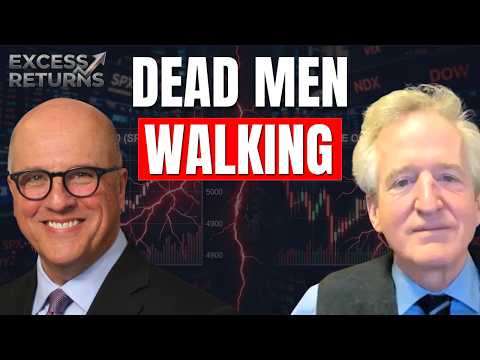
We Asked Rich Bernstein and Chris Davis Why This Market Isn’t as Safe as It Feels
 Excess Returns
· · Hosts: Jack Forehand, Matt Zeigler · Guests: Chris Davis, Rich Bernstein
Summary
The episode focused on why a market that feels calm may still be fragile. The host and the guests argued that investors can mistake perceived safety for actual safety, especially when the market is concentrated in a few popular winners and valuations assume very durable growth. One guest used a family example to show how a portfolio can outperform simply by not selling great businesses too early, while still noting that professional managers face diversification and fiduciary constraints that make that outcome hard to replicate.
A major thread was inflation and how to think about the current regime. One guest argued that today may look more like the 1960s than the 1970s: defense spending, tax cuts, and a still-accommodative Fed could matter more than a simple oil-shock analogy. He also said gasoline as a share of wages is still low enough that consumers may not change behavior as dramatically as they did in the 1970s, even if inflation pressures confidence.
The episode also made a case for owning businesses that generate cash now, not just someday. One guest said higher inflation would increase the appeal of dividends and near-term cash flow, while the other stressed that durability, valuation, and exceptional management teams all matter because business models can change fast. The host and guests repeatedly returned to the idea that markets often reward patience, but not complacency.
Key takeaways
- The guests argued that letting winners run can be powerful, but professional portfolio constraints make that much harder than it looks.
- One guest said today’s macro setup looks more like the 1960s ‘guns and butter’ period than the 1970s oil-shock era.
- One guest said the Fed’s 2% inflation target is likely outdated and that 3% to 4% may better reflect reality.
- The guests said higher inflation would raise the value of dividends and near-term cash flow relative to distant growth stories.
- One guest argued that durable businesses still matter, but valuation has to match how durable the cash flows really are.
Notable quotes
“Her portfolio has probably outperformed our fund by 500 basis points a year for almost 20 years”
“We don't think this is quite the 1970s. Rather, it looks to us much more like the 1960s”
“One of the peculiarities of investing is that the more risk people feel they're taking, the less risk they are taking”
“The way I describe to people is look, the Fed is still using a 2% inflation target”
How the episode opens
Her portfolio has probably outperformed our fund by 500 basis points a year for almost 20 years. And you say, how's that possible? She doesn't own a single company that we don't own.
We don't think this is quite the 1970s. Rather, it looks to us much more like the 1960s. And the 1960s were a period this the second half of the 1960s were called the guns and butter period.
One of the peculiarities of investing is that the more risk people feel they're taking, the less risk they are taking. If you can't afford to buy gasoline, you can't afford to buy bread, you can't afford to buy groceries, you don't care about growth in 15 or 20 years.
Welcome to the Excess Returns Weekly Rap. I'm Jack Forehand and straight out of the dentist here. U hopefully drugged up and going to say some wildly controversial stuff, I've got my good friend Matt Ziggler.
Listen, Steve Martin is my dentist in heart and spirit from Little Shop of Horrors, and that's the only way I roll. Luckily, clean bill of health. I know the people will be excited to know my braces less teeth as they evolved in my adult life.
Cavity-free yet again, the street continues. Only broken once a couple of years ago, but a lot of cavities in your house, Jack. You doing okay over there?
Uh, you know, not too many. I had a lot when I was a kid. I had a dentist who was incompetent who uh just refused to actually acknowledge that I had cavities.
So when I finally got to the adult dentist, they're like, "This is this we're going to need to do some work here."
So uh — And that's when you turn to uh active managers and talking to them all day.
From the episode’s captions: roughly the first two minutes, lightly cleaned. Keep watching on YouTube →
Topics
- letting winners run
- inflation risk
- market concentration and diversification
- dividends and cash flow
- ai as an investment story
Watch the episode
Watch “We Asked Rich Bernstein and Chris Davis Why This Market Isn’t as Safe as It Feels” on YouTube
Summary, takeaways and quote selection by Octagon. Quotes are short excerpts; the full conversation is in the episode.
More from Excess Returns
-
 An AI Bubble Could Hit Stocks. Inflation Could Hit Bonds. How Do You Diversify and Keep Both?
-
 Tech Is Priced for a Boom. 86% of the Economy Grew 0.7%. What If AI Slows?
-
 Tech Is the Cheapest Since 2022. Walmart Is 46 Times Earnings. Where Is the Bubble?
-
 This $1.5 Trillion Manager Expects More Fed Hikes. So Why Is He Still Bullish?
-
 AI Stocks Cracked. Margins Could Be Peaking. So Why Is a Liquidity Expert Watching the Debt Wall?
-
 The AI Trade Is Cracking | Peter Boockvar on What to Own Instead
Excess Returns, this episode and its artwork belong to Excess Returns. Octagon is not affiliated with the show; this page is an independent summary.
