
Episode summary
Olivier Blanchard Talks SPCX Economics, Tentative Merger with TSLA
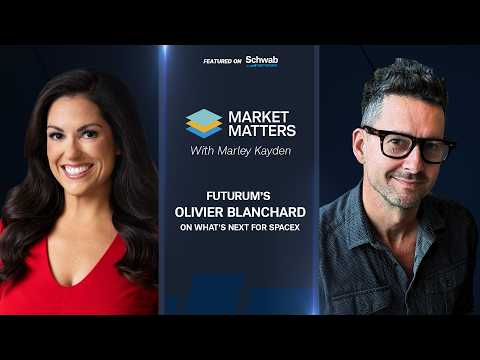
Summary
The discussion centered on whether SpaceX’s expanding business model can justify its lofty valuation and aggressive revenue ambitions, or whether the physics and economics simply do not work at scale. Olivier Blanchard argued that the company’s tech is real, but the buildout required for tens of thousands of launches, millions of satellites, and orbital compute is where the math breaks down. He said the biggest constraint is not the technology itself, but the scale of manufacturing, replacement, and deployment needed to meet Elon Musk’s targets.
Blanchard was also skeptical of SpaceX’s push into wireless spectrum and carrier services. He said the company is effectively trying to create demand rather than meet it, and that terrestrial networks remain cheaper, simpler, and less frictional than space-based alternatives. He favored partnerships or even a major carrier acquisition over trying to become a standalone rival to T-Mobile or Verizon, especially if SpaceX wants durable commercial revenue.
On the potential SpaceX-Tesla combination, Blanchard said the strategic logic is real in terms of shared IP, battery and power systems, and robotics. But he sees SpaceX as the stronger company and the likelier acquirer, with Tesla serving as a source of useful engineering rather than the core growth engine. He also warned that regulators, national security concerns, and scrutiny of Elon Musk could become the biggest threat to the combined story.
Key takeaways
- Olivier Blanchard says the biggest risk to SpaceX is not technology, but whether it can physically scale launches, satellites, and maintenance fast enough.
- He thinks the economics of orbital AI data centers do not work against terrestrial alternatives, because compute should stay closer to the data.
- Blanchard argues SpaceX’s spectrum strategy looks like supply searching for demand, and says a major carrier partnership or acquisition would be more economical.
- He sees Tesla’s robotics and battery IP as useful to SpaceX, but says SpaceX is the stronger business and the likely acquirer if a deal happens.
- He says federal regulators and national security oversight are a bigger moat threat than rival launch companies over the next five years.
Notable quotes
“The math of it and just kind of like the the the scale of build outs and launches and management of all these satellites just doesn't really add up”
“I am worried about um the speed at which SpaceX can realistically uh deliver the number of payloads in space”
“supply looking for demand or supply trying to create demand and not the other way around”
“Federal regulators, national security oversight. And I would even say just actual investigations into Elon Musk himself”
Topics
- space economy
- revenue targets
- spectrum strategy
- spacex growth phase
- potential merger
Companies and tickers mentioned
- SPCX
- TSLA
- SpaceX
- Futurum
- Tesla
Watch the episode
Watch “Olivier Blanchard Talks SPCX Economics, Tentative Merger with TSLA” on YouTube
Summary, takeaways and quote selection by Octagon. Quotes are short excerpts; the full conversation is in the episode.
More from Schwab Network
-
 Will NVDA Repair Lost Trust? Max Weinbach on Company's Strategic Importance
-
 NVDA & Crypto Correlation "Cuts Both Ways," Stay Nimble on Volatility
-
 Kai Wu on NVDA Facing "Definition of Headline Risk," AI Spending Concerns
-
 Ladner: "Inflection Points" to Determine AI's Direction; NVDA Pain is GOOGL Gain
-
 Daniel Newman on NVDA $2T Decision, Sees MU & SNDK as Vastly Oversold
-
 "Bear Market Rally:" Jim Iuorio's Cautious Take on NVDA Lifting Stocks
Schwab Network, this episode and its artwork belong to their owners. Octagon is not affiliated with the show; this page is an independent summary.
