
Episode summary
Philip Straehl on Midterm Impacts to AI, Health Care, Long-Term Market Momentum
Summary
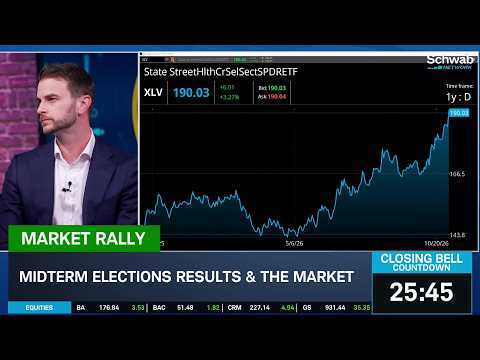
The guest argued that the biggest market lesson from the midterm results is not the headline political outcome, but the long history showing stocks can do well under both divided and unified governments. He said the data point to roughly 7% annualized real returns since 1793 and suggested that, outside recessions, divided government has often been even better for equities because gridlock makes extreme policy moves less likely and forces more compromise.
He also said the market is likely to sort winners and losers by sector rather than treat the outcome as a tide lifting all boats. In his view, AI-related names could face more friction if Democrats gain influence, especially through data-center permitting and possible regulation of model development, while health care could benefit from relief around Medicare and Affordable Care Act-related spending.
Even so, he emphasized that fundamentals matter more than politics. The guest said earnings growth, margins, and valuations should stay the main framework for long-term investors, with politics acting more as a short-term sentiment boost or headwind than a primary driver of returns.
Key takeaways
- The guest said historical data since 1793 show about 7% annualized real returns under both divided and unified governments.
- He argued gridlock can help stocks because it reduces the odds of extreme policy proposals and increases compromise.
- He said AI buildout could slow if regulatory pressure tightens around data centers and model oversight.
- He expects health care, especially hospitals and managed care, to benefit from possible cuts being reinstated or negotiated away.
- He said valuations and earnings fundamentals matter more than election outcomes for long-term investors.
Notable quotes
“since 1793 under, I actually did a check to make sure that that was noto. It is not a typo. Under both divided and unified governments, we generally have a 7% annualized real return”
“the composition of government doesn't really have a massive impact on stock market returns. That's really the conclusion”
“during a gridlock scenario, there's less of a likelihood for more extreme policy proposals and more of a need for consensus and compromise”
“we were going 100 miles an hour the first hof this year. And then with somef the increases in financing costs in, in, in cost of capital, effec we're going at 70 miles an hour”
“it really comes down to what ultimately drives returns in ultimately corporate think it' fundamentals, earnings that drive stocks”
Topics
- midterm impacts
- ai buildout
- healthcare policy
- market momentum
- dc gridlock
Companies and tickers mentioned
- MORN
- Morningstar
Watch the episode
Watch “Philip Straehl on Midterm Impacts to AI, Health Care, Long-Term Market Momentum” on YouTube
Summary, takeaways and quote selection by Octagon. Quotes are short excerpts; the full conversation is in the episode.
More from Schwab Network
-
 Jensen Huang Weighs Return as NVDA CEO; Risks & Rewards in 2027 CapEx Trade
-
 KG: "Shocked" by October Retail Sales; AI Chips Struggle as NVDA Drags
-
 NVDA Influence Beyond Tech: How Earnings Move VIX, Other Sectors
-
 The Big 3: SHOP, TMUS, S
-
 NVDA Earnings, Tighter AI Chip Restrictions to Test SPX Bulls
-
 How NVDA Earnings Will Move Wall Street; U.S. Tightens AI Chip Exports
Schwab Network, this episode and its artwork belong to their owners. Octagon is not affiliated with the show; this page is an independent summary.
