
Episode summary
There's No Single Volatility Number for a Stock

Summary
The host argues that comparing a stock’s implied volatility to a single number is misleading, because volatility varies by expiration and even by strike inside the same options chain. Using Nvidia, Meta, Amazon, QQQ, and IWM, the host shows that individual stocks typically carry much higher implied volatility than broad indexes, which is the market’s way of pricing firm-specific, idiosyncratic risk.
That difference matters most for premium sellers. The host shows that a similar short-put or strangle setup usually collects more premium in a single stock than in an index fund, because the stock’s IV is higher. For example, Meta produced meaningfully more credit than QQQ on a similar 30-delta short put, and Amazon brought in more premium than IWM on a comparable strangle.
The bigger lesson is that premium sellers should think first about where volatility is elevated and what kind of risk they are being paid for. The host says index volatility is the core place to live when it is rich, while single names are better used as supplemental opportunities around the edges.
Key takeaways
- The host says a stock does not have one universal implied volatility number; each expiration and strike has its own.
- Nvidia’s IV index around 67% was far above SPY’s 19.4% and QQQ’s 29%, illustrating firm-specific risk.
- The host showed a similar short-put in Meta paid more credit than the same setup in QQQ because Meta’s implied volatility was higher.
- A comparable strangle in Amazon produced more premium than the same style trade in IWM, again due to higher stock-level IV.
- The host prefers 30-to-60-day premium-selling setups over 0DTE for a more reliable statistical edge.
Notable quotes
“it's kind of a bit of a misnomer to say that the implied volatility on stock XYZ is, you know, 15% or 20% or whatever it might be”
“It really depends on what expiration cycle are you looking at”
“each individual strike inside of a given expiration cycle for a stock is its own self- sustaining city in a lot of ways”
“This is going to be something that's going to manifest itself in the actual premium that we can sell”
“the differences in risk between an index and an individual stock”
Topics
- implied volatility
- options expiration cycles
- option chain strikes
- firm specific risk
- risk diversification
Watch the episode
Watch “There's No Single Volatility Number for a Stock” on YouTube
Summary, takeaways and quote selection by Octagon. Quotes are short excerpts; the full conversation is in the episode.
More from Tastylive
-
 Nvidia Is Down 37% and Traders Can’t Agree What Happens Next
-
 Tim Knight Calls This the Great Sell-the-News Event
-
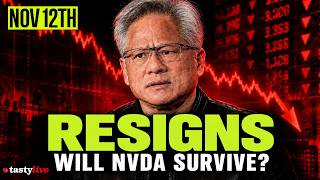 NVIDIA SHOCK: Jensen Huang RESIGNS; NVDA -9% | THURSDAY Nov 12 Live Trading
-
 Stocks Can’t Catch a Break Even as Yields and Oil Fall. Why?
-
 Four Ways to Be Bullish, Three of Them Will Hurt
-
 $250 Million Flowed In on the Worst Day in Months
Tastylive, this episode and its artwork belong to their owners. Octagon is not affiliated with the show; this page is an independent summary.
