
Episode summary
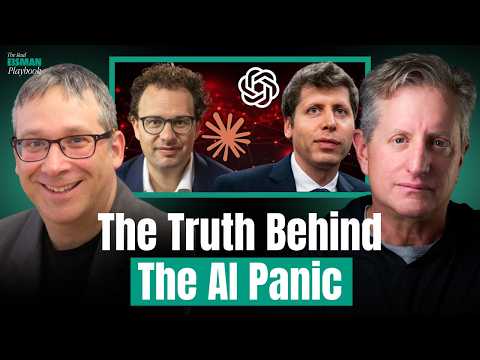
AI Doomsday Fears, Hacking & the Fight for Control with Gary Marcus | The Real Eisman Playbook Ep 79
 The Real Eisman Playbook
· · 47 min · Hosts: Steve Eisman · Guests: Gary Marcus
Summary
Gary Marcus argues that the loudest AI doomsday claims are outpacing the technical reality. He says current systems are still unreliable, especially as agents, and that the real issue is not imminent extinction but poor security and weak control: models can hallucinate, ignore instructions, and in some cases be used in hacking incidents. He frames the recent wave of “AI will kill us all” talk as a mix of genuine belief, hype, and strategic messaging.
Marcus says the business incentives are equally important. The best path to profits is still agentic usage, but those same agents are costly, brittle, and can create cyber risks. He suggests that doom narratives can help AI firms raise capital and win regulatory favor, while also pushing the public and policymakers toward a duopoly-friendly framework. The host largely agrees, arguing that the bigger fear is that leading firms want regulation they can shape.
Marcus also says the policy response should focus on practical controls: stronger sandboxing, monitoring, liability, and outside review before deploying more opaque systems. He describes his UN remarks as a plea to prioritize current cyber risks over speculative extinction scenarios, and to slow down products that are creating real-world harm before they are scaled further.
Key takeaways
- Marcus says the real near-term AI risk is cyber-security failure, not human extinction, because agents are still unreliable and hard to control.
- Marcus argues that doomsday talk can paradoxically help OpenAI and Anthropic by signaling that their models are powerful and worth funding.
- The host says the two biggest AI companies may be trying to manufacture a crisis that leads to regulation they can shape into a duopoly.
- Marcus says the right response is liability, monitoring, sandboxes, and outside review rather than letting companies self-police.
- Marcus says AI systems are not yet close to AGI because they still cannot follow instructions reliably or act safely across open-ended tasks.
Notable quotes
“the finances don't make a lot of sense, right? There's an important thing to note about that story, which is there's one hope for these companies to make money, which is agents”
“the thing you need to most worry about is you know racial profiling from AI which is something we should worry about and had already been happening for several years”
“What is motivating them to make these outlandous statements and then to also say we should slow down”
“They hear powerful, they don't hear die”
How the episode opens
Hi, this is Steve Eisman and welcome to another episode of the real Eisman playbook. So, I have to say not a day goes by where there isn't some crazy insane story about AI these days. you know, month or so ago, I think we were talking about normal things like balance sheet, growth, cash flow, how much money could these companies really make?
You know, like normal business stuff, and now we're talking about the end of the world. Is it going to end? When is it going to end?
Is this serious? Is this a lie? I mean, it's enough to drive anybody crazy.
So back with us today is recurring guest Gary Marcus who hopefully will shed some light on the insanity. So Gary, welcome back.
I was just telling you offstage as it were that I was thinking about writing an essay today called Six Lies Before Breakfast. It's a relentless every day there's so much hype. There's so much spin.
There's so much nonsense. So, let's before we even dig down to the nonsense or or or maybe it's at least maybe some of them actually believe it's not nonsense, let's take a sort of oversight perspective on this thing. What the hell is going on?
I mean, besides the details which we could we're going to go into like is there some meta story here that we we could sort of put everything into context? I'm not sure there's one meta story, but I'll give you a few maybe. So, one meta story is still the one that we keep talking about that we've talked about before, which is the finances don't make a lot of sense, right?
There's an important thing to note about that story, which is there's one hope for these companies to make money, which is agents, because agents cost more money because they make lots of calls out to the internet.
From the episode’s captions: roughly the first two minutes, lightly cleaned. Keep watching on YouTube →
Topics
- ai doomsday narratives
- rogue ai agents
- cybersecurity failures
- ai regulation
- hacking scandals
Companies and tickers mentioned
- Anthropic
- OpenAI
Watch the episode
Summary, takeaways and quote selection by Octagon. Quotes are short excerpts; the full conversation is in the episode.
More from The Real Eisman Playbook
-
 The Midterms Have Changed the AI Narrative: S&P Down 4.4%, Nasdaq Down 5.5% | The Weekly Wrap
-
 Why Young Americans Feel Locked Out with the Lemonade Stand Podcast | The Real Eisman Playbook Ep 82
-
 Anthropic’s Growth is Slowing: Is AI Capex Next? | The Weekly Wrap
-
 Inflation, The Deficit & Why the Dollar Stays King with Benn Steil | The Real Eisman Playbook Ep 81
-
 AI Narrative Switched, Debt Yields Spike | The Weekly Wrap
-
 Big Short Reunion w/ Danny Moses: Rising Rates, AI & Private Equity | The Real Eisman Playbook Ep 80
The Real Eisman Playbook, this episode and its artwork belong to Steve Eisman. Octagon is not affiliated with the show; this page is an independent summary.
