
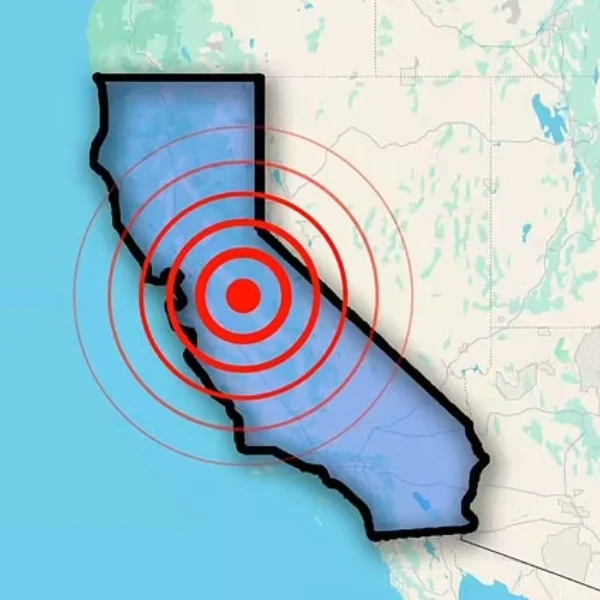
Will there be an at least 8.0 magnitude earthquake in California before 2035?
Yes refers to: Before 2035
Short Answer
1. Market Behavior & Drivers
- UCERF3 projects a 7% M8+ earthquake probability over 30 years.
- Agencies update M8+ probabilities based on models, not specific precursors.
- UCERF4 development aims to revise California's M8+ earthquake probabilities.
- Northern section of the southern San Andreas Fault shows higher rupture potential.
Who Wins and Why
| Outcome | Market | Model | Why |
|---|---|---|---|
| Before 2035 | 31.0% | 21.8% | California's active fault systems are known to produce extremely powerful 8.0+ magnitude earthquakes. |
Current Context
Sources (4)
- 1UCERF3en.wikipedia.org
- 2New Long-Term Earthquake Forecast for California | U.S. Geological Surveyusgs.gov
- 3San Andreas Fault: 93% Chance of M7.0+ Quake in California by 2045 — Is State Ready for Big One?ibtimes.co.uk
- 4Will there be an at least 8.0 magnitude earthquake in California before 2035? | Climate and Weather Prediction Markets | Solflaresolflare.com
2. Price Chart
Historical Price (Probability)
3. Market Data
Contract Snapshot
The market resolves to "Yes" if an earthquake of at least 8.0 magnitude, with an epicenter in California or its territorial waters, occurs before December 31, 2035, as verified by USGS; otherwise, it resolves to "No." The market opened on June 21, 2025, and will close early if the event occurs, or by December 30, 2035, at 11:59 PM EST if it does not, with payouts projected 30 minutes after closing. Insider trading is prohibited for persons with material non-public information or those employed by the Source Agencies.
Available Contracts
Market options and current pricing
| Outcome bucket | Yes (price) | No (price) | Last trade probability |
|---|---|---|---|
| Before 2035 | $0.31 | $0.70 | 31% |
Market Discussion
Traders are primarily discussing the probability of an 8.0 magnitude earthquake in California before 2035, with arguments largely focused on recent seismic activity. Proponents of "Yes" cite perceived recent large earthquakes (e.g., claimed 7.0M or 7.2M events) as indicators of a higher likelihood, viewing it as a profitable opportunity given that payouts occur immediately if the event happens. Conversely, "No" arguments challenge the veracity of these claimed recent large quakes, while some traders also note the extended time horizon of the market, which influences investment decisions and raises questions about platform stability.
4. Trust Index
Order book is critically thin.
Primary risk· Trade quality
Includes the cost to trade: a $1,000 order can't be filled here because the order book is too thin.
Weighted blend with hard caps — a critically weak safety pillar, or a severe trading anomaly, caps the total regardless of the rest. Full methodology · About the Trust Index
5. Why do prediction market odds for an M8+ California earthquake significantly exceed the forecasts from scientific models like the USGS UCERF3?
| Likelihood of M8+ earthquake (30 years) | 7% [1][2][3][4] |
|---|---|
| Previous likelihood (UCERF2) | 4.7% [1][2][3][4] |
| Near-term likelihood for M8+ earthquake | Low [5][6][7] |
6. How does the M8+ earthquake risk posed to California by the Cascadia subduction zone compare to the risk from the San Andreas Fault system?
| Cascadia M8.0-8.5 Recurrence | 220–240 years (southern segment) [1] |
|---|---|
| CA M>=8.0 by 2035 Probability | 2-3% (2026–2035) [2] |
| Cascadia M8+ Decade Probability | Low [1] |
7. What specific seismic precursors would compel agencies like the USGS or Caltech to elevate the official M8+ earthquake probability before 2035?
| USGS Prediction Stance | Has never predicted a major earthquake [1] |
|---|---|
| CA M8+ 30-year likelihood (UCERF2) | 4.7% [2] |
| CA M8+ 30-year likelihood (UCERF3) | 7.0% [2] |
Sources (5)
- 1Can you predict earthquakes? | U.S. Geological Surveyusgs.gov
- 2New Long-Term Earthquake Forecast for California | U.S. Geological Surveyusgs.gov
- 3Earthquake forewarning in the Cascadia regionpubs.usgs.gov
- 4Southern California Earthquake Data Center at Caltechscedc.caltech.edu
- 5The California Earthquake Advisory Plan: A history | U.S. Geological Surveyusgs.gov
8. What are the anticipated model changes and timeline for the upcoming UCERF4 forecast, and how might it revise California's M8+ probability from UCERF3?
| UCERF3 M8+ Probability (30 years) | 7.0% [1] |
|---|---|
| UCERF4 Release Date | Not specified [2] |
| UCERF4 Methodology Focus | Physics-based simulators [2] |
9. How does the M8.0+ rupture potential before 2035 compare between the northern and southern sections of the San Andreas Fault?
| Rupture potential M 7.7-8.0 (Southern San Andreas) | Higher on northern half compared to southern half [1] |
|---|---|
| Statewide M>=8.0 probability (UCERF3) | Approximately 7.0% over the next 30 years [2] |
| Statewide M>=8.0 probability (UCERF2) | Approximately 4.7% over the next 30 years [2] |
10. What Could Change the Odds
Key Catalysts
Key Dates & Catalysts
- Expiration: January 07, 2036
- Closes: December 31, 2035
