
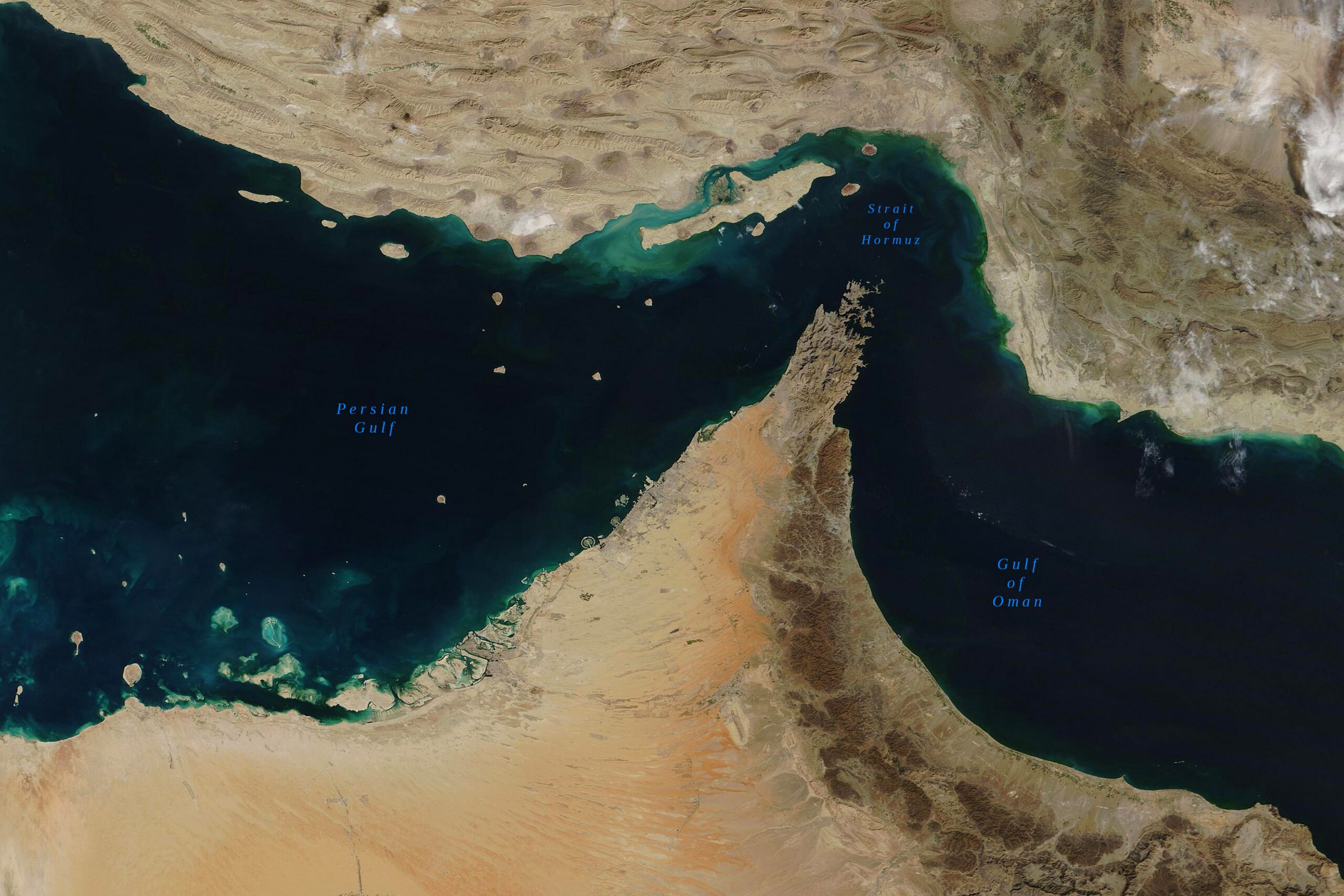
Strait of Hormuz traffic returns to normal by December 31?
Short Answer
1. Market Behavior & Drivers
- Yes, Iranian factions exhibit strategic consensus regarding the Strait of Hormuz.
- Yes, US and allies demand security guarantees for navigation freedom.
Who Wins and Why
| Outcome | Market | Model | Why |
|---|---|---|---|
| Yes | 60.0% | 56.7% | Progress toward an Iran ceasefire could lead to normalized transit through the Strait. |
Current Context
Sources (11)
- 1Hormuz Traffic at a Trickle as Ship Attacks Heighten Concerns - Bloombergbloomberg.com
- 2Strait of Hormuz Status: August 3, 2026 | Straits Daily Briefstraits.live
- 3Hormuz Situation Report · Straits | Straitsstraits.live
- 4Iran, Oman in final Strait of Hormuz talks; Trump claims...cnbc.com
- 5Officials report progress on a deal to reopen the Strait of Hormuz | AP Newsapnews.com
- 6Iran Update Special Report, August 4, 2026 | ISWunderstandingwar.org
- 7Iranian parliament reviews bill to restrict Strait of Hormuz transitaa.com.tr
- 8Why Iran is fighting to keep Hormuz at center of US negotiations - AL-MONITOR: The Middle Eastʼs leading independent news source since 2012al-monitor.com
- 9https://polymarket.com/event/strait-of-hormuz-traffic-returns-to-normal-by-december-31/strait-of-hormuz-traffic-returns-to-normal-by-december-31polymarket.com
- 10Strait of Hormuz traffic returns to normal by December 31? — Odds & Predictions | PredScopepredscope.com
- 11Strait of Hormuz traffic: Will it normalize by Dec 31?chanceindex.com
2. Price Chart
Historical Price (Probability)
3. Significant Price Movements
Notable price changes detected in the chart, along with research into what caused each movement.
📈 August 02, 2026: 12.0pp spike
Price increased from 46.5% to 58.5%
Outcome: Yes
4. Market Data
Contract Snapshot
This Polymarket contract resolves to "Yes" if IMF Portwatch publishes a 7-day moving average of transit calls for the Strait of Hormuz equal to or above 60 for any date between market creation and December 31, 2026. Otherwise, the market will resolve to "No" once data has been published for the final date of December 31, 2026, and the "Yes" condition has not been met. The market can resolve early if the "Yes" condition is satisfied, and data revisions within the timeframe are considered, while obvious data integrity issues may delay final resolution for corrections.
Available Contracts
Market options and current pricing
| Outcome bucket | Yes (price) | No (price) | Last trade probability |
|---|---|---|---|
| Yes | $0.61 | $0.40 | 60% |
Market Discussion
For the Kalshi prediction market on the Strait of Hormuz traffic, traders currently show a 60.5% consensus for normalization by year-end, which means reaching a 7-day average of 60 transit calls. Key arguments for "Yes" focus on ongoing diplomatic talks, the potential for a durable agreement, and previous temporary easements. Arguments for "No" emphasize persistent US-Iran hostilities, vessel attacks, high war-risk insurance costs, and traffic remaining significantly below pre-crisis levels.
5. Trust Index
Largest single print on “Yes” carried 52% of its $5,579 tape (window is 23% of 24h flow)
Integrity risk· Large trades
Includes the cost to trade: a $10,000 order loses about 3% of the price to slippage.
Weighted blend with hard caps — a critically weak safety pillar, or a severe trading anomaly, caps the total regardless of the rest. Full methodology · About the Trust Index
6. What are the key political or military triggers within Iran that could halt the diplomatic progress on reopening the Strait of Hormuz before December 31?
| Current Diplomatic Status | Positive and progressive as of early August 2026 (Iran and Oman) [1][2][3] |
|---|---|
| Prior Diplomatic Outcome | Collapsed in June 2026 [3] |
| Key Military Trigger | Resumption of direct military strikes between the U.S. and Iran [4] |
Sources (10)
- 1Officials report progress on a deal to reopen the Strait of Hormuz | AP Newsapnews.com
- 2Iran, Oman make ‘positive’ progress on Strait of Hormuz shipping framework: Iran Foreign Ministry spokespersongulfnews.com
- 3Strait of Hormuz Deal With Iran Possible Soon, Bessent Saysnytimes.com
- 4Proposed Hormuz deal would give Iran control of inbound...reuters.com
- 5Strait of Hormuz traffic plunges as US, Iran resume fighting | Shipping | Al Jazeeraaljazeera.com
- 6No breakthrough on Strait of Hormuz as Trump halts attack on Iran | US-Israel war on Iran News | Al Jazeeraaljazeera.com
- 7US-Iran strikes: Strait of Hormuz ship traffic falls steeplybbc.com
- 8Trump Says Talks Are Iran’s ‘Last Chance’ After Threats | Bloomberg Businessweekyoutube.com
- 9Trump Considers "Massive" Iran Attack, Imposes New Tariffs | Bloomberg Daybreak: US Editionyoutube.com
- 10Trump Talks Up Iran Diplomacy; Chip Rout Deepens on China Competition | Bloomberg Daybreak: US...youtube.com
7. According to maritime logistics experts, what is the realistic timeline for traffic to ramp up from current 'trickle' levels to the 60-transit daily average once a political deal is announced?
| Current Daily Transits | 8-15 per day (early August 2026) [1][2][3] |
|---|---|
| Normal Traffic Level (Prediction Markets) | 60 or more daily transits (7-day moving average) [4][5][6] |
| Time for Full Return to Pre-Crisis Levels | 3 to 12 months [1][2][3][7][8] |
Sources (9)
- 1Strait of Hormuz Status: August 3, 2026 | Straits Daily Briefstraits.live
- 2Strait of Hormuz Crossings Rise 8% Week-on-Week, But Dark AIS Activity Remains Elevatedforeignpolicyjournal.com
- 3Hormuz crossings drop 70% as traffic shifts to Iran route Strait of Hormuz crossings drop 70% as tanker traffic shifts almost entirely to the Iranian route | Kpler - Jul 23, 2026kpler.com
- 4Dear Mr. Kirkpatrick,cftc.gov
- 5The Daily View: Place your bets on length of Hormuz disruption :: Lloyd's Listlloydslist.com
- 6Strait of Hormuz Closed, Day 145 | Live Tracker & Monitorstraits.live
- 7The Strait of Hormuz is reopening, but global shipping won’t return to normal for monthstheconversation.com
- 8US-Iran deal to reopen Strait of Hormuz— but full container shipping recovery at least three months awayxeneta.com
- 9After the deal: Transits could near 50% of pre-war levels After the deal: Transits could near 50% of pre-war levels in 30 days | Kpler -kpler.com
8. How do the publicly stated goals of Iran's moderate government factions compare with those of hardline elements in the IRGC and Parliament regarding the terms for reopening the Strait?
| Factional Strategic Consensus | Moderate and hardline elements agree on Strait of Hormuz as essential leverage and for regime survival [1][2][3][4] |
|---|---|
| Factional Tactical Disagreement | Disagreement is tactical, concerning negotiations versus military escalation [1][2][3][4] |
| Condition for Full Reopening | US must end naval blockade and withdraw from the region [5][6][7][8] |
Sources (8)
- 1Iran’s leaders are united over the war but not over what comes next | AP Newsapnews.com
- 2Iran Update Special Report, July 11, 2026 | ISWunderstandingwar.org
- 3Why Iran is risking so much over the Strait of Hormuzbbc.com
- 4Iran Update Special Report, July 28, 2026 | ISWunderstandingwar.org
- 5Iran says a deal with Oman to reopen the strait of Hormuz...theguardian.com
- 6Live Updates: Iran, Oman deal on Strait of Hormuz getting...cbsnews.com
- 7Hormuz Situation Report · Straits | Straitsstraits.live
- 8No breakthrough on Strait of Hormuz as Trump halts attack on Iran | US-Israel war on Iran News | Al Jazeeraaljazeera.com
9. What is the methodology and reporting lag for the IMF PortWatch data, and are there alternative real-time vessel tracking sources that could serve as leading indicators?
| IMF PortWatch Data Lag | 3–5 days [1][2][3] |
|---|---|
| IMF PortWatch Data Source | Satellite-based Automatic Identification System (AIS) vessel movement data [1][2][3] |
| Alternative Real-time Trackers | AISStream, Kpler, and SeaVantage [3][4][5] |
10. What specific security guarantees are the US and its allies likely to require from Iran and Oman as preconditions for endorsing a new maritime traffic framework?
| US & Allies Stance | Require security guarantees for freedom of navigation (UNCLOS) [1][2][3] |
|---|---|
| Rejected Proposals | Iran's proposals for oversight and fee collection [1][4][5] |
| Negotiation Status | Iran and Oman negotiating maritime framework as of August 2026 [1][6][5] |
Sources (6)
- 1Officials report progress on a deal to reopen the Strait of Hormuz | AP Newsapnews.com
- 2Iran and Oman propose fee plan for Strait of Hormuz, sources saynbcnews.com
- 3How Allowing Iran to Charge Ships in the Hormuz Strait Undermines U.S. Strategyjustsecurity.org
- 4Iran and Oman swap proposals to manage Strait of Hormuz: What we know | US-Israel war on Iran News | Al Jazeeraaljazeera.com
- 5Iran and Oman exchange proposals to manage Strait of Hormuz | US-Israel war on Iran News | Al Jazeeraaljazeera.com
- 6Iran, Oman make ‘positive’ progress on Strait of Hormuz shipping framework: Iran Foreign Ministry spokespersongulfnews.com
11. What Could Change the Odds
Key Catalysts
Key Dates & Catalysts
- Closes: December 31, 2026
Sources (9)
- 1Strait of Hormuz Status: August 3, 2026 | Straits Daily Briefstraits.live
- 2Hormuz Traffic at a Trickle as Ship Attacks Heighten Concerns - Bloombergbloomberg.com
- 3Hormuz Situation Report · Straits | Straitsstraits.live
- 4The Oil Market’s Billion-Barrel Problemyoutube.com
- 5Officials report progress on a deal to reopen the Strait of Hormuz | AP Newsapnews.com
- 6Iran says Hormuz deal with Oman in final stage as Trump signals breakthroughca.news.yahoo.com
- 7Strait of Hormuz traffic returns to normal by… 86% Yes · Polymarketexplorer.struct.to
- 8DGPredict - Prediction Marketsdgpredict.com
- 9Strait of Hormuz traffic: Will it normalize by Dec 31?chanceindex.com
