Short Answer

The model aligns with market consensus that Trump creating a $250 bill featuring himself before Jan 1, 2027 is unlikely, seeing no actionable edge.

1. Market Behavior & Drivers

This prediction market has exhibited a sideways trading pattern, with the probability of a Trump-featured $250 bill remaining consistently low. The price has been range-bound, fluctuating between a support level of approximately 4.0% and a resistance ceiling at 13.0%. The market opened at 5.7% and currently trades at 5.8%, indicating a lack of significant long-term trend or change in sentiment. The primary spike to the 13.0% high likely occurred in response to the news that H.R. 1761, the "Donald J. Trump $250 Bill Act," was formally introduced. However, this peak was not sustained, suggesting that while the legislative proposal created initial interest, the market quickly priced in the low odds of it passing through Congress and becoming law.
The total volume of 14,879 contracts suggests moderate but not overwhelming interest over the market's lifetime. The recent sample data points showing zero volume indicate that trading activity has become sparse, which is common when a market price has stabilized and there is no new information to drive speculation. This lack of recent volume implies that traders have low conviction in a price move in either direction and are waiting for new developments. The price consistently returning to the 5-6% range after any upward movement shows that this level has become a strong point of equilibrium.
Overall, the chart suggests a persistent market consensus that the bill is highly unlikely to be enacted before the 2027 resolution date. The market sentiment is decidedly bearish, assigning the event a probability consistently below 15%. The initial reaction to the bill's introduction appears to have been the high point of optimism, but the price's failure to hold those gains and subsequent drift back to its starting level indicates that traders view the proposal as having very slim prospects of succeeding.
  • H.R. 1761 was introduced in House on February 27, 2025.
  • The bill must navigate House and Senate committees to pass.
  • US law generally prohibits living individuals from appearing on currency.
  • H.R. 1761 aims to amend existing law for living presidents.
  • Treasury Department and experts likely object to the bill's intent.

Who Wins and Why

Outcome Market Model Why
Before Jan 1, 2027 5.8% 2.6% Creating a $250 bill featuring a president would require unprecedented congressional action and face significant opposition.

Current Context

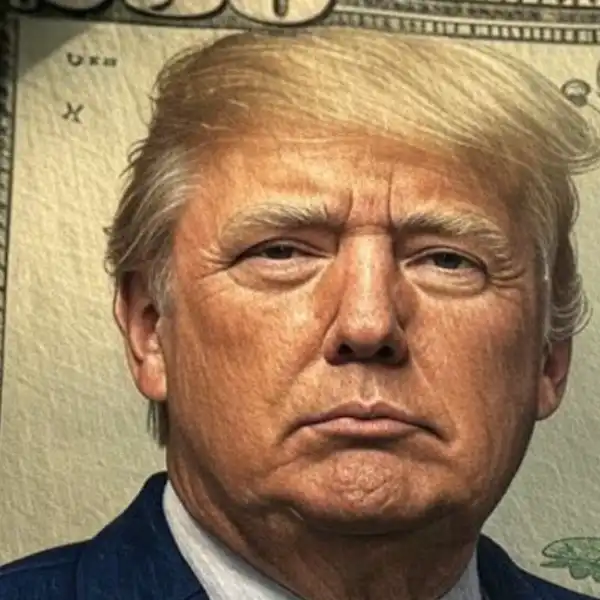
A bill has been introduced to feature Donald J. Trump on a new $250 bill. H.R. 1761, titled the "Donald J. Trump $250 Bill Act," was introduced by Representative Joe Wilson (R-SC) on February 27, 2025 [1][2][3][4]. The legislation requires the U.S. Treasury to print $250 bills with Trump's portrait within one year of its potential enactment, timing this with the United States' 250th anniversary in 2026 [1][2][3][4]. As of early 2026, the bill has attracted 15 Republican cosponsors, including Representatives Norman, Ogles, Barr (who joined on January 7, 2026), and Rose (who joined on February 24, 2026) [5].
The bill faces significant hurdles with an extremely low enactment probability. H.R. 1761 has been referred to the House Financial Services Committee but has not seen any reported hearings, votes, or further advancement [6][7]. Congressional tracking service GovTrack assesses the bill's chance of enactment at just 2%, noting its deviation from long-standing norms against depicting living figures on U.S. currency [8][9]. No expert analyses or prediction markets suggest the bill will pass before 2027, indicating that this initiative is likely a symbolic Republican effort that requires broad support to succeed [9].
Sources (9)
  1. 1Wilson Introduces Legislation to Print President Trump on New $250 Bill | Representative Joe Wilsonjoewilson.house.gov
  2. 2H.R.1761 - Donald J. Trump $250 Bill Act 119th Congress (2025-2026) |congress.gov
  3. 3Text - 119th Congress (2025-2026): Donald J. Trump $250 Bill Actcongress.gov
  4. 4Text of H.R. 1761: Donald J. Trump $250 Bill Act (Introduced version) - GovTrack.usgovtrack.us
  5. 5Details for H.R. 1761: Donald J. Trump $250 Bill Act - GovTrack.usgovtrack.us
  6. 6Details for H.R. 1761: Donald J. Trump $250 Bill Act - GovTrack.usgovtrack.us
  7. 7HR1761 | US Congress 2025-2026 | Donald J. Trump $250 Bill Act - Legislative Tracking | PolicyEngagetrackbill.com
  8. 8Donald J. Trump $250 Bill Act (H.R. 1761) - GovTrack.usgovtrack.us
  9. 9HR 1761 - Congressional Auditor: PoliScorepoliscore.us

2. Price Chart

Historical Price (Probability)

Outcome probability
Date

3. Market Data

Contract Snapshot

This market resolves to "Yes" if a bill mandating the creation and issuance of a $250 U.S. bill featuring Donald J. Trump's likeness becomes law before January 1, 2027; otherwise, it resolves to "No." The outcome is verified by the Library of Congress, and the market closes by January 1, 2027, at 10:00 am EST if the event does not occur, with insider trading explicitly prohibited for employees of Source Agencies or those with material, non-public information.

Available Contracts

Market options and current pricing

Outcome bucket Yes (price) No (price) Last trade probability
Before Jan 1, 2027 $0.06 $0.94 6%

Market Discussion

The market discussion is highly skeptical, with traders overwhelmingly believing it's improbable for a $250 bill featuring Donald Trump to become law by 2027. Key arguments for "No" highlight the unlikelihood of such a "goofy" bill passing the Senate, Trump's perceived superstition about only dead people appearing on currency, and the idea that he would find $250 too low an amount, preferring a significantly higher denomination. The main argument for "Yes" is a brief comment that it "should happen in May with Memorial Day celebrations," with some suggesting the $250 value ties into America's 250th anniversary.

4. Trust Index

Octagon Trust Index Kalshi 73 Good

Order book is critically thin.

Primary risk· Trade quality

How it adds up
Integrity80% of score84Good
Trade quality20% of score28Avoid

Includes the cost to trade: a $1,000 order can't be filled here because the order book is too thin.

Trust score73Good

Weighted blend with hard caps — a critically weak safety pillar, or a severe trading anomaly, caps the total regardless of the rest. Full methodology · About the Trust Index

Trust profile
Integrity4 screens run · 6 don't apply

5. What is the complete legislative pathway H.R. 1761 must navigate in both the House and Senate to become law before the 119th Congress concludes in January 2027?

Introduction DateFebruary 27, 2025 [1][2][3]
Primary SponsorRep. Joe Wilson (R-SC) [1][2][3]
Enactment Chance2% [4]
H.R. 1761 was introduced in the House and referred to committee. The "Donald J. Trump $250 Bill Act" (H.R. 1761) was introduced in the U.S. House of Representatives on February 27, 2025, by Representative Joe Wilson (R-SC) [1][2][3]. This bill gained support from 16 additional Republican sponsors [2][3]. On the same day it was introduced, H.R. 1761 was referred to the House Financial Services Committee [1][4][5][6].
The bill has made no progress and faces a legislative deadline. As of May 8, 2026, H.R. 1761 has not advanced through any legislative stages, including hearings, markup sessions, or floor votes in the House [1][4][5][6]. For the bill to become law, it must be enacted before the conclusion of the 119th Congress, which is set to adjourn on January 3, 2027; failure to do so will prevent its further consideration [4]. GovTrack.us currently estimates the bill's chance of enactment at 2% [4].
Sources (6)
  1. 1H.R.1761 - Donald J. Trump $250 Bill Act 119th Congress (2025-2026) |congress.gov
  2. 2Details for H.R. 1761: Donald J. Trump $250 Bill Act - GovTrack.usgovtrack.us
  3. 3H.R. 1761: Donald J. Trump $250 Bill Act (119th Congress) Bill Summary | Quiver Quantitativequiverquant.com
  4. 4Donald J. Trump $250 Bill Act (H.R. 1761) - GovTrack.usgovtrack.us
  5. 5Donald J. Trump $250 Bill Act 119th Congress (2025-2026)congress.gov
  6. 6Bill tracking in US - HR 1761 (119 legislative session) - FastDemocracyfastdemocracy.com

6. What is the consensus forecast for H.R. 1761's enactment from non-partisan legislative tracking services like GovTrack and Skopos Labs as of late 2026?

GovTrack Enactment Probability2% [1]
Bill Introduction DateFeb 27, 2025 [1]
Overall Enactment OddsUnder 10% [1][2]
H.R. 1761 proposes a $250 bill featuring Donald Trump. This legislation was introduced on February 27, 2025, by Representative Joe Wilson (R-SC) [1][3][4]. Its primary objectives include directing the Treasury to issue a $250 bill bearing Donald Trump's image and exempting living presidents from existing bans on portrait currency [1][3][4].
The bill's enactment probability is currently very low. Since its introduction, H.R. 1761 has remained in committee [5][6]. GovTrack's latest assessment indicates a 2% probability of the bill's enactment [1]. The broader consensus from available legislative tracking sources suggests the bill faces exceptionally low odds, estimated to be under 10%, primarily due to its early legislative stage and partisan nature [1][2].
Sources (6)
  1. 1Donald J. Trump $250 Bill Act (H.R. 1761) - GovTrack.usgovtrack.us
  2. 2HR 1761 - Congressional Auditor: PoliScorepoliscore.us
  3. 3H.R.1761 - Donald J. Trump $250 Bill Act 119th Congress (2025-2026) |congress.gov
  4. 4Proposal for creating a $250 bill featuring Trump | PM Bug gold and silver discussion forumpmbug.com
  5. 5Skopos Labs Climate Policy Analyticsclimate.skoposlabs.com
  6. 6Bill tracking in US - HR 1761 (119 legislative session) - FastDemocracyfastdemocracy.com

7. How do the arguments from Rep. Joe Wilson for the bill contrast with the main objections raised by the Treasury Department and numismatic experts?

Bill NameDonald J. Trump $250 Bill Act (H.R.1761) [1]
Introduction Date2025-02-27 [1]
Primary ObjectionViolates 1866 law banning living portraits [2]
Representative Joe Wilson introduced legislation to create a new $250 bill. On February 27, 2025, Representative Joe Wilson introduced the 'Donald J. Trump $250 Bill Act' (H.R.1761) [1]. The bill outlines several objectives: commemorating the 250th U.S. anniversary in 2026, addressing 'Bidenflation' with a higher denomination, and honoring Donald J. Trump [1][3][4]. If enacted, the legislation would compel the Treasury to print $250 notes featuring Trump's portrait within one year. It also seeks to exempt presidents from 31 USC 5114(b), a specific legal section [4].
The proposed $250 bill faces significant legal and practical objections. A primary concern is its conflict with an 1866 law that strictly prohibits placing portraits of living individuals on U.S. currency [2]. Furthermore, the creation of new currency involves a complex process that necessitates the collaboration of multiple agencies, including the Treasury, the Bureau of Engraving and Printing, the Federal Reserve, and the Secret Service, all working to ensure security [2]. The 'Donald J. Trump $250 Bill Act' currently remains in committee [3][2].
Sources (4)
  1. 1Wilson Introduces Legislation to Print President Trump on New $250 Bill | Representative Joe Wilsonjoewilson.house.gov
  2. 2Trump on a $250 bill? Lawmaker’s currency effort faces roadblock – NBC 7 San Diegonbcsandiego.com
  3. 3Text - 119th Congress (2025-2026): Donald J. Trump $250 Bill Actcongress.gov
  4. 4https://joewilson.house.gov/sites/evo-subsites/joewilson.house.gov/files/evo-media-document/%24250billact.pdfjoewilson.house.gov

8. What are the specific U.S. laws and Treasury Department conventions regarding the depiction of living individuals on currency, and have there been any exceptions?

Legal Basis for Prohibition31 U.S.C. § 5114(b) mandates deceased individuals on currency [1]
Origin of ProhibitionThayer Amendment, enacted 1866 [2][3][4]
Highest US Currency Denomination$100 [1]
United States law generally prohibits living individuals on currency and securities. This long-standing practice is rooted in a specific 1866 amendment [2][3][4]. Specifically, 31 U.S.C. § 5114(b) mandates that only portraits of deceased individuals may appear on U.S. currency and securities [1]. The Thayer Amendment, enacted in 1866 following a scandal involving Spencer M. Clark's self-portrait, explicitly prohibits living persons on 'bonds, securities, notes, fractional or postal currency' [2][3][4]. For circulating coins, the Presidential $1 Coin Act of 2005 further requires presidents to be deceased for at least two years before their image can be used [2].
Exceptions to this living individual rule are limited and specific. These exceptions are primarily for commemorative coins, such as the 1995 Special Olympics silver dollar which uniquely featured Eunice Kennedy Shriver [2][4]. Despite recent proposals for Donald Trump's image on 2025 gold and $1 coins, potentially utilizing semiquincentennial authority, and for his signature on bills in 2026, existing law dictates that new denominations require Congressional approval [3][5][1]. There is currently no $250 bill, nor has one been proposed, with the highest existing denomination being $100 [1].
Sources (5)
  1. 1Face Value: How the U.S. Treasury Designs Our Moneylewisrice.com
  2. 2Living People on U.S. Coins: Laws & Rare Exceptions | GOVMINTgovmint.com
  3. 3Can a Living Person Appear on U.S. Currency? | Tradition, Thayer Act, & Trump Coins | Britannicabritannica.com
  4. 4Upending The Theory of the Thayer Amendmentskepticallycurious.substack.com
  5. 5Trump just ended a 165-year tradition by signing your dollar bills — here's why no president has ever done it beforefinance.yahoo.com

9. Who are the key Republican and Democratic leaders on the House Financial Services Committee, and what are their public stances on politicizing currency design?

Republican LeaderFrench Hill (R-AR) [1][2][3][4]
Democratic LeaderMaxine Waters (D-CA) [5][6][7][8]
Stance on Politicizing BillsNo direct public stances identified [9][4][10]
The House Financial Services Committee key leaders are French Hill and Maxine Waters. French Hill (R-AR) serves as the chair of the House Financial Services Committee, a position he has held since 2025 [1][2][3][4]. The Ranking Member for the committee is Maxine Waters (D-CA) [5][6][7][8]. The committee also addresses currency matters through its Task Force on Monetary Policy, which is led by Frank Lucas (R-OK) [1][11].
French Hill prioritizes financial innovation and a strong U.S. Dollar. He specifically champions financial innovation, advocates for strengthening the U.S. Dollar via stablecoins, and opposes the implementation of a Central Bank Digital Currency (CBDC) [1][2][3][4]. Maxine Waters is actively engaged in the committee Democrats' work [5][6][7][8]. While these leaders' general focus gravitates towards ensuring apolitical financial resilience [9][4][10], the available research does not include direct public statements from them concerning the politicization of bill designs with politicians.
Sources (11)
  1. 1GOP Leadership | U.S. House Committee on Financial Servicesfinancialservices.house.gov
  2. 2United States House Committee on Financial Servicesen.wikipedia.org
  3. 3U.S. House Committee on Financial Servicesfinancialservices.house.gov
  4. 4Chairman Hill: A Properly Regulated Stablecoin Market Can Strengthen the U.S. Dollar’s Dominance | U.S. House Committee on Financial Servicesrepublicans-financialservices.house.gov
  5. 5Committee Members | U.S. House Committee on Financial Servicesfinancialservices.house.gov
  6. 6Committee Membership | U.S. House Committee on Financial Services Democratsdemocrats-financialservices.house.gov
  7. 7House Committee on Financial Services - GovTrack.usgovtrack.us
  8. 8U.S. House Committee on Financial Services Democratsdemocrats-financialservices.house.gov
  9. 9Chairman Hill: These Bills Support American Competitiveness and Reinforce the Strength and Resilience of Our Financial System | U.S. House Committee on Financial Servicesfinancialservices.house.gov
  10. 10Committee Republicans Request Federal Reserve Thoughtfully Approach Recirculating Existing Pennies | U.S. House Committee on Financial Servicesfinancialservices.house.gov
  11. 11Task Force on Monetary Policy, Treasury Market Resilience, and Economic Prosperity Reviews the Treasury-Fed Accord | U.S. House Committee on Financial Servicesrepublicans-financialservices.house.gov

10. What Could Change the Odds

Key Catalysts

H.R.1761 was introduced on February 27, 2025, by Representative Joe Wilson (R-SC), with cosponsors Harshbarger, Norman, and Issa [1]. This legislation mandates the issuance of $250 notes featuring a portrait of Trump within one year of enactment, amending the Federal Reserve Act and 31 USC 5114 to include living presidents [2].
As of May 2026, no progress has been reported on the bill [3]. The Octagon AI model assigns a 5.3% 'Yes' probability to its passage, which contrasts with the market's 7.7-8% [3].
Potential catalysts for the bill's progression include actions by Donald Trump, who reposted an op-ed by Representative Andy Barr on October 8, 2025, and publicly displayed a bill mockup at Doral in March 2026 [4].

Key Dates & Catalysts

  • Expiration: January 01, 2027
  • Closes: January 01, 2027
Sources (4)
  1. 1Wilson Introduces Legislation to Print President Trump on New $250 Bill | Representative Joe Wilsonjoewilson.house.gov
  2. 2https://joewilson.house.gov/sites/evo-subsites/joewilson.house.gov/files/evo-media-document/%24250billact.pdfjoewilson.house.gov
  3. 3H.R.1761 - Donald J. Trump $250 Bill Act 119th Congress (2025-2026) |congress.gov
  4. 4Donald Trump Pushes to Put His Own Face on New $250 Billthedailybeast.com