
Episode summary
The AI Shakeup Has A Message | The Brainstorm 158
 ARK Invest
· · Hosts: Brett Winton, Nick

Summary
SpaceX’s recent Starship landing is framed as a major technical and commercial inflection point. The hosts argue that returning the upper stage, the largest object ever brought back from space, could sharply reduce launch costs, potentially toward $100 per kilogram from about $600 to $700 on Falcon 9. They say the bigger surprise is refurbishment speed: Elon Musk suggested the vehicle might be ready again in weeks, versus the 90 days ARK had modeled, which would improve launch cadence and capital efficiency.
That lower cost structure is then tied to orbital compute. Once launch costs fall below roughly $300 to $400 per kilogram, the economics of space-based data centers begin to pencil, and at $100 per kilogram launch may no longer be the binding constraint. The hosts also note that SpaceX’s manufacturing scale and reusable fleet could let it deploy compute faster than terrestrial rivals dealing with siting and permitting.
The second half turns to NVIDIA after Jensen Huang’s exit. The hosts argue he represented aggressive capital allocation across the AI stack: neoclouds, open-weight models, Chinese access, and biology venture bets. They expect a more conservative posture under the CFO, but disagree on the implications for AI demand. One side sees Jevons paradox driving higher total spend as intelligence gets cheaper; the other worries companies will soon test what they will actually pay.
Key takeaways
- SpaceX’s reusable Starship upper stage could push launch costs toward $100 per kilogram, materially improving the economics of orbital compute.
- The hosts say refurbishment may take weeks, not the 90 days ARK modeled, which would increase launch cadence and capital efficiency.
- Jensen Huang’s departure is expected to slow Nvidia’s aggressive ecosystem financing, especially neoclouds, open-weight models, and biology venture bets.
- The hosts disagree on AI demand: one expects Jevons paradox to drive higher aggregate spend as inference gets cheaper, while the other expects companies to cap spending against revenue growth.
- A key near-term test is whether GPU pricing, Nvidia guidance, and frontier model revenue keep compounding at the pace markets assumed.
Notable quotes
“This is the largest by volume object that we have ever returned from space”
“they could lower their cost per launch to around $100 per kilogram from right now we think on the Falcon 9 they're at, you know, $6 to $700 per kilogram”
“We thought the first um Starship to even successfully land if it were to occur would have taken 90 days of refurbishment”
“what did Jensen represent to the broader AI market? like we can put you know just the discussion around Nvidia on pause”
“Jevans paradox where it's like you get this stuff cheaper, you find more uses for it and then you expand across your uses”
Topics
- spacex starship reusability
- launch cost and orbital compute
- nvidia leadership change
- ai demand and open weight models
- ai spending limits
Companies and tickers mentioned
- NVDA
- SpaceX
- NVIDIA
Watch the episode
Watch “The AI Shakeup Has A Message | The Brainstorm 158” on YouTube
Summary, takeaways and quote selection by Octagon. Quotes are short excerpts; the full conversation is in the episode.
More from ARK Invest
-
 Did The Midterms Just Break The AI Trade? | The Brainstorm 157
-
 Cathie Wood: Did The Market Overreact To The Election? | In The Know
-
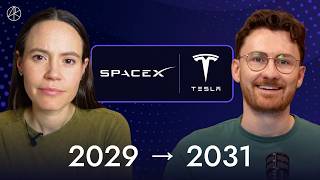 Our Updated Tesla Valuation, Explained
-
 We Believe The Market Has Not Digested The SpaceX Quarter
-
 Ramp's Economist Found Cracks In The AI Thesis | The Brainstorm 156
-
 Anthropic’s S-1, Meta’s $90B, And Elon’s Warning Call | The Brainstorm 155
ARK Invest, this episode and its artwork belong to ARK Invest. Octagon is not affiliated with the show; this page is an independent summary.
