
Episode summary
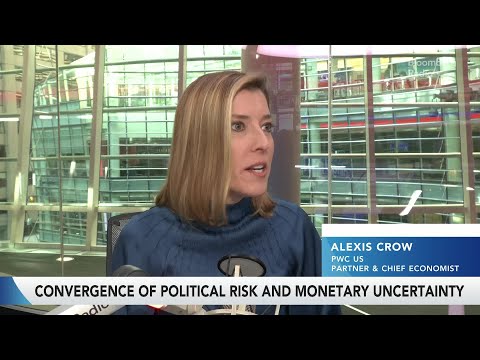
Monetary Policy is What 'Really Moves Markets,' Not Geopolitics, Says PwC's Alexis Crow
 Bloomberg Surveillance
· · 9 min · Guests: Alexis Crow, Neil Dutta, Krishna Guha
Summary
The guest argues that 2026’s key investing theme is Europe’s chance to close its savings and investment gap, deepen private pensions, and channel more capital into infrastructure, lenders, and long-duration assets. She ties that opportunity to slowing growth, demographic pressure, and a more isolationist U.S. stance, saying Europe will need to “step up spending on infra” and mobilize insurers, banks, and households more effectively.
She is more skeptical of the idea that France’s fiscal and labor problems make Europe uninvestable. Instead, she points to Germany’s relaxed debt brake, Italy’s smaller deficit, record-high labor-force participation in France, and strong startup inflows as evidence of a broader cultural and policy shift. She also says consolidation among eurozone lenders could help move nonperforming assets and that coordination between regional banks and the ECB is underestimated.
On markets, she says geopolitics matters less than monetary policy: volatility spikes tend to come from funding and carry-trade stress, not headlines. She also argues AI will augment rather than replace the highly specialized, relationship-driven work needed in private markets and banking. On oil, she says the market is underestimating the strategic importance of the Strait of Hormuz and the scale of disruption that could hit European demand.
Key takeaways
- The guest says Europe’s 2026 investment opportunity rests on closing its private pensions gap and mobilizing long-term savings into productive assets.
- She argues that France’s labor and fiscal debate is overstated, citing record participation, more hours worked, and capital flowing into startups.
- She expects eurozone bank consolidation and closer ECB coordination to help shift nonperforming assets and support financial integration.
- She says global markets respond more to monetary policy than geopolitics, pointing to the carry trade and cost of money as the real volatility drivers.
- She argues AI will augment specialized investment and client work, but not replace the relationship skills that private markets need.
Notable quotes
“the key investing theme for 2026 is the moment for Europe to seize on the Savings and Investment union”
“I don't see it. I got a Draghi letter out that everybody hangs on and I'm sure you read every word of it”
“global markets and global markets, by and large, do not care about geopolitics”
“it is monetary. Thank you”
“that's the type of job that doesn't touch. It can augment, but it doesn't necessarily touch”
How the episode opens
We highlight. This is the key investing theme for 2026 is the moment for Europe to seize on the Savings and Investment union and really actually moving to close the private pensions gap where pensioners in Europe in the private space hold less than ten X of what they have in the United States. So for macroeconomic reasons.
Right. Just slowing growth. Demographic reasons.
Geopolitical forces that you mention of the US withdrawal. Right. And isolationism means that Europe is going to have to step up spending on infra.
And we've seen this obviously with the merits team and Germany actually ticking up in growth and we see this across the board with insurance companies needing to find assets that will generate returns over the long term. I don't see it. I got a Draghi letter out that everybody hangs on and I'm sure you read every word of it and responded to it.
Lagarde's been talking this up for years and on and on and on. I'm a cafe regi in Paris, and everybody around me is 50 years old and retired. That's the reality.
Just they don't want. I'm sorry. They don't want to work.
That's all there is to it. Ooh, Those are fighting words in a cafe having a perfect omelet. Everybody's reading Le Figaro and whatever.
And they're wrong. Wrong? Can they ask you, man?
I don't know. They all retire at 50 years old as a stereotype. All right, So we've got the situation in France.
In France usually sits a little bit between northern and southern Europe, particularly on the fiscal side. What you do have is a cultural shift where Germany has removed the debt brake. As we know, Italy has also remarkably reduced the fiscal deficit.
So the situation in France, which you acknowledge, yes, it's a hot button topic, unfortunately, it's their own version of myopia when it comes to the policy debate.
From the episode’s captions: roughly the first two minutes, lightly cleaned. Keep watching on YouTube →
Topics
- ai demand
- europe and em diversification
- fed rate-cut expectations
- trump fed chair race
- obesity drug approval
Companies and tickers mentioned
- NVO
- CFRUY
- BAC
- EVR
- PwC
- Novo Nordisk A/S
- Richemont SA
- Bank of America Corp.
- Evercore
Watch the episode
Summary, takeaways and quote selection by Octagon. Quotes are short excerpts; the full conversation is in the episode.
More from Bloomberg Surveillance
-
 Stocks Rise as Inflation Data Ease Fed-Hike Worry | Bloomberg Surveillance
-
 Bloomberg Surveillance TV: November 13th, 2026 | Bloomberg Surveillance
-
 Bloomberg Surveillance TV: November 12th, 2026 | Bloomberg Surveillance
-
 Jensen Huang Ousted by Nvidia Board as CEO | Bloomberg Surveillance
-
 Bloomberg Surveillance TV: November 11th, 2026 | Bloomberg Surveillance
-
 AI Stocks Rebound as Fed Hike Bets Return | Bloomberg Surveillance
Bloomberg Surveillance, this episode and its artwork belong to Bloomberg. Octagon is not affiliated with the show; this page is an independent summary.
