
Episode summary
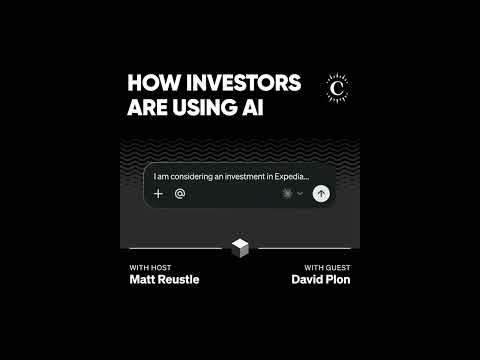
How Investors Are Using AI [Business Breakdowns: Episode 240]
 Business Breakdowns
· · 49 min · Hosts: Matt Reustle · Guests: David Plon
Summary
David Plon framed AI as a practical research tool for investors, not a replacement for judgment. He said the biggest opportunities are in three parts of the workflow: idea generation, initial context building, and ongoing monitoring of portfolio names and industries. As a former investor at Barclays, Slate Path Capital, and Bow Post, he argued that AI is most useful when it helps triage the flood of information, surface relevant data points faster, and move some deeper-dive tasks earlier in the process without weakening conviction.
He gave concrete examples of how investors can use AI to monitor adjacent ecosystems, such as using Expedia as a lens on hotels, or tracking supplier and customer signals that used to require manually combing through endless transcripts and filings. He also said AI can help kill ideas sooner by quickly surfacing red flags, such as compensation misalignment, aggressive accounting, or a management team with a poor guidance track record.
Plon spent significant time on prompting, experimentation, context windows, memory, and agentic AI. He said effective prompts should include task, rationale, background context, desired output, and domain guidance, while experimentation matters because model capabilities change quickly. He also argued that documentation of firm thinking will become increasingly valuable as models learn from a fund’s own history and operate more like an internal research analyst.
Key takeaways
- David Plon said AI is strongest today in idea sourcing, context building, and monitoring, where it can triage information without replacing an investor’s conviction-building work.
- He said investors can use AI to spot cross-company and cross-industry signals, such as hotel demand trends when researching Expedia or tariff exposure across supply chains.
- Plon said AI is especially useful for killing weak ideas early by surfacing risks like compensation issues, accounting aggressiveness, or repeated guidance misses.
- He argued that good prompts should state the task, the reason, the context, the output format, and skeptical domain guidance about management bias.
- He said firms that document investment memos and decision history will create more valuable training data as AI becomes more embedded in research workflows.
Notable quotes
“I think there are many good solutions today for staying on top of what is happening with an individual name”
“What I think historically has been hard but now is much simpler is being able to cast a wider net of pulling in relevant data points in a much sparer set of data”
“AI can be really helpful in that process is giving you enough baseline context to be able to triage the idea of, oh yeah, this is passing the initial sniff test”
“I usually provide some background context. I provide a task”
“I think spending some 15% of your time on experimentation is really important because unlike past technologies, one the underlying models are changing but two the capability frontier is evolving as well”
How the episode opens
This is business breakdowns. Business breakdowns is a series of conversations with investors and operators diving deep into a single business. For each business, we explore its history, its business model, its competitive advantages, and what makes it tick.
We believe every business has lessons and secrets that investors and operators can learn from and we are here to bring them to you. To find more episodes of breakdowns, check out join colossus.com. All opinions expressed by hosts and podcast guests are solely their own opinions.
Hosts, podcast guests, their employers or affiliates may maintain positions in the securities discussed in this podcast. This podcast is forformational purposes only and should not be relied upon as a basis for investment decisions. This is Matt Russell and today we have a special episode breaking down how investors are using AI.
This is a question I get from many of you. And while there is no shortage of content on the implications of AI, I know there's an appetite to learn more about tangible use cases, how to make sure you're getting the most out of these tools, how to think about advancements in the technology and ensuring that you're keeping pace with the innovation curve. So my guest today is David Plawn, founder of Portrait Analytics.
Now, David and Portrait have been a partner of Business Breakdown since last year, but I specifically asked David to do this episode because one, he is really front and center to how investors are using and applying AI, but two, and maybe more importantly, him and his team come with a background in investing. So, while the conversation doesn't really focus on portrait, you'll hear references to what him and his team are building and how they've shaped it for investors, you'll very much understand when you hear David talk that he is someone who understands the pain points of an investor.
From the episode’s captions: roughly the first two minutes, lightly cleaned. Keep watching on YouTube →
Topics
- ai for investment research
- ai prompt engineering
- investment process automation
- long-term ai model potential
- research pain points
Companies and tickers mentioned
- Portrait Analytics
Watch the episode
Watch “How Investors Are Using AI [Business Breakdowns: Episode 240]” on YouTube
Summary, takeaways and quote selection by Octagon. Quotes are short excerpts; the full conversation is in the episode.
More from Business Breakdowns
-
 Affirm: The Next American Express (Audio)
-
 How Kaz Nejatian Is Rebuilding Opendoor
-
 Agilent: Back To The Lab - [Business Breakdowns, EP.223]
-
 Agilent: Back To The Lab - [Business Breakdowns, EP.223]
-
 Compass: Real Estate Revolution - [Business Breakdowns, EP.226]
-
 CME Group: The House Always Wins - [Business Breakdowns, EP.224]
Business Breakdowns, this episode and its artwork belong to Colossus | Investing & Business Podcasts. Octagon is not affiliated with the show; this page is an independent summary.
