
Episode summary
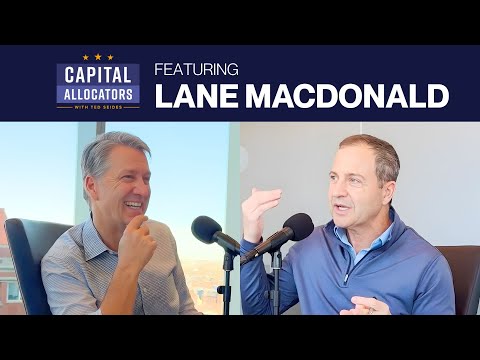
Lane MacDonald – Teamwork, Alignment, and Investing at the Highest Levels at SCS (EP.483)
 Capital Allocators with Ted Seides
· · Hosts: Ted Seides · Guests: Lane MacDonald
Summary
Lane MacDonald argues that great allocators win by identifying managers with a real, durable edge in increasingly efficient markets. He says the key questions are domain expertise, sector choice, and whether the edge is sourcing, operating, or strategic. Across public equity, private equity, co-investments, and emerging managers, he emphasizes that statistical noise and a few early wins are not enough; the allocator’s job is to separate true skill from luck.
His career path shaped that view. Hockey taught him teamwork, resilience, humility, and the importance of being part of something bigger than himself. Injuries ended a likely NHL path, pushing him toward investing through banking, Stanford, and then private equity, where he learned that sector selection matters as much as manager quality. At Harvard Management Company and later the Fidelity family office, he saw how much better partnerships work when LPs are honest, meaningfully sized, and willing to be a real partner.
At SCS Financial, Lane says the firm is built around alignment, team structure, and enough scale to matter without becoming so large that it cannot do nimble, niche opportunities. He favors tax-managed passive public equity, active private equity where dispersion is high, and co-investments and emerging manager seeding as forms of “structural alpha.” He remains bullish on private equity, but says the best opportunities are increasingly in the smaller end of the market and in managers with clear domain expertise.
Key takeaways
- Lane MacDonald says allocators should underwrite managers for proven inefficiency capture, not just headline returns or early luck.
- He says sector matters: media and telecom showed him that even good investors can struggle in the wrong industry.
- He believes tax-managed passive equity is the right base in low-dispersion public markets, while private equity merits active selection.
- Lane says co-investing creates structural alpha only when the GP has true domain expertise, alignment, and the right deal size.
- He argues SCS’s edge comes from combining scale, alignment, and a team-based decision process without becoming too large to stay nimble.
Notable quotes
“Our job as allocators is to find people who have a proven ability to capture inefficiencies in increasingly efficient markets”
“Teamwork. There's nothing more important. You learn so much about leadership. It's a we. It's not an I in how you lead”
“Where there's dispersion, you go active. Where there's low dispersion, like public equity, you go passive”
“Alignment is really important to me. I want to be aligned with everyone around me in terms of from a team standpoint, but also from a capital standpoint”
How the episode opens
Our job as allocators is to find people who have a proven ability to capture inefficiencies in increasingly efficient markets. How do you disentangle that? How do you figure out what their ability is to find those inefficiencies?
Domain expertise to start, but what's their edge? Is it a sourcing edge, an operational edge, a strategic edge? What are those things that allow someone to capture those inefficiencies?
In our sector, many people build track records that are not statistically significant. not meaningful. You have a few early wins.
You think you're smart. How do you find those people who are truly gifted and differentiated what they do? They see things in a different way or they just have skills, capabilities that others don't.
I'm Ted Sides and this is Capital Allocators. My guest on today's show is Lane McDonald, the chief investment officer of SCS Financial, a registered investment adviser and OCIO platform with approximately $46 billion in assets under management. Lane was a US Olympic hockey player and Hobie Baker award winner as the best player in college hockey in the late 80s.
But his aspirations of following in his father's footsteps and playing in the NHL were derailed shortly thereafter by injuries. In the decades since, he spent a dozen years in private equity and the last 18 as an allocator at institutions ranging from the Harvard endowment to the family office for the owners of Fidelity and now SCS. Our conversation traces Lane's path from the rink to investing and from dealmaker to allocator, examining what separates great investors from good ones.
We discussed the importance of domain expertise, sector selection, alignment, and identification of a durable edge and structural alpha in increasingly efficient markets. We close with Lane's outlook on private markets and the lessons from hockey endowments and family offices that inform the team building platform at SCS.
From the episode’s captions: roughly the first two minutes, lightly cleaned. Keep watching on YouTube →
Topics
- private markets outlook
- alignment and team-based investing
- durable edge and structural alpha
- sector selection and domain expertise
- private equity to allocation careers
Companies and tickers mentioned
- SCS Financial
- Old Well Labs
- Fidelity
Watch the episode
Summary, takeaways and quote selection by Octagon. Quotes are short excerpts; the full conversation is in the episode.
More from Capital Allocators with Ted Seides
-
 Aydin Senkut: Chasing Demand, Not Hype, at Felicis
-
 Scott Ramsower: Continuation Vehicles from the LP Seat
-
 Vik Uppal: Real Estate Special Situations With a Flexible Mandate
-
 Zack McGuire: Dynamic Allocation and Concentrated Conviction at Children's Healthcare of Atlanta
-
 Ben Harrison: AI Tools for the Investment Firm
-
 Tracy Britt Cool: The Berkshire Model for $5–50M Businesses
Capital Allocators with Ted Seides, this episode and its artwork belong to Ted Seides – Allocator and Asset Management Expert. Octagon is not affiliated with the show; this page is an independent summary.
