

Podcast summaries
Capital Allocators with Ted Seides
About these summaries
Octagon has summarized 68 episodes of Capital Allocators with Ted Seides published between Jul 7, 2025 and Nov 11, 2026. The companies discussed most often are Old Well Labs, Ascension Data and Thema. Frequent guests include Andy Golden, Dawn Fitzpatrick and Jenny Heller. Each summary lists key takeaways, short timestamped quotes and the companies and tickers mentioned, with a link to the full episode.
Most-mentioned tickers
- C 2
- JPM 2
Most-mentioned companies
- Old Well Labs 4
- Ascension Data 3
- Thema 3
- Bloomberg family office 2
- Brandywine Trust Group 2
- Citigroup 2
- Goldman Sachs 2
- Juniper Square 2
- Partners Capital 2
- Princeton University Investment Management Company 2
- Sloan Foundation 2
- Soros 2
- Willett Advisors 2
Frequent guests
- Andy Golden 2
- Dawn Fitzpatrick 2
- Jenny Heller 2
- Matt Bank 2
- Scott Wilson 2
- Steve Rattner 2
Episodes
- Aydin Senkut: Chasing Demand, Not Hype, at Felicis
Aydin Senkut says Felicis has stayed a generalist, early-stage firm for 20 years, but the center of gravity has moved from consumer internet and SaaS toward AI infrastructure…
- Scott Ramsower: Continuation Vehicles from the LP Seat
Scott Ramsower argues that continuation vehicles are neither inherently good nor bad, but LPs have come to view them with growing skepticism because the GP sits on both sides of…
- Vik Uppal: Real Estate Special Situations With a Flexible Mandate
Vik Uppal argues that the best real estate special situations firms should behave less like AUM factories and more like flexible owners of capital.
- Zack McGuire: Dynamic Allocation and Concentrated Conviction at Children's Healthcare of Atlanta
Zack McGuire argues that institutional investing should start with the capital base, not with asset classes or managers.
- Ben Harrison: AI Tools for the Investment Firm
Intapp is repositioning its software stack around what Ben Harrison calls “firm AI”: using agentic workflows to execute the operating procedures of investment firms, law firms…
- Tracy Britt Cool: The Berkshire Model for $5–50M Businesses
Tracy Britt Cool describes how a farm upbringing, Buffett-inspired reading, and a handwritten letter led to a decade at Berkshire Hathaway, where she started as Warren Buffett’s…
- Erlina Yeo Terwelp: From Banking to PE to Family Office to Columbia Endowment
Erlina Yeo Terwelp traces her path from Singapore, where she grew up in a family split between a commodities trader father and an organizational-behavior mother, into investing…
- Stephen McLennan: Building the Total Portfolio at Ontario Teachers' $300B Fund
Stephen McLennan describes Ontario Teachers’ Pension Plan as a $300 billion total-portfolio investor built to deliver on a pension promise across decades, not to beat a narrow…
- Nancy Zimmerman: People, Process, and Fixed Income Arbitrage at Bracebridge Capital
Nancy Zimmerman argues that fixed income arbitrage works because markets keep creating similar or economically linked instruments that trade at different prices, and those gaps…
- André Perold: Why Alignment Drift – Not Performance – Is the Real Exit Trigger
André Perold argues that the current investing backdrop is unusually exciting because change is happening in multiple exponential domains at once: AI, GLP-1 therapeutics, and…
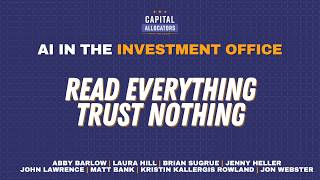
- AI in the Investment Office: 8 CIOs on What’s Working
Eight CIOs describe a common theme: AI is already useful for productivity, but the real prize is better investment judgment, faster workflows, and eventually alpha.
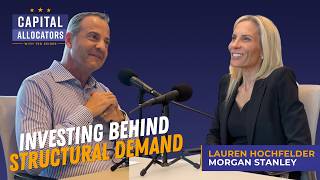
- Lauren Hochfelder: Investing Behind Structural Demand in Real Assets
Lauren Hochfelder describes a 26-year career at Morgan Stanley that started as an analyst straight out of Yale and evolved into running global real assets.
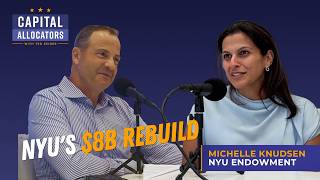
- Michelle Knudsen: Rebuilding the NYU Endowment from a Clean Sheet of Paper
Michelle Knudsen frames her career as a progression from crisis-tested investor to portfolio builder, starting at Goldman Sachs in 2008 and carrying forward the lesson that “you…
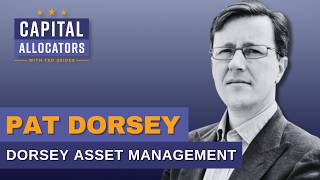
- Pat Dorsey: The Nuances of Investing in Moats (Capital Allocators, EP.509)
Pat Dorsey argues that moat investing is best understood as a qualitative discipline grounded in pattern recognition, not a search for a single magic metric.
- Trinity Wall Street's Nicholas Csicsko: How Transparency Survives a 50% Drawdown
Nicholas Csicsko argues that the core job of an allocator is not just finding good managers, but building portfolios and relationships that can survive stress.
- Hotel Investing at EOS – Jonathan Wang
Jonathan Wang traces EOS Investors’ edge to a simple but disciplined hotel framework: focus first on market supply-demand, then on asset type, then on conservative financing and…
- Contrarian Quality at GQG Partners – Rajiv Jain
Rajiv Jain argued that GQG’s edge comes from a simple but demanding framework: favor businesses with high barriers to entry, keep the portfolio anchored in absolute risk control…
- Kieran Goodwin – Private Credit Concerns (EP.494)
Kieran Goodwin traces his path from Duke computer science and early interest rate derivatives into decades of credit trading, emphasizing that his edge came from understanding…
- Will Guidara – Unreasonable Hospitality (EP.492)
Will Guidara argues that hospitality is not a restaurant tactic but a business strategy for making people feel seen, welcomed, and valued.
- Ryan Lovell – Chainlink: The Infrastructure Pipes for Multi-Chain Finance (EP.491)
Chainlink is presented as the middleware that lets blockchains work with real-world financial systems.
- Katelin Holloway – Human Side of Venture Investing at 776 (EP.490)
Katelin Holloway argues that early-stage venture investing is really about people, systems, and trust under extreme uncertainty, which is why her HR and operator background maps…
- Ed Grefenstette and Sean Warrington – Venture Market Update (EP.488)
The discussion frames venture capital as having entered a healthier but more selective phase after the 2020 and 2021 vintage boom.
- Bobby Jain – Multi-Strategy Hedge Fund First Principles at Jain Global (EP.487)
Bobby Jain frames Jain Global as a from-scratch answer to two big shifts: multi-strategy firms have been returning capital and becoming less accessible to investors, while “the…
- WTT: Can Private Markets Normalize?
Ted Seides argues that private equity is running into a structural exit problem, not a temporary slowdown.
- Stephen Gilmore – CalPERS’ Total Portfolio Approach (EP.486)
Stephen Gilmore argues that CalPERS’ move toward a total portfolio approach is mainly a change in mindset: the portfolio should be organized around the fund’s overall objective…
- Brendan O’Connor – Alpha Opportunities in Australia at Regal Partners (EP.485)
Brendan O’Connor argues that Australia offers a distinct return stream because its market is unusually concentrated in financials and materials, with resources still a major part…
- Jonathan Lewinsohn – Credit Microcycles at Diameter (EP. 484)
Jonathan Lewinsohn argues that credit investing is best understood through microcycles: industry-specific disruptions caused by technological change, policy volatility, or both.
- Lane MacDonald – Teamwork, Alignment, and Investing at the Highest Levels at SCS (EP.483)
Lane MacDonald argues that great allocators win by identifying managers with a real, durable edge in increasingly efficient markets.
- Nick Rohatyn – Emerging Markets Multi-Asset Investing at TRG (EP.482)
Nick Rohatyn argues that emerging markets are badly served by the standard developed-market playbook: single-asset-class funds, regional silos, and benchmark-driven allocations…
- Scott Kleinman – Apollo’s Integrated Alternatives Platform (EP.481)
Scott Kleinman argues that Apollo’s evolution was driven less by capital availability than by finding better risk-adjusted ideas across the capital structure.
- Ashby Monk – Total Portfolio Approach and the Future of Asset Owners (EP.480)
Ashby Monk argues that large asset owners have quietly become central economic institutions, and that the next frontier for them is the total portfolio approach, or TPA.
- Mike Gitlin – The Century of Capital Group (EP.479)
Capital Group’s edge, as Mike Gitlin describes it, comes from a century-old ownership structure and a deliberately collaborative investment process.
- Year in Review 2025
Private markets dominated the year, especially the mismatch between abundant capital and scarce exits.
- Matthew Dicks – Storytelling Mastery (EP.477)
Matthew Dicks argues that strong storytelling is not improvisation but disciplined design: start with location and action, choose the right ending first, and use only the details…
- Josh Wolfe & Brett McGurk – Venture, Geopolitics, and the Next Frontier (EP.476)
Josh Wolfe argues that venture is splitting into two worlds: subscale firms that are likely to be forced out, and very large platforms that increasingly resemble diversified…
- Robert Boucai & James Broyer – Tax-Efficient Multifamily Real Estate at Newbrook (EP.475)
Robert Boucai and James Broyer argue that multifamily real estate is best used as a tax-efficient income engine when it is held long term, financed with fixed-rate debt, and…
- John Khoury – Asymmetry and Opportunity in Public Real Estate at Long Pond (EP.474)
Public real estate is still cheap, but the market has changed enough that old rules no longer apply.
- Michael Kelly - Democratizing Access to the Middle Market at Future Standard (EP.473)
Michael Kelly argues that the best opportunities in private markets have shifted toward the middle market, where companies are smaller, more fragmented, and easier to improve…
- Daniel Mahr – Glass Box Quant at MDT Advisers (EP.472)
Daniel Mahr argues that MDT’s edge comes from combining machine learning with a transparent, repeatable stock-selection process rather than chasing secret information.
- David Lyon – Hybrid Capital Solutions for Private Assets (EP.471)
David Lyon argues that private credit, private equity, and distressed investing have all become more crowded and more efficient, which has compressed returns and made…
- What Ted's Thinking: The Sydney Sweeney Interview
Ted uses a viral GQ interview with Sydney Sweeney to argue that good interviewing is about gathering information, not proving a point or forcing agreement.
- Jay Ripley – Emerging Manager Selection at GEM (EP.470)
Jay Ripley describes how a military upbringing and early work in investment banking and private equity shaped his comfort with uncertainty, diligence, and owner-operator thinking.
- Dave Thornton - Unlocking Venture Access Through Stock Options at Vested (EP.469)
Dave Thornton traces Vested back to his work in trading, law, and startup building, where he kept seeing employees mishandle equity and taxes.
- Jeff Aronson – Building Centerbridge Across the Capital Structure (EP.468)
Jeff Aronson traces his path from suburban Boston to law school, then from an uninspiring corporate law job into investing after joining the in-house legal team at LF Rothschild…
- Mike Trigg and Sanjay Ayer – The Discipline of Getting Better at WCM (EP.467)
WCM’s hardest stretch in 2022 became a catalyst for a broad reset in how the firm identifies, sizes, and monitors growth stocks.
- Morgan Housel - The Art of Spending Money (EP.466)
Morgan Housel argues that spending money is not a math problem but a personal art form, because the right way to use money depends on who you are, what you value, and what kind…
- John Graham - Evolution of the Canadian Model at CPPIB - (EP.465)
CPPIB’s investment model is centered on maximizing total return at the portfolio level, not on running a traditional asset-allocation book against benchmarks.
- Eric Mogelof - Understanding the 401(k) Market - (EP.464)
Eric Mogelof argues that retirement assets are already enormous, but the move into private markets will be gradual rather than immediate.
- Matt Spielman - Igniting Careers and Energizing Lives - (EP.463)
Matt Spielman argues that executive coaching in investment organizations works best when it is organized around a clear system, concrete outcomes, and a disciplined structure…
- Mason Morfit & Rob Hale - Quiet Activism at ValueAct (EP.462)
ValueAct’s 25-year story is a case for quiet activism: buy high-quality public companies, build deep relationships with management, and help redirect capital, strategy, and…
- Jack Kokko - Building the Google of Finance at AlphaSense (EP.461)
Jack Kokko traces AlphaSense back to his days as an investment banking analyst in London and San Francisco, where fast-moving deal work and manual research tools made him feel he…
- Herb Wagner - Opportunistic Value at Finepoint Capital (EP.460)
Herb Wagner traces Finepoint Capital’s style to a childhood in small-town Ohio where work came early and responsibility came early.
- Adrian Meli - Active Equity Excellence at Eagle (EP.459)
Adrian Meli traces his investing instincts to a childhood shaped by deal-seeking, trading, and arbitrage thinking, then to Williams College and an early hedge fund start in 2002.
- CIO Greatest Hits: Multi-Family Offices - Stan Miranda (Partners Capital)
Stan Miranda traces Partners Capital’s origin to the tech bubble bust, when he and Paul Dmitri saw concentrated private equity portfolios suffer and found private banks offering…
- CIO Greatest Hits: Multi-Family Offices - Jenny Heller (Brandywine Trust Group, 2021)
Jennifer Heller describes Brandywine Trust Group’s investing process as a disciplined search for durable opportunities, but one that is still guided by a beginner’s mind.
- CIO Greatest Hits: Multi-Family Offices - Jenny Heller (Brandywine Trust Group, 2017)
Jenny Heller describes a path from microfinance curiosity to long-horizon investing, starting with South Africa and India experiences that taught her patience, humility, and the…
- CIO Greatest Hits: Hedge Funds - Dan Fagan, Adam Blitz, and Craig Bergstrom
Three hedge fund allocators compare how they build portfolios, emphasizing bottom-up manager selection over top-down macro calls.
- CIO Greatest Hits: Private Equity - Mario Giannini (Hamilton Lane)
Mario Giannini traces Hamilton Lane’s path from a four-person shop to a firm with about 550 people, $150 billion to $160 billion of assets under management, and roughly $800…
- CIO Greatest Hits: Public Pensions - Ash Williams (Florida SBA)
Ash Williams traces his path from Florida politics into investing and back again, arguing that public pension success depends on fiduciary discipline, governance, and long-term…
- CIO Greatest Hits: Sovereign Wealth Funds - Nicolai Tangen (Norges Bank)
Nicolai Tangen framed investing as a craft built on preparation, simple questioning, and apprenticeship.
- CIO Greatest Hits: Single Family Offices – Dawn Fitzpatrick (Soros)
Dawn Fitzpatrick traces her path from trading options out of college to running Soros Fund Management, emphasizing how market crises, not theory, shaped her style.
- CIO Greatest Hits: Single Family Offices – Steve Rattner (Willett Advisors)
Steve Rattner describes how Willett Advisors, Michael Bloomberg’s family office, was built around a straightforward endowment-style model rather than a radical reinvention.
- CIO Greatest Hits: Endowments – Scott Wilson (Washington University-St.Louis)
The guest describes a career that moved from rural Alaska and college basketball to equity research, derivatives trading in Tokyo and London, and eventually endowment investing.
- CIO Greatest Hits: Endowments – Andy Golden (Princo)
Andy Golden describes how Princeton University Investment Management Company built its decision process around a long-term, valuation-independent framework and a staff with real…
- Ron Kantowitz - Direct Lending’s Evolution and Invesco’s Edge (EP.457)
Ron Kantowitz argues that direct lending is not a new asset class so much as a shift in who provides capital: banks dominated middle-market lending before the GFC, then…
- Tim Sullivan - Yale's Private Portfolio (EP.456)
Tim Sullivan argues that Yale’s private-market edge came less from magic than from disciplined process, patience, and a willingness to change when the environment changed.
- Friends Reunion 3 - Five Allocators Riff on Investing (EP.454)
The conversation centers on how four allocators are positioning portfolios through a period of heavy private-market capital formation, changing liquidity, and renewed interest in…
- Michael Ovitz - Reinventing Talent and Building Momentum at Treville (EP.455)
Michael Ovitz argues that his career was built less on formal strategy than on a lifelong instinct for talent, follow-up, and momentum.





























Capital Allocators with Ted Seides, its episodes and artwork belong to Ted Seides – Allocator and Asset Management Expert. Octagon is not affiliated with the show; these pages are independent summaries.
