
Episode summary
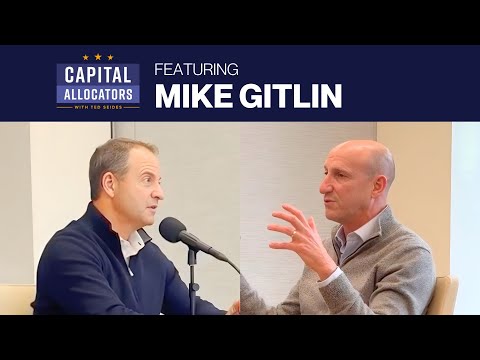
Mike Gitlin – The Century of Capital Group (EP.479)
 Capital Allocators with Ted Seides
· · Hosts: Ted Seides · Guests: Mike Gitlin
Summary
Capital Group’s edge, as Mike Gitlin describes it, comes from a century-old ownership structure and a deliberately collaborative investment process. The firm was founded in 1931 with the belief that capital should be managed for the long term, and later built the Capital System after John B. Lovelace’s heart attack made key-person risk unacceptable. That model gives analysts and portfolio managers real responsibility, shared visibility into research, and a portfolio built from multiple high-conviction views rather than one manager’s diluted ideas.
Gitlin argues that the private partnership structure reinforces that mindset. Because the firm does not have to manage quarterly earnings pressure, it can keep investing through drawdowns, train people patiently, and measure success over years rather than quarters. Hiring is intentionally slow, mentoring is built in, and investment professionals are given time to learn before being judged. Attrition is far below industry norms, and the average portfolio manager retires in their 60s.
The discussion also covers how Capital Group has scaled without losing intimacy: splitting investment groups, digitizing its research library, using Capital Connect, and testing AI tools to make decades of internal knowledge usable. On products, Gitlin says the firm prefers to stay at the core of client portfolios, launch fewer strategies, and increasingly offer choice across ETFs, SMAs, funds, and partnerships such as public-private credit with KKR. The strategic plan centers on strengthening the Capital System, evolving with clients, simplifying the organization, and improving the associate experience.
Key takeaways
- Mike Gitlin says Capital Group’s culture is built around long-term ownership, low key-person risk, and a multi-manager system that surfaces the strongest ideas in each portfolio.
- Gitlin says Capital Group’s attrition is about half the industry average overall, and low single digits in the investment group.
- He says the firm keeps investment teams small by design, with roughly 80 to 100 people per equity unit to preserve high-quality dialogue as assets grow.
- Gitlin says Capital Group avoids launching products unless they are good for clients, sustainable, and able to add value over time.
- He says the firm is using Capital Connect and AI tools to turn 94 years of research into faster, better investment decisions.
- Gitlin says the firm is moving toward more vehicle choice, including ETFs and SMAs, while keeping the same underlying investment DNA.
Notable quotes
“The mindset of the Love Lace family was not optimizing for the Love Lace family”
“No investor should want to be with a company where you're left with a single individual's 300th best idea”
“My edge is time”
“We don't pay on assets. We pay on investment results”
“You have to stay small when you're big”
How the episode opens
The mindset of the Love Lace family was not optimizing for the Love Lace family. When JBL founded the company, he said in 1931, "When my grandkids, who didn't exist at the time, when my grandkids pass away, no one in the Love Lace family should own any bit of Capital Group stock. There's very few founding families that would say that.
His point was it should be owned by the people who were working at the company at the time who were driving the client outcomes. That is a very powerful statement to make nearly a hundred years ago. It can sound complex, but it's pretty simple.
No investor should want to be with a company where you're left with a single individual's 300th best idea. That's what happens when you're a sole practitioner in a strategy and you're managing a lot of money and you're diversified. You could be left with someone's less high conviction parts of the portfolio.
The bottom 25% of their conviction names, why would you want those in a portfolio? You have analysts who are subject matter experts in a certain sector and they have high conviction. You want those stocks in the portfolio.
your analysts who have conviction in their subject matter expertise. Great. Those names make their way in to the portfolio.
You have portfolio managers, five of them, 10 of them, whatever the mandate would be, all expressing their conviction, all seeing what everyone else is doing, all using the research that we have internally, all having their own individual conviction. What you end up in a portfolio is everyone has the same mandate but you have the strongest convictions of individuals not being left with any of their lower conviction ideas. Think of it as a multiple portfolio manager and analystrun best idea portfolio as opposed to such a broad diversified one person's strategy.
From the episode’s captions: roughly the first two minutes, lightly cleaned. Keep watching on YouTube →
Topics
- capital group talent recruitment
- long-term investment philosophy
- private ownership model
- multi-manager capital system
- strategic plan and product development
Companies and tickers mentioned
- Capital Group
- Old Well Labs
- Thema
- Ascension Data
Watch the episode
Watch “Mike Gitlin – The Century of Capital Group (EP.479)” on YouTube
Summary, takeaways and quote selection by Octagon. Quotes are short excerpts; the full conversation is in the episode.
More from Capital Allocators with Ted Seides
-
 Aydin Senkut: Chasing Demand, Not Hype, at Felicis
-
 Scott Ramsower: Continuation Vehicles from the LP Seat
-
 Vik Uppal: Real Estate Special Situations With a Flexible Mandate
-
 Zack McGuire: Dynamic Allocation and Concentrated Conviction at Children's Healthcare of Atlanta
-
 Ben Harrison: AI Tools for the Investment Firm
-
 Tracy Britt Cool: The Berkshire Model for $5–50M Businesses
Capital Allocators with Ted Seides, this episode and its artwork belong to Ted Seides – Allocator and Asset Management Expert. Octagon is not affiliated with the show; this page is an independent summary.
