
Episode summary
Matt Spielman - Igniting Careers and Energizing Lives - (EP.463)
 Capital Allocators with Ted Seides
· · Hosts: Ted Seides · Guests: Matt Spielman
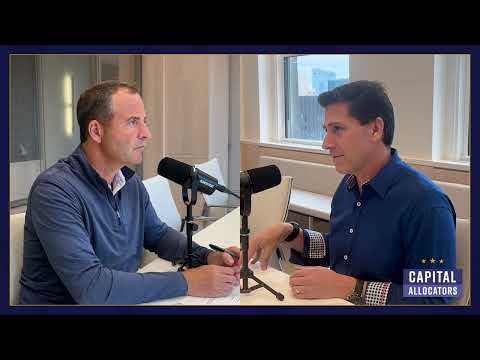
Summary
Matt Spielman argues that executive coaching in investment organizations works best when it is organized around a clear system, concrete outcomes, and a disciplined structure rather than vague self-improvement. His firm’s work starts with the individual or team defining goals such as advancing a career, raising a fund, launching an initiative, or even balancing nonwork priorities, then translating that into a practical game plan.
A central theme is that the people who rise to the top of asset management often did so because they were excellent investors, analysts, or presenters, not because they were trained leaders. Spielman says the best leaders become clearer on their why, define the organization’s core purpose, and then connect that vision to each person’s own motivation. He also emphasizes that leadership is usually lonelier than it looks, which is why outside coaching can create a space for honest discussion.
He spends significant time on communication habits that drive performance: weekly check-ins, specific feedback using SBI, asking how and what questions, and giving more weight to appreciation than most managers do. He sees investment firms as especially dominated by thinking types, which can make them efficient but also colder, less empathetic, and weaker at delegation and feedback. Over time, he has expanded from one-on-one coaching to firmwide leadership systems, and he expects AI to help scale the same framework into a more continuous day-to-day prompt for clients.
Key takeaways
- Spielman says the most effective coaching model is a system with structure, clear goals, and measurable outcomes rather than vague professional development.
- He argues that many investment leaders succeed for investing skill, not management skill, so leadership training has to start by acknowledging that gap.
- He says investment firms are heavily skewed toward "thinking" personalities, which can make them effective but also less empathetic and less likely to appreciate or coach people well.
- His core leadership advice is to set the course, meet with direct reports weekly, and use specific feedback that focuses on situation, behavior, and impact.
- Spielman says the business has evolved from short engagements into multi-year partnerships that often expand from one leader to an entire team or firm.
Notable quotes
“they got there not because they were great leaders, but because they were really good at doing the job, doing the work, doing the analysis, doing the presentation”
“it's really lonely at the top. Really lonely at the top”
“the deepest human principle is the craving to feel appreciated”
“What we have found is yeah, an organization can have a game plan. Here's the vision statement. Here's what it is we're working towards”
“I want to ignite careers and energize lives”
How the episode opens
It's important for them to understand, you know, how they and their organization got there, which is they got there not because they were great leaders, but because they were really good at doing the job, doing the work, doing the analysis, doing the presentation, Matt, great to see you. It's great to be here, Ten. So, you've been at this for 10 years now.
What have you found works? So what I find that works that people really grab on to is a system and structure. I think executive coaching or professional development I think by nature can be a little bit squishy.
And what I really tried to do is provide a system that people can grab on to and say we're in this part of the system now. Now we're in this one and now we're in this one. So I I think they like the the structure.
Now the structure combined with this I mean I dare say this maniacal focus on outcomes and achievement and results I think also sort of rings true for a lot of the folks who kind of grab on to it. They get a lot out of it I think a lot more than they thought they were going to get. When you put the system in place, what types of outcomes is the system driving towards?
Determined by the individual andor the team. We often engage executive teams or even offices, but it's determined by them. It's certainly not something that I come in or my team comes in and said, "This would be a really meaningful outcome for you.
We can give background or context of what Yeah. I mean, we've had thousands of coaching sessions, hundreds and hundreds of game plans. These are some of the things that people aim for, but it's really driven by them.
From the episode’s captions: roughly the first two minutes, lightly cleaned. Keep watching on YouTube →
Topics
- leadership challenges
- investment organization dynamics
- feedback and empathy
- executive coaching systems
- ai scaling
Companies and tickers mentioned
- Inflection Point Partners
Watch the episode
Watch “Matt Spielman - Igniting Careers and Energizing Lives - (EP.463)” on YouTube
Summary, takeaways and quote selection by Octagon. Quotes are short excerpts; the full conversation is in the episode.
More from Capital Allocators with Ted Seides
-
 Aydin Senkut: Chasing Demand, Not Hype, at Felicis
-
 Scott Ramsower: Continuation Vehicles from the LP Seat
-
 Vik Uppal: Real Estate Special Situations With a Flexible Mandate
-
 Zack McGuire: Dynamic Allocation and Concentrated Conviction at Children's Healthcare of Atlanta
-
 Ben Harrison: AI Tools for the Investment Firm
-
 Tracy Britt Cool: The Berkshire Model for $5–50M Businesses
Capital Allocators with Ted Seides, this episode and its artwork belong to Ted Seides – Allocator and Asset Management Expert. Octagon is not affiliated with the show; this page is an independent summary.
