

About these summaries
Octagon has summarized 33 episodes of Capital Ideas Podcast published between Jul 3, 2025 and Oct 22, 2026. The companies discussed most often are Capital Group, Capital Client Group, Inc. and Apple. Each summary lists key takeaways, short timestamped quotes and the companies and tickers mentioned, with a link to the full episode.
Most-mentioned tickers
- AAPL 2
- GE 2
Most-mentioned companies
- Capital Group 17
- Capital Client Group, Inc. 4
- Apple 2
Episodes
- What continuous learning looks like over 30 years of investing
Grant Cambridge frames his investing edge as a long habit of looking for durable income rather than chasing the highest payout.
- Why Asian credit deserves a closer look
Debbie Leow argues that Asian credit deserves attention because it can add diversification, income and a different risk profile depending on the portfolio.
- Luxury, mining and the power of connecting the dots
Frank Beaudry argues that good investing comes from spotting when markets share the wrong assumption and then connecting the dots across people, products and supply chains.
- Investing through the AI transition
Brady Enright argues that the AI transition rhymes with the dot-com era because both are periods of transformational change, but the setup is different.
- Who you become when you invest
Greg Miliotes argues that becoming a better investor is less about copying a style than about building a personal framework through experience, mistakes, and repetition.
- Follow the research, not the crowd
David Hoag argues that long-term fixed income success comes from following deep research, not trying to build the whole investment process yourself.
- How Chef Daniel Boulud scaled a restaurant empire with intention
Daniel Boulud traces his path from growing up on a farm in France, where his mother and grandmother cooked with the family’s own vegetables, fruits, and cheese, to building a…
- A hunting dog mindset to investing
Harold La frames investing as a process of finding change early, not predicting it perfectly.
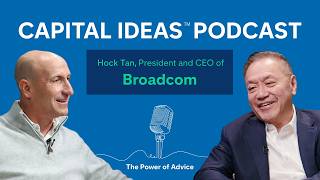
- How relentless focus sets Broadcom’s CEO apart
Hock Tan argues that Broadcom’s edge comes from relentless focus: pick a narrow set of businesses, get good at them, and stay disciplined for years.
- Skills that matter in an AI world
Michael Beckwith argues that in an AI-disrupted market, technical skills are merely table stakes; the real edge comes from adaptability, judgment, and the ability to think across…
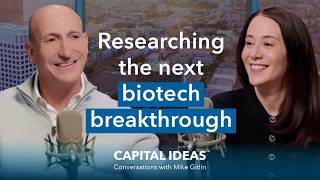
- From medicine to markets: Long-term biotech investing
Judith Finegold says her edge as a biotech investor comes from being a former cardiologist who worked in clinical research and trials.
- How GM’s Chair & CEO is redefining what’s possible at a legacy company
Mary Barra frames GM’s transformation as a lesson in inclusion, accountability, and constant reinvention.
- How a neuroscientist invests in biopharma
Laura Nelson Carney traces her investing edge to a nonlinear path through neuroscience, pharma R&D, consulting, sell-side research and global markets.
- Why municipal bonds can win on an after-tax basis
Municipal bonds can play a central role in a diversified portfolio because they combine income, capital preservation and equity diversification with a tax advantage that matters…
- You can't model human behavior
Cyana Chilton argues that long-term banking and financials investing depends less on prediction than on preparation, pattern recognition, and humility.
- The psychology of building portfolios to withstand any cycle
Shannon Ward says her psychology training became a practical edge in high-yield investing because the job is largely about judging behavior, incentives, and how management teams…
- Amazon CEO on leadership, innovation and customer obsession
Andy Jassy says Amazon’s edge comes from a culture that starts with the customer and forces teams to work backward from real needs before writing code.
- Why being an investment analyst is the “best job in the world”
Kelly Murphy argues that being an investment analyst is “the best job in the world” because it combines constant learning, autonomy, and accountability.
- Building resilience into portfolios over the long term
Aline Avzaradel argues that resilience in portfolios starts with capital preservation, not chasing the highest headline yield.
- Banking on the big picture: How patience can pay off
European banks have rallied sharply because profitability improved after a long period of zero or negative rates, and because regulators now let banks return more capital to…
- How analysts think about banks: AI, regulation and the consumer
Matt Antle describes a banking research process built on discipline, curiosity and skepticism.
- Running a tight, high-conviction portfolio in a noisy market
Emme Kozloff says her investing style was shaped by two very different early assignments: retail, which taught her to separate signal from noise in a volatile, competitive arena…
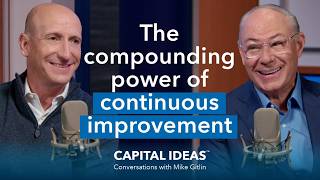
- How GE Aerospace CEO Larry Culp turns problems into progress
Larry Culp argues that GE Aerospace’s transformation rests on a simple but demanding operating philosophy: respect for people, continuous improvement, and an unrelenting focus on…
- Uncovering overlooked tech opportunities and the next layer of AI
Sugi Widjaja says his investment style was shaped by living through the 2001 TMT bust, which taught him to watch for macro and industry disruptions before they show up in earnings.
- Learning to thrive in unpredictable markets
Lisa Thompson says her edge as a portfolio manager comes from being comfortable with uncertainty, cyclicality and volatility, a skill she traces to decades of experience in…
- From summer associate to CIO: Martin Romo on Capital Group’s signature investment approach
Martin Romo describes his path from an architecture student at Berkeley to a 32-year career at Capital Group, where he now serves as chair and CIO.
- Cracking the Agg: How active fixed income can beat the benchmark
Ritchie Tuazon argues that short-term signals are most useful when they are used to build a long-term fixed income view, not to chase the next move in yields.
- From oil sands to OPEC: A disciplined approach to energy investing
Andrea Montero argues that energy investing should be driven by process, not just outcomes.
- From NFL to CEO: Larry Fitzgerald on embracing discomfort and investing in innovation
Larry Fitzgerald argues that the biggest lesson from his post-football career is to seek discomfort early.
- Investing in AI for the long term: A tech investor's view
Tomoko Fortune argues that artificial intelligence is the kind of big technology shift that can create both disruption and long-duration opportunity across the economy, not just…
- Don't overlearn lessons: Staying nimble in turbulent markets
Julian Abdey argues that the key investing discipline is to avoid turning past lessons into rigid rules, because markets change and old heuristics can quickly fail.
- Innovation in Asia and Europe: Why now matters
Noriko Chen argues that her investment edge comes from a global perspective and a long time horizon: she is less focused on the next quarter than on where companies and…
- Investing in South Asia's emerging markets: India’s embrace of free enterprise
Samir Parekh argues that successful investing in emerging markets starts with understanding the country as much as the company.





Capital Ideas Podcast, its episodes and artwork belong to Capital Group. Octagon is not affiliated with the show; these pages are independent summaries.
