
Episode summary
Habits, Not Assets: What Piada Teaches Investors About Capital Discipline and Scaling Right
 Dakota Live!
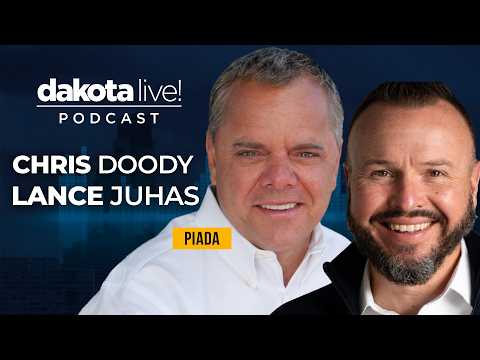
· · 1 hr 7 min · Hosts: Robert Morier · Guests: Chris Doody, Lance Juhas
Summary
Piada is presented as a disciplined fast-casual growth story built on repeatability, not novelty. The founder says the concept began with studying Italian street food after Bravo Brio, then testing the menu, design, and service model before opening the first store for $600,000 and reaching $2.7 million in first-year sales. That early unit performance led to rapid expansion, but only after the team settled on a smaller set of curated menu items and a format that works for lunch and dinner.
The host and the guests argued that the real edge is capital discipline, people discipline, and consistency. Piada’s operators said they focus on tier 2 and tier 3 markets, open in clusters, and choose sites that can support strong traffic and $2.5 million average unit volumes. They emphasized that growth only works when the stores already have the right to grow, meaning the unit economics and operations are proven first.
The guests also stressed that technology, loyalty, and digital ordering matter, but only as tools supporting food quality and hospitality. They said Piada remains 100% company-owned because the brand has the capital and operating team to scale carefully, though a licensed model has begun and franchising could still be an option later.
Key takeaways
- The founder said Piada’s first store cost $600,000 and generated $2.7 million in its first year, validating the model early.
- The guests said Piada targets about $2.5 million average unit volumes and wants a sales-to-investment ratio of at least 2.5x.
- The operator said the brand moved away from create-your-own ordering because curated menu items improved speed and repeat visits.
- The guests said Piada has posted 29 consecutive quarters of positive same-store comps and watches traffic daily, not just sales.
- The founder said growth should be paced in disciplined steps, not accelerated just because capital is available.
Notable quotes
“before something becomes an asset, a platform or a strategy, it has to become a habit”
“we opened the first store, you know, we opened that store for $600,000. It did 2.7 million its first year”
“we pivoted very quickly to 12 basically 12 curated menu items”
“you have to have the right to grow”
“We've had you know 29 quarters of positive comps which is you know kind of world beating in the you know for seven years in this industry”
How the episode opens
Welcome to the Dakota Live podcast. I'm your host, Robert Morier. The goal of this podcast is to help you better know the people behind investment decisions.
We introduce you to chief investment officers, manager research professionals, and other industry leaders to help you sell in between the lines and better understand the investment sales ecosystem. If you're not familiar with Dakota and our Dakota live content, please visit our website at dakota.com. Before we get started, I need to read a brief disclosure.
This content is provided forformational purposes and should not be relied upon as recommendations or advice about investing in securities. All investments involve risk and may lose money. Dakota does not guarantee the accuracy of any of the information provided by the speaker who is not affiliated with Dakota.
Not a solicitation, testimonial, or an endorsement by Dakota or its affiliates. Nothing herein is intended to indicate approval, support, or recommendation of the investment adviser or its supervised persons by Dakota. Today's episode is brought to you by Dakota Marketplace.
Are you tired of constantly jumping between multiple databases and channels to find the right investment opportunities? Introducing Dakota Marketplace, the comprehensive institutional and intermediary database built by fundraisers for fundraisers. With the KOD marketplace, you'll have access to all channels and asset classes in one place, saving you time and streamlining your fundraising process.
Say goodbye to the frustration of searching through multiple databases and say hello to a seamless and efficient fundraising experience. Sign up now and see the difference Dakota Marketplace can make for you. Visit dakota marketplace.com today.
Welcome back to the Dakota Live podcast. We spend a lot of time talking about capital. How it moves, how it's allocated, how it compounds.
But once in a while, it's worth stepping back and asking a more fundamental question.
From the episode’s captions: roughly the first two minutes, lightly cleaned. Keep watching on YouTube →
Topics
- unit economics
- capital discipline
- restaurant scaling
- loyalty programs
- ai
Companies and tickers mentioned
- Piada Italian Street Food
Watch the episode
Summary, takeaways and quote selection by Octagon. Quotes are short excerpts; the full conversation is in the episode.
More from Dakota Live!
-
 Expanding the Pie Through Organic Growth: Wealth Management with Constellation Wealth Capital
-
 Where the Risk Hides: Tom Majewski of Eagle Point on CLOs, Private Credit, and the Next Credit Cycle
-
 Building Private Markets Programs for RIAs with Opto Investments
-
 Depth Over Breadth: Inside The Next Collective
-
 Brad Mook | Rosemont's History in GP Stakes and the Move to Permanent Capital
-
 The Unconventional VC: Maddi Holman of Daring Ventures
Dakota Live!, this episode and its artwork belong to Robert Morier. Octagon is not affiliated with the show; this page is an independent summary.
