
Episode summary
Inside Modern Wealth Management: How Top RIAs Build Portfolios, Select Managers & Manage Risk
 Dakota Live!
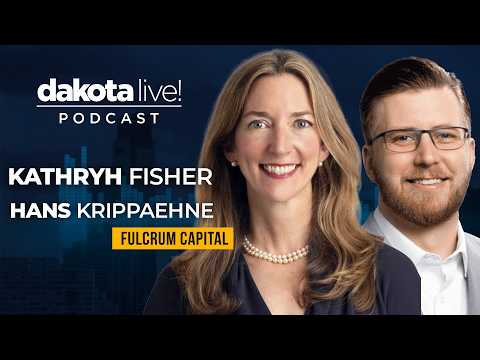
· · 56 min · Hosts: Robert Morier · Guests: Kathryn Fisher, Hans Krippaehne, Carter Garrison
Summary
Fulcrum Capital’s wealth strategy is built around integrating planning and investing rather than treating them as separate functions. The guest explains that the firm, an independent RIA in Seattle with over a billion in assets under management, was founded to escape the traditional brokerage model and provide fiduciary advice, tax awareness, estate coordination, and community giving alongside portfolio management. The host frames the conversation around how modern RIAs are evolving into broader advisory partners for business owners, professionals, and nonprofits.
On the investment side, the guest says portfolio construction starts with the client’s plan, risk tolerance, liquidity needs, and concentrated exposures elsewhere in the balance sheet, such as a business or RSUs. The team uses models, but keeps room for customization, and it leans on active management where it believes research supports it. That includes manager selection work in areas like emerging markets, where the guest emphasizes fewer managers, higher conviction, and careful attention to tracking error.
The conversation also stresses education and transparency. The guest says clients need to understand the tradeoffs in private markets, active ETFs, and other less liquid structures, especially as more thematic products crowd the market. The firm’s view is that illiquid assets can be useful, but only when they fit into a broader plan with enough cash and short-duration assets to meet future needs.
Key takeaways
- Fulcrum starts with the financial plan and then matches portfolio risk, liquidity, and tax placement to that plan, rather than building assets in isolation.
- The guest says the firm prefers fewer, higher-conviction managers in areas like emerging markets to avoid recreating the index at a higher fee.
- Private market exposure is used selectively and is sized small enough that clients should not need to sell it for near-term liquidity needs.
- The guest says active ETFs may offer lower fees and better tax efficiency than mutual funds, but due diligence remains essential because the category is still nascent.
- The guest says transparency and client education are central, especially when portfolios include less liquid or more complex strategies.
Notable quotes
“We do use models to to guide our portfolios. In any one of a number of instances, there can be customizations based on certain client preferences that we can account for”
“diversification and risk are are first and foremost to to our our framework”
“We definitely lean towards the fewer managers camp on this”
“We want to be very transparent with clients about why we're investing in specific investments, what advantage we see to that investment, and what are the drawbacks”
How the episode opens
Welcome to the Dakota Live podcast. — I'm your student host, Carter Garrison.
And I'm your host, Robert Morier. The goal of this podcast is to help you better know the people behind investment decisions. We introduce you to chief investment officers, manager research professionals, and other industry leaders to help you sell in between the lines and better understand the investment ecosystem.
If you're not familiar with Dakota and our Dakota Live content, please visit our website at dakota.com. Before we get started, I need to read a brief disclosure. This content is provided for informational purposes and should not be relied upon as recommendations or advice about investing in securities.
All investments involve risk and may lose money. Dakota does not guarantee the accuracy of any of the information provided by the speaker, who is not affiliated with Dakota. Not a solicitation, testimonial, or endorsement by Dakota or its affiliates.
Nothing herein is intended to indicate approval, support, or recommendation of the investment advisor or its supervised persons by Dakota.
Today's episode is brought to you by Dakota Marketplace. Are you tired of constantly jumping between multiple databases and channels to find the right investment opportunities? Introducing Dakota Marketplace, the comprehensive institutional and intermediary database built by fundraisers for fundraisers.
With Dakota Marketplace, you'll have access to all channels and asset classes in one place, saving you time and streamlining your fundraising process. Say goodbye to the frustration of searching through multiple databases and say hello to a seamless and efficient fundraising experience. Sign up now and see the difference Dakota Marketplace can make for you.
Visit dakotamarketplace.com today. Welcome back to the Dakota Live podcast. Today's episode is a particularly interesting one.
We are joined by Fulcrum Capital, an independent, employee-owned wealth management and investment advisory firm based in Seattle, Washington.
From the episode’s captions: roughly the first two minutes, lightly cleaned. Keep watching on YouTube →
Topics
- ria evolution
- manager selection
- tax-efficient portfolio construction
- liquidity planning
- active etfs
Companies and tickers mentioned
- Fulcrum Capital
Watch the episode
Summary, takeaways and quote selection by Octagon. Quotes are short excerpts; the full conversation is in the episode.
More from Dakota Live!
-
 Expanding the Pie Through Organic Growth: Wealth Management with Constellation Wealth Capital
-
 Where the Risk Hides: Tom Majewski of Eagle Point on CLOs, Private Credit, and the Next Credit Cycle
-
 Building Private Markets Programs for RIAs with Opto Investments
-
 Depth Over Breadth: Inside The Next Collective
-
 Brad Mook | Rosemont's History in GP Stakes and the Move to Permanent Capital
-
 The Unconventional VC: Maddi Holman of Daring Ventures
Dakota Live!, this episode and its artwork belong to Robert Morier. Octagon is not affiliated with the show; this page is an independent summary.
