
Episode summary
David Reich – Bronze Age shock, the Neanderthal puzzle, & the sudden spread of farming
 Dwarkesh Podcast
· · 2 hr 14 min · Hosts: Dwarkesh Patel · Guests: David Reich, Ali Akbari
Summary
The guest argues that the ancient-DNA field has finally reached the sample sizes needed to detect biological change over time, and that the new paper overturns the old view that natural selection was mostly quiescent after the agricultural revolution. Using a method that corrects for migration and admixture, he says the genome shows widespread selection signals in the last 10,000 years, with especially strong intensification in the Bronze Age and Iron Age, rather than immediately after farming began.
He says the clearest signals cluster around immune and metabolic traits, with examples including tuberculosis-related TYK2, ABO blood group variation, hemochromatosis, lactase persistence, pigmentation, obesity-related traits, and the genetic predictor of years of schooling and cognitive performance. The host presses on why behavioral traits look weaker, and the guest says that is mostly a power issue because those traits are spread across many more genes of smaller effect.
A recurring theme is that Bronze Age societies may have been a much harsher evolutionary shock than the initial shift to agriculture: denser settlements, more livestock contact, more infectious disease, and new social structures. The guest also argues that what looks like selection in some traits may reflect deeper tradeoffs, with different environments favoring different genetic set points over time.
Key takeaways
- The guest says the paper finds selection was not dormant after farming, but accelerated, especially from 5,000 to 2,000 years ago.
- He argues immune and metabolic traits show the strongest enrichment, while behavioral traits are harder to detect because they are more polygenic.
- The guest says the Bronze Age, not the first farming transition, looks like the biggest environmental shock in the data.
- He says the genetic predictor of years of schooling and related cognitive traits appears to have been under strong selection, even though the relevant phenotype is modern.
- The guest uses TYK2, lactase persistence, pigmentation, and body fat as examples of traits whose selection trajectories changed sharply over time.
Notable quotes
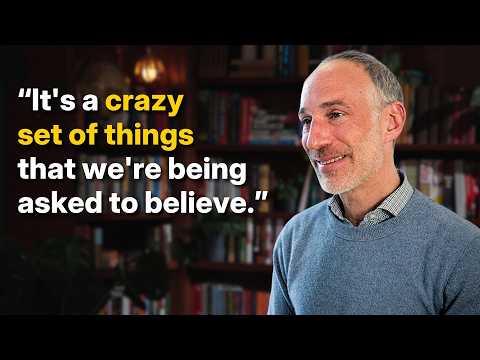
“And 98% of it is other factors, especially genetic drift”
“Instead of being quiescent, natural selection is everywhere”
“What you see when you look at intelligence is that this maxes out in the Bronze Age, between 5,000 and 2,000 years ago”
“the biology of the population might not be ideally adapted”
How the episode opens
Humans, at least in this part of the world, were wrenched into a way of living that was so different from how their hunter-gatherer ancestors lived that the organism had to adapt very strongly. Maybe the degree of that wrenching process moving into the Bronze Age was qualitatively greater than the degree of the wrenching process that happened from the initial transition to growing plants, which is surprising, because our cartoon picture is that the big transition is farming. But the genetic data, the biological readout, is saying our genome is reacting much more strongly to these events that happened 5,000 years ago.
I am back with David Reich, who is a professor of ancient DNA at Harvard. How do you describe what it is that you study? I'm a geneticist, and I work on human history and how ancient people relate to each other and people living today.
We did an interview two years ago, which ended up being one of the most popular interviews I've ever done. I think people found it really compelling that there's so much about human history we don't know and are just learning about now as a result of the kinds of techniques your lab is using. You have a new preprint that's very exciting, and I wanted to talk to you about it.
Can you give me a little bit of context on what we're talking about today? The dream was that when this ancient DNA field started, more than 16 or 17 years ago, we were going to learn a lot about biology —about how people's biology changed over time— by getting DNA out of ancient human remains and tracking changes over time. And that dream has really not been realized since the beginning of this field.
The field has been a big success with regard to learning about human history.
From the episode’s captions: roughly the first two minutes, lightly cleaned. Keep watching on YouTube →
Topics
- ancient dna
- natural selection
- bronze age selection
- neanderthal origins
- spread of farming
Watch the episode
Summary, takeaways and quote selection by Octagon. Quotes are short excerpts; the full conversation is in the episode.
More from Dwarkesh Podcast
-
 What Robert Caro learned about power after studying it for 50 years
-
 What will computer chips look like in 2045?
-
 How did a few hundred Spanish soldiers topple two empires? – Si Sheppard
-
 OpenAI researcher on agent swarms & recursive self-improvement
-
 AI researchers debate how close we are to recursive self-improvement
-
 Ajeya Cotra – Inside the OpenAI agent swarm that hacked Hugging Face
Dwarkesh Podcast, this episode and its artwork belong to Dwarkesh Patel. Octagon is not affiliated with the show; this page is an independent summary.
