
Episode summary
Grant Sanderson (@3blue1brown) – AI and the future of math
 Dwarkesh Podcast
· · 1 hr 34 min · Hosts: Dwarkesh Patel · Guests: Grant Sanderson
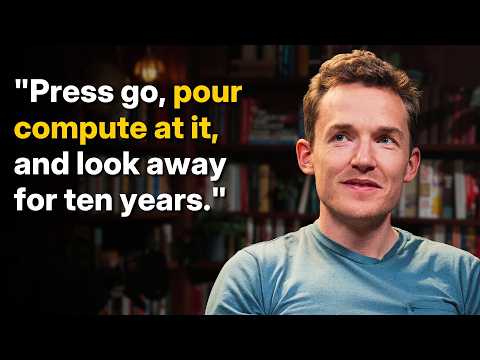
Summary
Grant Sanderson argues that AI’s rapid progress in mathematics is revealing what broader AI progress may look like: not a single “aha” moment, but a jagged frontier where some tasks become easy long before others do. He says today’s systems already show this in math contests, where geometry can be brute-forced while combinatorics remains harder, and he expects similar unevenness as AI moves toward deeper problems like the Riemann hypothesis.
A central theme is that the most important mathematical breakthroughs are often not just proofs, but new concepts, definitions, and connections across fields. Grant contrasts benchmark-style wins with the much fuzzier work of conjecture generation, theory building, and “lightning bolts” between domains, using examples like Montgomery and Dyson, Fermat’s Last Theorem, and the Langlands program. He thinks AI may eventually become strong at these connection-making tasks, but measuring that progress will likely be subjective and tied to whether mathematicians feel their research process has changed.
He also argues that the real bottleneck may be grindability rather than verifiability alone. Math and code are unusually suited to repeated parallel attempts, unlike most real-world work, and he expects better harnesses, multiple agent perspectives, and deliberate entropy in prompts to matter more than formal proof systems like Lean for near-term progress.
Key takeaways
- Grant Sanderson thinks AI progress in math is a preview of broader AI progress: uneven, domain-specific, and unlikely to arrive as one clean milestone.
- He says the next major benchmark is not just theorem proving, but generating good conjectures, definitions, and new conceptual frameworks.
- He expects the most interesting AI breakthroughs to come from finding connections between fields, like the Montgomery-Dyson link or the Langlands-style search for hidden maps between ideas.
- He argues math advances faster partly because it is both verifiable and grindable, letting systems run many parallel attempts with clear credit assignment.
- Grant says Lean and formalization matter less than many assume for current progress; the bigger driver is whether the task can be repeatedly explored at scale.
Notable quotes
“AI has been making the fastest progress in mathematics out of any other field”
“there's a spiky frontier to AI, and math is just right there in one of the spikes”
“good mathematicians prove theorems, great mathematicians come up with conjectures, and the greatest mathematicians come up with definitions”
“I think that's one of the two important reasons, but people really neglect the other one”
“Math, of course, is the exception, and I feel like this is an important driver of progress in this domain and also in coding”
How the episode opens
Today, I'm chatting with Grant Sanderson, who runs 3Blue1Brown and is now working on a new project documenting the progress AI is making in math. I wanted to talk to you about this because AI has been making the fastest progress in mathematics out of any other field. Whatever is happening here, and whatever way we're seeing AI progress happen or not happen, will tell us about what will happen to the rest of the world as AI gets better and better.
I wanted to start with this question I asked you when I first interviewed you three years ago. I asked you, once we have AIs that can get gold in the International Math Olympiad, wouldn't that just be AGI? Wouldn't this just be able to do anything any human can do, given how hard these problems are?
You had an answer, which in retrospect turned out to be very wise and correct. You said it'll be another benchmark, like all these other benchmarks that AI are passing. Obviously, AI has gotten better in a general way since then, but there won't be some "aha" moment when this happens.
First, I'd be curious to get your heuristics on why that turned out to be true. Second, I'm curious how long you think this narrowness can continue to be true. By the point that AI has solved a Millennium Prize problem, do you think it's still possible that there are lots of tasks humans are doing that AI still can’t automate in the economy?
It's an interesting question because it's hard to answer without knowing what the solution looks like ahead of time. If we take the IMO, the spirit of your question three years ago was in looking at how some of the solutions to these problems really seem to require creativity.
From the episode’s captions: roughly the first two minutes, lightly cleaned. Keep watching on YouTube →
Topics
- ai and math
- ai proof verification
- riemann hypothesis
- conceptual breakthroughs
- human understanding
Watch the episode
Watch “Grant Sanderson (@3blue1brown) – AI and the future of math” on YouTube
Summary, takeaways and quote selection by Octagon. Quotes are short excerpts; the full conversation is in the episode.
More from Dwarkesh Podcast
-
 What Robert Caro learned about power after studying it for 50 years
-
 What will computer chips look like in 2045?
-
 How did a few hundred Spanish soldiers topple two empires? – Si Sheppard
-
 OpenAI researcher on agent swarms & recursive self-improvement
-
 AI researchers debate how close we are to recursive self-improvement
-
 Ajeya Cotra – Inside the OpenAI agent swarm that hacked Hugging Face
Dwarkesh Podcast, this episode and its artwork belong to Dwarkesh Patel. Octagon is not affiliated with the show; this page is an independent summary.
