
Episode summary
Bearish Into November. Room to Run After: Why Dan Niles Is Watching Hyperscaler Credit Default Swaps
 Excess Returns
· · Guests: Daniel Niles
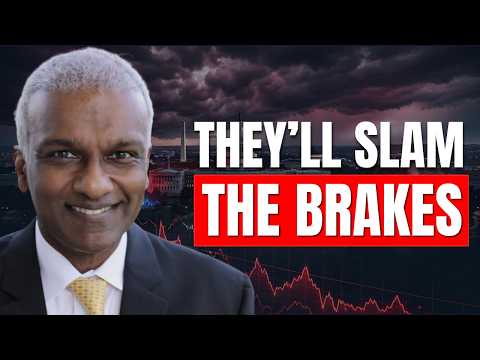
Summary
Dan Niles argues that AI is both a genuine technological revolution and an investment bubble, which means investors can still make money even as the eventual unwind gets larger. He compares the current cycle with railroads, electricity and the internet, saying overinvestment is normal in a transformative era, but that semiconductors could still see a 30% to 50% drawdown when the cycle turns. He thinks Nvidia is much cheaper than Cisco was in 2000, so the downside may be less extreme than the dot-com collapse.
What he watches most closely is whether AI economics keep improving: token prices have fallen about 50% since the end of May, but token volume has risen 2.5x, while cloud revenue growth at Amazon, Microsoft and Google accelerated and margins improved. He also thinks the market briefly improved after the Situational Awareness unwind exposed leverage and forced selling. At the same time, he worries that hyperscaler free cash flow is deteriorating as capex is increasingly financed with debt.
Niles sees political opposition to data centers, electricity constraints, and rising credit stress as near-term risks. He is especially focused on credit default swaps for Microsoft, CoreWeave and Nvidia, and he thinks China’s rapid memory-chip expansion could bring semiconductor cyclicality back faster than many investors expect. Within software, he expects value to shift away from model providers and toward infrastructure and selected application-layer winners, while he worries most about OpenAI’s position relative to Anthropic and Google.
Key takeaways
- Niles says AI is a real revolution, but also an overinvestment cycle that can still produce strong returns before it breaks.
- He expects semiconductors can still run, but ultimately sees room for a 30% to 50% correction when the bubble unwinds.
- He is watching token pricing and token volume closely; token costs are down about 50% since the end of May while tokens produced are up 2.5x.
- He thinks hyperscaler AI revenues are still accelerating, but free cash flow pressure and debt-funded capex are increasing credit-market risk.
- Niles believes political backlash against data centers and China’s memory-chip push are two underappreciated risks to the AI trade.
- He sees the most durable software winners in security, systems of record and certain entertainment names, not necessarily the model providers.
Notable quotes
“if you believe that AI is one of those technologies, which I do and I think most people do, then by definition you have overinvestment going on”
“the number of tokens being actually produced is up two and a half times since the end of May”
“The problem was they were running it at 4x leverage”
“I think anthropic is going to and on the enterprise side and then Google on the consumer side are going to squeeze open AI between them”
How the episode opens
Welcome back to Excess Returns. I'm Justin Carbon. I'm here with Jack Forehand as always.
And today we are joined and have the privilege to be joined by Dan Niles. In my opinion, I think there's a small handful of people we consider elite thinkers when it comes to the technology sector. And for a number of years, I've admired uh Dan and his work.
He is founder of Niles investment management has been portfolio there portfolio manager at Niles Investment Management for um two decades and uh you know with you have over 30 years experience in researching and investing in the technology business and it's it's a very interesting time to be someone that has your views on tech Dan there's a lot going on and so yeah just thank you for joining us we think this is going to be a great discussion a lot of it's going to be focused around AI but we know you have, you know, thoughts on a lot of things when it comes to tech. So, really appreciate you taking the time to join us today.
Oh, my pleasure, Justin, and thanks for having me on. I want to start with something that you said earlier in the year and I think it was along the lines that yes we are 100% in a bubble or maybe there was a specific pocket you were talking about but that you specifically kind of keyed in on you thought that you know semiconductor stocks were going to see somewhere in the range of you know 30 to 50% pullback and and and since then you know semis have pulled back uh quite a bit from June. So just kind of where let's use that as a starting point to where you think we are currently in sort of this bubble cycle if we are in one.
From the episode’s captions: roughly the first two minutes, lightly cleaned. Keep watching on YouTube →
Topics
- ai bubble vs revolution
- hyperscaler credit risk
- semiconductor cyclicality
- ai capex and debt issuance
- data center politics and constraints
Companies and tickers mentioned
- NVDA
- GOOGL
- GOOG
- Nvidia
- OpenAI
- Anthropic
Watch the episode
Summary, takeaways and quote selection by Octagon. Quotes are short excerpts; the full conversation is in the episode.
More from Excess Returns
-
 We Asked Fidelity’s Director of Global Macro Who Wins If AI Spending Slows
-
 An AI Bubble Could Hit Stocks. Inflation Could Hit Bonds. How Do You Diversify and Keep Both?
-
 Tech Is Priced for a Boom. 86% of the Economy Grew 0.7%. What If AI Slows?
-
 Tech Is the Cheapest Since 2022. Walmart Is 46 Times Earnings. Where Is the Bubble?
-
 This $1.5 Trillion Manager Expects More Fed Hikes. So Why Is He Still Bullish?
-
 AI Stocks Cracked. Margins Could Be Peaking. So Why Is a Liquidity Expert Watching the Debt Wall?
Excess Returns, this episode and its artwork belong to Excess Returns. Octagon is not affiliated with the show; this page is an independent summary.
