
Episode summary
The 10-Year Hit a 24-Year High. Nobody Is Buying Puts. Are You Watching the Wrong Market?
 Excess Returns
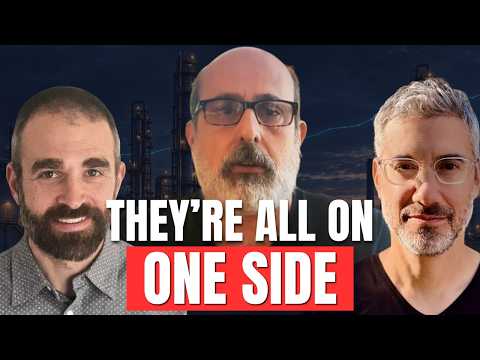
· · 56 min · Hosts: Andy Constan, Brent Kochuba, Eric Pachman, Jack Forehand, Matt Zeigler
Summary
Rising long-term yields were the episode’s anchor point, with the host framing September’s jump in the 10-year Treasury from 4.75 to 5.29 as the biggest rate move since 2022. Andy Constan argued that the move is being driven less by a bond-market crisis than by stronger growth, AI-related capex, and heavy government debt supply, with hawkish Fed policy and Treasury politics acting as catalysts. He said inflation is still above target, but not accelerating sharply enough to justify a panic about fiscal collapse or a true bond-market crisis.
Brent Kochuba then translated that macro backdrop into positioning data. He said options traders are not leaning into equity downside; instead, they are buying calls and betting that yields will come back down, even as bond volatility spikes and equity volatility stays unusually calm. His read was that markets are underpricing the possibility that higher rates eventually hit stocks, but they are not positioned for that outcome yet.
Eric Pachman broadened the inflation case beyond rates, focusing on refinery constraints, crack spreads, diesel shortages, freight costs, and the way those pressures can pass through to CPI. The closing discussion tied those cost pressures back to AI, arguing that huge spending on data centers and models may be inflationary in the near term while productivity gains arrive more slowly and unevenly.
Key takeaways
- Andy Constan said higher long rates are being driven mainly by strong growth, AI capex, and debt supply, not a bond-market crisis.
- Constan argued bonds are more attractive than they were five years ago, but he does not expect a major bond rally unless the economy weakens.
- Brent Kochuba said traders are piling into call trades that benefit if yields fall, while equity downside protection remains notably light.
- Kochuba said the market is calm on the surface, but the real risk is a fast repricing if yields keep climbing and equities finally catch the stress.
- Eric Pachman said diesel tightness and refinery bottlenecks can feed freight costs into consumer inflation even if crude oil eases.
- The host and Matt Zeigler argued AI spending is still stimulative and inflationary even if model quality and efficiency keep improving.
Notable quotes
“There is not a bond market crisis at the moment. Nothing is in crisis. There is no crisis”
“People are not positioning for downside and equities at all”
“Instead, they are all kind of piling into trades that are going to make money if the yields start to come off”
“I think that if we understood the the physics and functioning of a refinery, we would not be so complacent right now”
How the episode opens
You can point to hawkishness coming from the committee um which ultimately resulted in a hike. You can point to Bessant making a really terrible arrogant decision to sort of dare the bond market to go higher um which it proceeded to do in terms of yields. People are not positioning for downside and equities at all. Instead, they are all kind of piling into trades that are going to make money if the yields start to come off.
I think that if we understood the the physics and functioning of a refinery, we would not be so complacent right now. You're watching Excess Returns. I'm Matt Ziggler. That's Jack Forhand. We We made it through another month. We didn't die. Bonds tried to kill us. Diesel tried to kill us,
But we persevere. How you doing, J? — I'm just just happy private jets don't take diesel, Matt. — Um I don't know what is happening with jet fuel because that actually that could be up as well, and I'm not sure that, but uh at least they don't take diesel.
Is our private jet solar? How do we fly? — Yeah, that maybe eventually we'll be.
I don't think we'll make it. I'm not sure if we'll make it up the runway right now. I knew it's summer, but maybe someday that'll happen to us.
Maybe more sun up there. I don't even know. There you go.
Let's fly a kite. Let's fly a kite. Why can't Why can't we do this?
So, we've got a bunch of great people with us. We've got our segments. We are looking back on the month that was and looking forward to the month ahead of us.
It's not short-term thinking. There's a long-term perspective in all these things.
From the episode’s captions: roughly the first two minutes, lightly cleaned. Keep watching on YouTube →
Topics
- rising bond yields
- options positioning
- inflation risks
- ai capital spending
- diesel and freight inflation
Watch the episode
Summary, takeaways and quote selection by Octagon. Quotes are short excerpts; the full conversation is in the episode.
More from Excess Returns
-
 We Asked Fidelity’s Director of Global Macro Who Wins If AI Spending Slows
-
 An AI Bubble Could Hit Stocks. Inflation Could Hit Bonds. How Do You Diversify and Keep Both?
-
 Tech Is Priced for a Boom. 86% of the Economy Grew 0.7%. What If AI Slows?
-
 Tech Is the Cheapest Since 2022. Walmart Is 46 Times Earnings. Where Is the Bubble?
-
 This $1.5 Trillion Manager Expects More Fed Hikes. So Why Is He Still Bullish?
-
 AI Stocks Cracked. Margins Could Be Peaking. So Why Is a Liquidity Expert Watching the Debt Wall?
Excess Returns, this episode and its artwork belong to Excess Returns. Octagon is not affiliated with the show; this page is an independent summary.
