
Episode summary
We Asked Rich Bernstein Why the S&P 500 Could Deliver a Lost Decade — And What He Owns Instead
 Excess Returns
· · 1 hr 2 min · Guests: Richard Bernstein
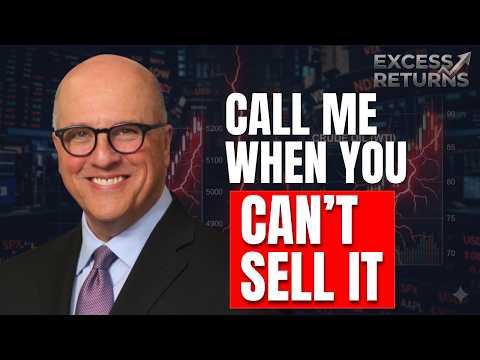
Summary
Richard Bernstein argues that investors are underestimating a structural inflation shift, and that S&P 500 index funds could deliver disappointing returns over the next 1, 3, 5, or 10 years. He says the U.S. is now “importing inflation” as core import prices rise faster than core CPI, and he sees the current backdrop as more like the 1960s “guns and butter” era than the 1970s oil-shock period. In his view, war, deglobalization, a larger defense buildup, and tax cuts could all keep inflation and deficits higher than consensus expects.
Bernstein says that in a more inflationary regime, shorter-duration assets matter more than long-duration growth, which is why he favors cash, dividends, and shorter-duration equities and fixed income. He says the market’s obsession with AI and the Magnificent 7 has pulled capital away from many overlooked areas, creating opportunity in small and midcap industrials, pro-inflation assets, and non-U.S. stocks. He also thinks the Fed’s 2% target is antiquated and likely to remain unchanged politically, even if a higher target would be more realistic.
He repeatedly frames the current market as a concentration story rather than a broad economy story: earnings are healthy, but leadership is narrow. Bernstein says the real opportunity may come when capital rotates away from crowded themes and toward the rest of the market, especially where valuations are lower and growth is still strong.
Key takeaways
- Bernstein thinks S&P 500 index buyers could be disappointed because higher inflation and tighter financial conditions may compress long-term returns.
- He says the U.S. is now importing inflation as core import prices rise faster than core CPI, reinforcing his inflationary thesis.
- He argues today resembles the 1960s “guns and butter” period more than the 1970s, with defense spending and tax cuts adding to demand.
- He favors shorter-duration assets, dividends, and cash flow because near-term cash needs become more important when inflation runs hotter than expected.
- He sees opportunity in small and midcap industrials, non-U.S. stocks, and other pro-inflation assets that investors are largely ignoring.
- He thinks the Fed will keep its 2% inflation target too long, making a 3% to 4% regime more plausible over time.
Notable quotes
“If you're buying an S&P index fund right now for and you have a a time horizon more than you know the next commercial break”
“we are actually importing inflation meaning that import prices are rising faster core import prices so let's take out energy and food”
“we think there's more similarities to the 1960s than there are necessarily to the 1970s”
“I think we should be talking about a three to three and a half or 3 to 4% inflation target rather than the 2% that they're using right now”
“I think there's a bunch of stuff out there that is just like screaming for investors to look at them and investors just don't care”
How the episode opens
If you're buying an S&P index fund right now for and you have a a time horizon more than you know the next commercial break let's assume you're you know you're really investing for you know 1 3 5 10 years um I think you can be very disappointed for the first time in a long time we are actually importing inflation meaning that import prices are rising faster core import prices so let's take out energy and food core import prices are rising faster than the core CPI so that means We're now importing inflation. If you can't afford to buy gasoline, you can't afford to buy bread. You can't afford to buy groceries.
You don't care about growth in 15 or 20 years. You care about being able to buy groceries and gasoline today. I think there's a bunch of stuff out there that is just like screaming for investors to look at them and investors just don't care.
You're watching Excess Returns, the channel that makes complex investing ideas simple enough to actually use where better questions lead to better decisions. I'm Matt Ziggler. Justin Carbon is here with me as co-host.
We've got the global head of macro and custom strategies at Janice Henderson Investors, Richard Bernstein. Welcome back to Access Returns.
Thank you. Thanks, guys. Thanks for having me. — So, you wrote a really happy note. Quick thoughts on war. early March, you made the point that war rarely if ever is disinflationary, which it's it's obvious. You know, you're shooting at stuff, you're blowing stuff up. It tends to
Tends to cause prices to go up with them. But now, two months into this Iran conflict, has the market played out with inflation expecting expectations as expected? — So, yes and no.
From the episode’s captions: roughly the first two minutes, lightly cleaned. Keep watching on YouTube →
Topics
- s&p 500 passive returns
- inflation regime shift
- deglobalization and geopolitics
- short-duration and cash flow
- market concentration and ai mega-caps
Companies and tickers mentioned
- Janus Henderson Investors
Watch the episode
Summary, takeaways and quote selection by Octagon. Quotes are short excerpts; the full conversation is in the episode.
More from Excess Returns
-
 We Asked Fidelity’s Director of Global Macro Who Wins If AI Spending Slows
-
 An AI Bubble Could Hit Stocks. Inflation Could Hit Bonds. How Do You Diversify and Keep Both?
-
 Tech Is Priced for a Boom. 86% of the Economy Grew 0.7%. What If AI Slows?
-
 Tech Is the Cheapest Since 2022. Walmart Is 46 Times Earnings. Where Is the Bubble?
-
 This $1.5 Trillion Manager Expects More Fed Hikes. So Why Is He Still Bullish?
-
 AI Stocks Cracked. Margins Could Be Peaking. So Why Is a Liquidity Expert Watching the Debt Wall?
Excess Returns, this episode and its artwork belong to Excess Returns. Octagon is not affiliated with the show; this page is an independent summary.
