
Episode summary
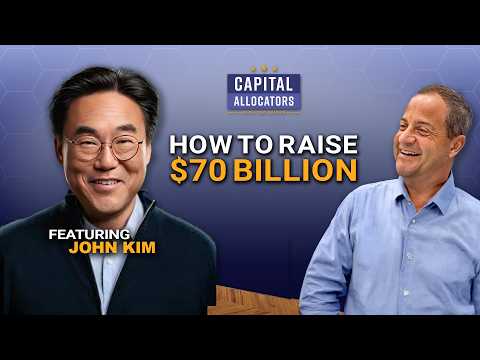
Fundraising Mastery: the Tao of Kimmer – John Kim (EP.503)
 Investment Management Operations
· · 1 hr 9 min · Hosts: Ted Seides · Guests: John Kim
Summary
John Kim argues that fundraising is not a mysterious art but a disciplined sales process: identify prospects, contact them, qualify fit, persuade, and close. He says every meeting has to quickly establish rapport, credibility, attention, and interest, because allocators arrive with competing priorities and little patience for generic pitches. His core view is that successful persuasion reduces fear more than it stokes desire, and that trust matters more than abstract belief in a strategy.
He frames the pitch around three forces: logic, emotion, and values. Track record helps, but differentiation and simplicity of story matter just as much, especially when the investor has to explain the decision to others. He also gives a taxonomy of institutions: pensions want respect, sovereigns want strategic and national benefits, fund-of-funds want differentiation, insurance companies want risk mitigation, family offices require clarity on decision-making, and endowments want to feel special.
Kim then broadens the lens to fund-level fundraising economics. The outcome is driven by pipeline, conversion ratio, and bite size, while terms, speed, and size create unavoidable trade-offs. Strong fundraising can amplify a good product, but it cannot rescue a weak one. In his view, the best investor relations and fundraising teams combine GP knowledge, LP knowledge, and the ability to act as a credible ambassador.
Key takeaways
- Kim says fundraising is a process: identify, contact, qualify, persuade, and close.
- He argues that persuasion is “desire minus fear,” so the best pitch reduces an allocator’s anxiety first.
- Pension plans want respect, sovereigns want strategic value, and endowments want to feel special.
- Fundraising results depend on pipeline times conversion ratio times bite size, not just raw enthusiasm.
- Strong fundraising can amplify a good strategy, but it cannot fix a weak product or a complicated story.
Notable quotes
“Every meeting must start with four things. You must establish rapport. You must establish credibility. You have to gain their attention. You have to generate interest”
“I believe that persuasion is desire minus fear. So what people want minus how scared they are”
“The macro process is your pipeline times your conversion ratio times the size of the contract or the bite size of the investment equals the amount of money you're going to receive”
“Your track record plus your differentiation divided by the complexity of your story is generally how much money you can raise”
“pension plan investors, people who don't have a lot of upside, if I make 10 times money for you, you don't get paid anymore”
How the episode opens
The structure of the meeting is very important, but the persona can be even more potent. First, I want to talk about the structure. Every meeting must start with four things.
You must establish rapport. You must establish credibility. You have to gain their attention.
You have to generate interest. And you better do it fast. It's a conceit that when somebody walks into a meeting, they say, "Oh, well, you are meeting with me and so I have all of your attention.
No, you're doing something right before you met me and you're going to be doing something right after you meet me because by definition, if you're not busy, you probably don't have any money. Of course, you're busy because everybody wants your money. So, it is completely arrogant to believe that you're not thinking of something before you come in the meeting and you're not stressed about something else in your life.
You've got your own life. And that's the whole idea of the Capernican theory of selling. When I walk in the room, the whole world is you.
I literally only exist in your mind. my existence. And this is actually very meditative.
The whole idea that we make up our own realities, our own mind. The whole idea is therefore I need to establish rapport. I need to say, hey, let's change the setting.
Hopefully makes it a little bit charming. Sometimes just talk about the weather. I know it sounds silly, but today happens to be a beautiful day.
Well, talk about it if you want. If you've got something else you can talk about, it's particularly worthwhile if you walk into somebody's office and just pick out something in the office to talk about. That happens all the time.
Very few times we say, "Okay, great.
From the episode’s captions: roughly the first two minutes, lightly cleaned. Keep watching on YouTube →
Topics
- fundraising strategy
- capital raising sales process
- institutional investor taxonomy
- persuasion and negotiation
- fundraising team structure
Companies and tickers mentioned
- General Catalyst
- Lila Sciences
Watch the episode
Watch “Fundraising Mastery: the Tao of Kimmer – John Kim (EP.503)” on YouTube
Summary, takeaways and quote selection by Octagon. Quotes are short excerpts; the full conversation is in the episode.
More from Investment Management Operations
-
 Charlie Rose: Real Estate Credit Over Yield at Invesco's $85B Platform
-
 Daylian Cain on the Theory of the Pie
-
 Pat Dorsey on Assessing Management and Avoiding Blow-Ups
-
 Michelle Knudsen, NYU – How Decision Rights Are Split Between Committee and Team
-
 Luis Laboy: Why Every Market Is Now an Emerging Market | Hewlett Foundation
-
 Frank Danieli – Roadmap for Private Credit from Australia
Investment Management Operations, this episode and its artwork belong to Ted Seides – Allocator and Asset Management Expert. Octagon is not affiliated with the show; this page is an independent summary.
