
Episode summary
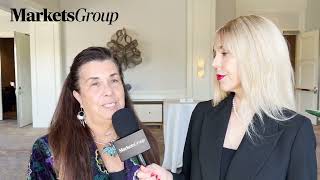
ALTSLA 2026: Jeremy Heer of the University of Illinois Foundation Spoke to Courtney McQuade

Summary
Jeremy J. Heer of the University of Illinois Foundation said the recent turbulence in private credit, including the Blue Owl situation, looks more like risks that were always embedded in the product than evidence that the asset class is broken. He argued that loan defaults and gating in semi-liquid funds were disclosed in fund documents, and that the bigger task is educating clients so they understand what they own.
On liquidity, Heer said it matters most when matched against an investor’s duration and cash needs. He described the foundation as a long-duration investor that can wait for capital, while warning that shorter-duration investors may have made assumptions about getting money back that were too optimistic.
Heer was more constructive on AI, saying the field is still early and likely to produce both big winners and big losers. He broke the opportunity set into four layers and said the top and bottom layers look most attractive, especially energy, chips, compute, power, infrastructure, and critical minerals, because the bottleneck comes down to “tokens per watt.” He also said he would not bet against Elon Musk’s SpaceX concept for data centers in space, though it still raises scientific questions.
Key takeaways
- Heer said the Blue Owl and private credit setbacks were risks “baked into” fund docs, not proof that the asset class is ending.
- He argued liquidity only matters relative to an investor’s time horizon, and the University of Illinois Foundation can afford to wait.
- He expects AI to create both major winners and losers, with the most value likely in the top and bottom layers of the stack.
- He said energy, power, chips, and critical minerals look especially attractive because AI economics will hinge on “tokens per watt.”
- He said the biggest market risk is not what is already visible, but “what you don’t know that you don’t know.”
Notable quotes
“these were things that were in the fund docs and things that people should have known about”
“I think that it remains to be seen who the winners and losers really are”
“I think that's really fertile hunting grounds for future investment”
“it's what you don't know that you don't know is what really hurts you”
How the episode opens
For the last 9 10 plus years, private credit has been a fan favorite. But recently, some things have been changing. The Blue Owl situation and more. I'm here at Alts LA with Jeremy here, managing director at the University of Illinois Foundation. Jeremy, what's your take?
I mean, what really happened, right? I mean, Blue Owl, they had some they had some loans go bad. That's going to happen from time to time.
They had to get a couple of funds. Uh, I'm Is it different than the last nine or 10 years? Absolutely.
Is it signs that the world is going to end? Probably not. Um, I suspect that a lot of the of what's happening now is kind of things that were baked into these things already.
These are risks that were out there and that people probably should have known about, right? The the risks of loans going bad, the risks of getting gated when you have these semi-liquid funds. These are these are these were things that were in the fund docs and things that people should have known about.
So I suspect there might be a bit of uh um work for people to do to make sure that the clients are educated so they understand these things can happen.
Yeah, absolutely. Liquidity has also been a really hot topic here at Alt. People talking about how important is liquidity? What are your thoughts on that? — Well, it at the end of the day, right, it's how many dollars do I get back when when I make an investment? It's obviously very important. Um, again, I think that's the kind of thing that has to be matched up to the type of investor you are and the types of assumptions that you're making when you're funding your investments.
From the episode’s captions: roughly the first two minutes, lightly cleaned. Keep watching on YouTube →
Topics
- private credit risks
- ai value accrual
- fund docs transparency
- black swan preparedness
- unknown unknowns
Companies and tickers mentioned
- University of Illinois Foundation
Watch the episode
Summary, takeaways and quote selection by Octagon. Quotes are short excerpts; the full conversation is in the episode.
More from Markets Group
-
 The €3bn German Allocator Who Said No to Alternatives
-
 RE West 2026: Valerie Red Horse Mohl of the California Endowment Spoke to Courtney McQuade
-
 RE West 2026: Steve Biggs of The Mather Group Spoke to Courtney McQuade
-
 RE West 2026: Martha Delgado of Saint Francis Foundation Spoke to Courtney McQuade
-
 Two Stints as Interim CIO: Howard Hodel on Risk, Rebalancing and Reassuring the Board
-
 Stefan Beiner on Repo, Resilience, and Why Governance Beats Prediction in Pension Investing
Markets Group, this episode and its artwork belong to their owners. Octagon is not affiliated with the show; this page is an independent summary.
