
Episode summary
Sam Gyimah Interview

Summary
Sam Gyimah says investor appetite for private credit remains strong even after recent blowups, because the market’s core issue is risk management rather than a collapse in demand. He says real asset investors and insurance companies still see pockets of opportunity in Europe, the US, and globally, and are willing to pursue them.
Gyimah argues that the bigger underappreciated risk is the changing price of money. Capital is no longer cheap, abundant, and global; instead, liquidity is being pulled into geopolitical and industrial-policy priorities, putting independent monetary policy under strain. He says global capital pools are fragmenting and liquidity is increasingly being weaponized, which investors are not discussing enough.
He also says the balance between politics and economics has reversed. Where economics once trumped politics, he now sees politics driving investment and corporate decisions, forcing CEOs and investors to pay much closer attention to geopolitical context. That shift, he says, has turned geopolitics into a C-suite issue rather than a narrow government-affairs concern.
Key takeaways
- Gyimah says private credit appetite is still very strong, with investors seeing opportunity despite recent failures in the space.
- He argues the underpriced risk is the “price of money,” as capital becomes less global and more constrained by geopolitics and industrial policy.
- Gyimah says global capital pools are fragmenting and liquidity is increasingly being weaponized.
- He says politics now trumps economics, so investors and corporate leaders must factor geopolitical context into every decision.
- Gyimah says CEOs are spending more time in Washington, reflecting a new need to manage policy as a core business issue.
Notable quotes
“the appetite and the desire for investors to participate in the market is still very strong”
“this is about risk management”
“We are seeing fragmentation of global capital pools but also the weaponization of liquidity”
“the politics trumps the economics”
How the episode opens
Sam, welcome. It's really great to have you here with us today. Thank you so much for joining.
You have such an incredible background from government to global finance and you were recently at our event earlier this month to talk about navigating private credit. I just want to ask you, can you please give us a quick preview of the key ideas you shared then? Well, the key idea coming Thank you Joanna.
The key idea coming out of the private credit discussion is that the appetite and the desire for investors to participate in the market is still very strong. Yes, there have been situations recently where companies have blown up in the private credit space. But the view very much is that this is about risk management.
But whether you're talking about real asset investors or insurance companies, it is very clear from that discussion that they all see pockets of opportunity in Europe and the US that they are willing to pursue and across the world that they're willing to pursue.
Thank you very much. But you also operate at the intersection of markets and policy. In your perspective, what's one geopolitical risk you think investors today are underestimating?
That's a really good question. Obviously, the discussion around geopolitical risk focuses a lot on tariffs, you know, US China relations, all of which are important in Europe, the war in Ukraine. But I'd like to hear more around the price of money.
And we are no longer at a period where capital was cheap, abundant, and global. We're now very much in a situation where money its availability is being pulled into geopolitical world but also into industrial policy independent monetary policy is therefore under huge strain. We are seeing fragmentation of global capital pools but also the weaponization of liquidity and I think the price of money is one of those areas where there is a real risk that investors are not talking as much about openly.
From the episode’s captions: roughly the first two minutes, lightly cleaned. Keep watching on YouTube →
Topics
- private credit demand
- geopolitical risk
- liquidity pressures
- capital flow fragmentation
- risk management
Companies and tickers mentioned
- SNG Capital
Watch the episode
Watch “Sam Gyimah Interview” on YouTube
Summary, takeaways and quote selection by Octagon. Quotes are short excerpts; the full conversation is in the episode.
More from Markets Group
-
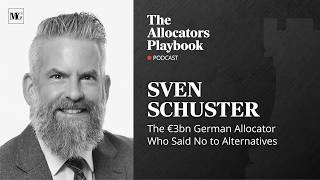 The €3bn German Allocator Who Said No to Alternatives
-
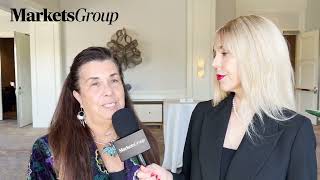 RE West 2026: Valerie Red Horse Mohl of the California Endowment Spoke to Courtney McQuade
-
 RE West 2026: Steve Biggs of The Mather Group Spoke to Courtney McQuade
-
 RE West 2026: Martha Delgado of Saint Francis Foundation Spoke to Courtney McQuade
-
 Two Stints as Interim CIO: Howard Hodel on Risk, Rebalancing and Reassuring the Board
-
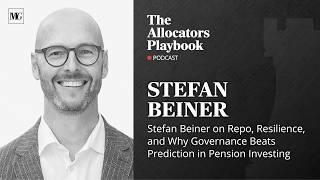 Stefan Beiner on Repo, Resilience, and Why Governance Beats Prediction in Pension Investing
Markets Group, this episode and its artwork belong to their owners. Octagon is not affiliated with the show; this page is an independent summary.
