
Episode summary
Lessons From The Great Financial Crisis | "Clear Takes" with Vincent Daniel and Danny Moses
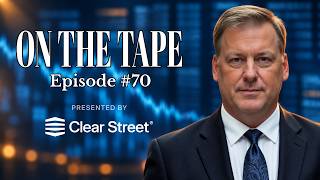
 On The Tape
· · Hosts: Danny Moses, Vincent Daniel, Puneet Pardasani

Summary
Danny Moses and Vincent Daniel argue that today’s market is being distorted by passive flows, momentum, and a research-and-banking complex that rewards consensus more than sober analysis. They say the result is a market full of inefficiencies, but one that now requires patience, selectivity, and a willingness to be early rather than constantly contrarian.
Their bigger focus is the AI capex boom, which they compare to both the dot-com era and the Great Financial Crisis. They see familiar signs of excess: circular financing, rising leverage outside the banking system, and heavy dependence on capital markets to keep the buildout going. They cite Anthropic’s filing, data center financing, and CoreWeave as examples of how far the trade has spread, while stressing that the secular demand story is real.
On policy, they think the Fed is likely near the end of the hiking cycle, with the bond market and tighter credit conditions doing some of the work for it. They also see midterms, government-shutdown risk, and a more uncertain macro backdrop as reasons volatility could rise, even if seasonality and historical post-midterm returns remain supportive.
Key takeaways
- Danny Moses says the current market rewards momentum and passive flows, which makes bottom-up stock picking harder but creates more inefficiencies to exploit.
- Vincent Daniel thinks the AI boom looks more like the dot-com era than the GFC because it combines secular growth with circular financing and eventual funding stress.
- The guests see the biggest AI risk in private-credit and nonbank financing, not in the banks themselves, which they say are more exposed through fees and transaction volume.
- They think CoreWeave is best understood as a lessor of equipment-like assets, making its business model highly dependent on cheap financing and longer GPU useful lives.
- Both guests expect the Fed to be near the end of its hiking cycle and think policy, yields, and fiscal debt dynamics are likely to matter more in 2027 and 2028.
Notable quotes
“being contrarian all the time is probably a losing proposition”
“what we learned from the GFC and if we see any similarities to today's markets and how banks are positioned this time around”
“No good asset goes unlevered”
How the episode opens
Welcome to the On the Tape podcast. I'm your host Danny Moses. And instead of the normal interview you're used to on the pod, we're releasing a conversation Vincent Daniel and myself had this week as part of Clear Street's new Clear Take weekly interview series.
Our friend Panite Partisani, who joined Clear Street earlier this year to run their institutional sales and trading business, conducted the interview and along with questions from other participants asked Vinnie and I a series of questions that covered a variety of topics, including what is it like to be a contrarian, which we both said not always fun. How do we view the world? what we learned from the GFC and if we see any similarities to today's markets and how banks are positioned this time around.
We were asked for our thoughts on AI, including Cory Vanthropic's recent IPO filing, as well as the impact that midterm elections might have on the markets. Lastly, we were asked where we see opportunities in these markets and what keeps us up at night. Before we get to the interview, I wanted to provide my thoughts on the Federal Reserve meeting and the press conference that just occurred.
As expected, the Fed left rates unchanged and there were two denters, Beth Hammock and Lisa Cook. In the Fed's statement, it read that they were waiting for quote accumulation of more information to determine future policy. And they changed the word to describe the economy from solid to strong, which War further detailed in his press conference.
The odds for a hike in December actually have gone up slightly over the course of this afternoon to over 80%. I will believe that when I see it. During the Fed press conference, Oracle, who was hosting their investor day, gave guidance that was wellreceived by investors regarding capex plan and free cash flow forecasts.
From the episode’s captions: roughly the first two minutes, lightly cleaned. Keep watching on YouTube →
Topics
- gfc
- passive flows
- momentum-driven markets
- ai capex boom
- leverage outside banking
Companies and tickers mentioned
- Seawolf Capital
- Clear Street
Watch the episode
Summary, takeaways and quote selection by Octagon. Quotes are short excerpts; the full conversation is in the episode.
More from On The Tape

On The Tape, this episode and its artwork belong to RiskReversal Media. Octagon is not affiliated with the show; this page is an independent summary.
